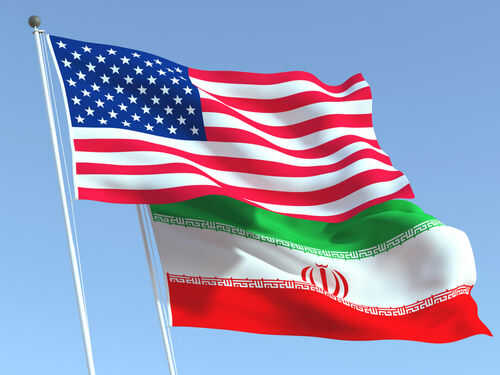
President Trump declared the U.S.-Iran ceasefire “over” on July 8, 2026 — just three weeks after calling it a triumph — as American and Iranian forces exchanged fresh strikes and the Strait of Hormuz remained a flashpoint.
Story Snapshot
- Trump announced a two-week ceasefire with Iran, then declared it “over” just weeks later after new strikes in the Strait of Hormuz.
- The U.S. launched Operation Epic Fury against Iran starting February 28, 2026, targeting more than 80 Iranian sites including air defense systems.
- A follow-on 60-day deal was signed, but fighting resumed quickly, raising serious questions about whether any agreement will hold.
- Defense analysts warn the U.S. has used up significant missile stockpiles, creating real risks for future conflicts.
From Ceasefire to “Over” in Three Weeks
President Trump announced a two-week ceasefire with Iran just 88 minutes before his own self-imposed deadline to destroy a “whole” set of Iranian targets. The deal required Iran to reopen the Strait of Hormuz, a critical waterway for global oil shipments. Trump called it a win. Three weeks later, he declared the ceasefire “over” and promised the U.S. would hit Iran “hard” after new strikes in the strait.
The back-and-forth has been dizzying. After the initial ceasefire collapsed, the two sides signed a broader deal — a 60-day extension — that Trump said was “all signed.” But fighting resumed again, putting the agreement on shaky ground almost immediately. The pattern raises a fair question: what does a real resolution actually look like here, and does anyone in charge have a clear answer?
What the U.S. Military Actually Did
The U.S. military operation, code-named Operation Epic Fury, began on February 28, 2026, as a joint effort with Israel. American forces struck more than 80 Iranian sites, including air defense systems. The operation officially concluded in May 2026. The scale of the strikes was significant — this was not a limited warning shot. It was a sustained military campaign aimed at degrading Iran’s ability to fight back.
Defense analysts at the Center for Strategic and International Studies (CSIS) reported that the U.S. depleted roughly 45% of its precision strike missiles and 50% of its interceptors during the conflict. That is a serious concern. Those weapons take years and billions of dollars to replace. Using them up against Iran means fewer resources available if China moves on Taiwan or another major threat emerges elsewhere in the world.
The Costs Keep Adding Up
The Strait of Hormuz disruption hit the global economy hard. Oil prices spiked more than 7%, climbing to nearly $80 per barrel. Daily ship traffic through the strait dropped from 130 vessels to just 41 at the height of the crisis. That slowdown ripples through everything — fuel prices, food costs, and supply chains that American families depend on every day. The economic pain was real and fast.
Some critics in Congress, including Representative Smith, have said Trump has “no idea” how to end the conflict he started. That may be too harsh — Trump did secure multiple ceasefire agreements, which is more than previous administrations managed with Iran. But the rapid collapse of those deals suggests the hard diplomatic work of locking in a lasting peace has not yet been done. Striking a deal is one thing. Making it stick is another. The American people deserve a clear strategy, not just a headline victory followed by more missiles.
A Pattern Worth Watching
History gives us reason to be cautious. Since Vietnam, critics have labeled nearly every major U.S. military engagement “unwinnable” — sometimes correctly, sometimes not. The Iran situation is genuinely complex. Iran has shown it can absorb strikes and keep fighting. But the U.S. also inflicted serious damage on Iranian air defenses and forced multiple ceasefire negotiations. Neither side has a clean path to total victory, which is exactly why a durable diplomatic deal matters more than any single military strike.
The Trump administration deserves credit for taking Iran seriously after years of weak responses from prior administrations. But the ceasefire chaos — declared, broken, extended, broken again — signals that the end game needs sharper definition. American strength is not just about hitting hard. It is about knowing when you have won and locking that win in place. Right now, that clarity is still missing.
Sources:
theamericanconservative.com, instagram.com, cfr.org, bbc.com, youtube.com, britannica.com, lemonde.fr, congress.gov, axios.com, studies.aljazeera.net, washingtoninstitute.org, gjia.georgetown.edu, mwi.westpoint.edu, arabcenterdc.org, facebook.com, csis.org, bigthink.com, usgovtpoli.commons.gc.cuny.edu, cato.org, publications.armywarcollege.edu, jeffsachs.org, sites.dartmouth.edu, foreignaffairs.com, eastasiaforum.org