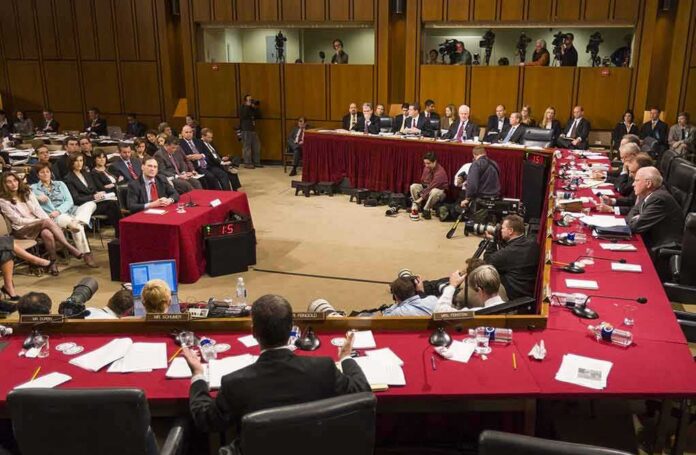
Dr. Anthony Fauci invoked the Fifth Amendment again and again in a Senate hearing, leaving major COVID decisions and potential conflicts unanswered.
Story Highlights
- Fauci declined to answer nearly every question, citing his Fifth Amendment rights.
- Senators pressed claims about gain-of-function funding and Wuhan research ties.
- Republicans cited 1,100+ diary pages and internal emails to challenge Fauci’s candor.
- Sen. Josh Hawley alleged taxpayer-backed staff helped seek $1 million+ in personal awards.
Fifth Amendment Silence Dominates a High-Stakes Hearing
Senators held a televised hearing on July 29, 2026, to question Dr. Anthony Fauci about the pandemic response and COVID-19 origins. Fauci replied that he would not answer, on advice of counsel, and invoked the Fifth Amendment repeatedly. Reporters counted this pattern across the session, noting he avoided direct replies to every major line of inquiry. The silence created a one-sided record where accusations stood without rebuttal or clarification from the witness.
Republicans argued that Americans deserve answers on lockdowns, school closures, and messaging that shaped daily life. They said families paid the price with lost learning, shuttered businesses, and lasting inflationary pain. They aimed to place decisions in context and demand the paper trail. Because Fauci declined to engage, senators signaled they would seek records, compel production, and consider contempt if needed. Democrats called the hearing partisan, but the questions stayed on the table.
Claims About Wuhan Research and Gain-of-Function Funding
Sen. Rand Paul cited past testimony and research links to argue that federal grants advanced work that could increase viral risk. He pointed to a 2015 study connected to federal funding and raised the disputed definition of gain-of-function. He said Fauci’s 2020 denial about such funding in Wuhan misled Congress. The hearing did not settle the science debate or the regulatory terms, but it highlighted gaps that records and grant files could resolve.
Reporters stressed that these allegations remain contested and are not court findings. Fauci has publicly rejected the claims in prior exchanges, saying the attacks are political and false. The current hearing produced no new sworn explanations from him because he declined to answer. That leaves open questions about how grants moved, how subawards worked, and whether any risk-enhancing experiments fit older or newer definitions in federal rules.
Diary Pages, Internal Emails, and the Push for Transparency
Republicans leaned on more than 1,100 pages from Fauci’s personal diary and internal emails released by the committee. They argued private notes clashed with public statements during key moments. Media accounts described staff messages and timelines that critics say show shifting narratives. The committee’s release did not include full context for every cited page, and Fauci’s refusal to answer left those entries without his on-record interpretation or explanation.
Dr. Anthony Fauci could face criminal prosecution after refusing to answer questions at Senate hearing https://t.co/2hm84T3bA1 pic.twitter.com/ZiHwyc4zmh
— FOX 2 Detroit (@FOX2News) July 31, 2026
Senators said the next step is document-first oversight. They want the complete transcript, the full diary set, and the underlying emails. They also want agency grant files and ethics reviews. That approach would let the public match specific lines in the diary or emails with real-world policies and press statements. Without that, the dispute risks living as clips and talking points instead of a clear timeline readers can verify against original documents.
Allegations About Personal Awards and Use of Federal Staff
Sen. Josh Hawley alleged that Fauci used federal employees and taxpayer resources to solicit more than $1 million in personal awards. He referenced internal emails, including a staffer note concerning the Dan David Award. He also criticized Fauci’s media profile during the pandemic, arguing that celebrity features showed personal benefit, not just service. Fauci did not answer these claims at the hearing, so the paper record will have to carry the debate for now.
These charges call for clear document trails. Ethics approvals, nomination files, routing logs, and emails could confirm or refute staff involvement and any use of government time. If records show routine handling within ethics rules, that would undercut the claim. If they show personal gain aided by federal staff, that would validate the concern. Either way, transparency is the only path to trust. Congress can and should press for those files promptly.
Why This Matters for Families and Constitutional Accountability
Parents, small business owners, and seniors lived the fallout from pandemic policy. They watched schools close, savings shrink, and freedoms narrow. They now want accountability grounded in facts, not theater. The Constitution protects the right against self-incrimination, but it also empowers Congress to demand answers. President Trump’s administration has backed oversight to get the records and set clear standards so the country does not repeat the same harms in the next crisis.
Lawmakers can secure the files, depose key staff, and publish the full record so citizens can see what guided each call. If rules were bent, there should be consequences. If the record clears the fog, the country can move forward. Until then, the unanswered questions remain. The families who bore the costs deserve straight answers, matched to dates, emails, and grants, not more spin on television or silence in a hearing room.
Sources:
usatoday.com, theguardian.com, nytimes.com, apnews.com, politico.com, axios.com, congress.gov