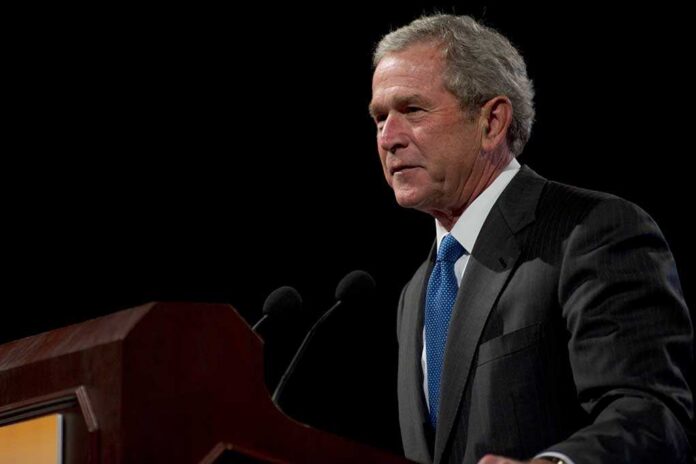
Right after 9/11, President George W. Bush told Americans “Islam is peace,” a message that set the nation’s tone for years and still divides conservatives over its real costs and benefits.
Story Highlights
- Bush separated Islam from terrorism and urged respect for Muslim Americans days after 9/11.
- The White House framed terrorists as “traitors to their own faith,” not representatives of Islam.
- Bush visited an Islamic center and condemned anti-Muslim abuse, stressing civil rights.
- Supporters said the outreach protected liberties and helped counterterrorism cooperation.
What Bush Said And Why It Mattered In The Days After 9/11
On September 17, 2001, just six days after the attacks, President George W. Bush stood at the Islamic Center of Washington and said, “Islam is peace.” He condemned any abuse of Muslim Americans and said those who mistreated them “should be ashamed.” He asked the public to show respect in a time of anger. Those remarks, carried nationwide, aimed to calm the country and prevent backlash against innocent people who shared no tie to the hijackers.
On September 20, 2001, Bush told a joint session of Congress that America’s enemy was a radical terror network, not Islam or Arab peoples. The administration described the fight as ideological, calling the terrorists “traitors to their own faith” who sought to hijack Islam. This framing tried to unite the nation for a long war while keeping the focus on the actual terror threat, not on peaceful neighbors or allies who practice Islam.
How The White House Turned Words Into Public Signals
The White House followed the speeches with visible outreach. Bush met Muslim leaders, hosted the first White House Iftar, and returned to the Islamic Center. A State Department account said these steps aimed to stop hate crimes and show respect for religious freedom. The message doubled as strategy: the war on terror needed partners, tips, and trust from Muslim communities at home and abroad to spot real threats early and save lives.
Officials also repeated a clear line: America fights terror and evil, not Islam. That language showed up in meetings with foreign leaders and in public statements. The goal was to defend the First Amendment’s promise of free exercise while keeping the frame on terrorist networks. Backed by the bully pulpit, the theme echoed through agencies and public events, urging citizens to be firm against terrorists and fair toward law-abiding Muslims.
The Conservative Debate: Reassurance Versus Clarity About Threat
Conservatives still argue over these choices. Supporters say Bush protected core liberties, cooled street tensions, and helped law enforcement build trust for tips and cooperation. They note that clear lines between Islam and terror upheld American values and avoided pushing peaceful Muslims away from helping stop plots. They also point to the need for alliance-building abroad to cut funding, safe havens, and recruitment pipelines for jihadist groups.
Critics counter that the rhetoric softened public focus on the specific ideology that inspired the attackers. They argue that saying “Islam is peace” risked blurring the role of radical interpretations that drive terror networks. However, the documented record provided here is heavy on Bush’s own words and public outreach, not on internal memos or data that show downstream security effects. The sources do not tie the rhetoric to proven policy failures or measurable complacency.
What We Can Prove From The Record — And What Is Missing
The established facts show Bush clearly separated Islam from the terrorists, condemned bigotry, and used the presidency to model restraint. Official archives capture repeated phrases about respect, religious freedom, and Muslim contributions to American life. These same records explain the strategy as both moral and practical. What is missing are internal assessments showing whether the outreach affected tip lines, recruitment, or terror risk in quantifiable ways during the early years after 9/11.
For readers weighing lessons today, two truths stand together. First, national leaders must name and defeat the ideology that fuels terror. Second, America must uphold liberty and equal protection, even in pain and anger. The Bush record on Islam after 9/11 leaned hard on the second truth while pledging total war on terrorists. The documents here prove the language of reassurance and civil rights; they do not prove security harm. Future releases of internal files would clarify those open questions.
Sources:
zerohedge.com, usinfo.org, gilderlehrman.org, georgewbush-whitehouse.archives.gov, theguardian.com