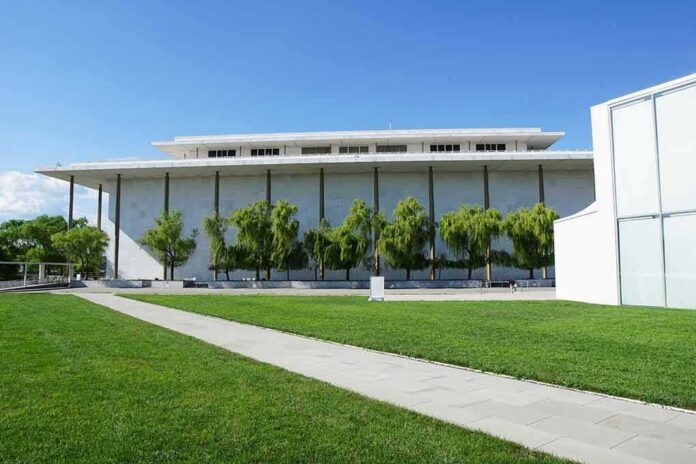
A federal judge demanded President Trump’s administration explain a rapid Kennedy Center shutdown after a dangerous ceiling collapse and months of legal wrangling.
Story Snapshot
- A judge ordered the administration to clarify if the closure violates an existing court limit on shutdowns.
- The board cited a foyer ceiling collapse and unsafe conditions to justify closing most of the building.
- Trump said repairs hinge on resolving the fight to add his name to the building.
- Watchdogs have warned for years about weak maintenance planning at the Kennedy Center.
Judge Presses For Answers On Closure Legality
U.S. District Judge Christopher Cooper ordered the Trump administration to explain whether the Kennedy Center’s plan to close the venue for up to two years defies a court order that limits its ability to shut down. The order followed a board vote to close most of the complex for repairs. The court wants clarity on how safety steps align with prior rulings that restrict large closures without a proper plan or authority on record.
Earlier this year, the court criticized a board vote authorizing a broad shutdown as “ill-informed and seemingly preordained.” The judge has blocked efforts tied to renaming while also scrutinizing the process for any lengthy closure. The latest directive does not contest safety risks outright. It demands the administration show that actions taken now comply with the court’s limits and the Kennedy Center’s statutory powers while protecting the public.
Safety Risks After Ceiling Collapse Drive Urgency
A partial ceiling collapse in the Grand Foyer triggered fresh alarms over the building’s condition. Internal language cited water intrusion and deterioration that released debris from about 60 feet, endangering visitors and staff. No injuries were reported, but the event reinforced expert warnings that the main building is unsafe for continued occupancy without prompt structural work. Board members cited immediate safety hazards and financial strain when voting to close most operations.
The board’s plan points to large-scale repairs and renovations to stabilize the facility. Officials referenced consultant findings and leadership assessments that forecast rising risk if the center stays open. Reports say the complex needs extensive upgrades, with a multi-hundred-million-dollar scope funded in part by federal appropriations. The shutdown aims to speed work and limit public exposure to hazards during heavy construction and remediation phases.
Naming Fight Collides With Repairs And Timeline
President Trump wrote that the board’s decision to close was “almost unanimous” and based on safety needs. He also said renovation and reconstruction would not begin until courts allow the board to proceed with adding his name to the building. He warned that if the ruling on naming is not overturned, the reconstruction and renovation “will not take place,” tying the project’s start and scope to the legal outcome.
Media reports and court filings show the judge has twice blocked attempts to add Trump’s name, ruling such steps exceed current authority. The court has also required the center to present workable plans to remain open when possible during litigation. That puts pressure on the administration and the board to separate urgent life-safety repairs from contested branding moves so public safety is not delayed by legal disputes.
Chronic Maintenance Gaps Meet Court Oversight
The Government Accountability Office previously urged the Kennedy Center to upgrade capital planning, life-cycle cost analysis, and documentation. That profile matches an aging facility with deferred maintenance risks, not a one-off crisis. The new collapse and rapid closure vote highlight the cost of waiting. Stronger project planning, clear statutory grounding, and transparent sequencing could help the center move faster on true safety work while staying within the law.
NEWS: Fencing has gone up around the Kennedy Center after its board voted to close most of the building for repairs, deepening a legal and political fight over the future of the landmark.
The closure came one day after a federal judge blocked plans to add President Donald…
— MDBayNews (@MDBayNews) September 17, 2026
Conservatives want two things here: safety first and law first. The court’s job is to ensure the shutdown and repairs follow the rules. The administration’s job is to protect people and steward tax dollars well. The quickest path is a compliant, safety-focused plan that moves forward now, without letting side issues stall the work. Families, workers, and performers deserve a safe building, not months of preventable delay and legal gridlock.
Sources:
npr.org, latimes.com, nbcnews.com, apnews.com, washingtonpost.com, wset.com, abcnews.com, courthousenews.com