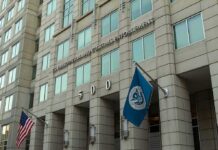
A federal watchdog says 3.1 million visa-overstay leads drew just eight arrests, exposing a gaping hole in border security under prior policy choices.
Story Highlights
- DHS inspector general found 3,145,375 overstay leads from fiscal years 2021–2024, but only eight arrests.
- More than 104,000 leads were flagged as potential national-security or public-safety risks.
- Only 496 investigations were opened from all leads, a tiny share of the total.
- Watchdog urged more Priority 1 overstay investigations and enforcement actions.
Watchdog Tallies Millions of Leads, Almost No Arrests
The Department of Homeland Security (DHS) summarized a new inspector general report showing that U.S. Immigration and Customs Enforcement (ICE) received 3,145,375 overstay leads from fiscal years 2021 through 2024, yet opened only 496 investigations and made eight arrests. DHS said 104,049 leads were marked as potential national-security or public-safety concerns. The inspector general wrote that ICE took few enforcement actions from targeted leads in those years and recommended a plan to increase investigations and enforcement for the highest-risk cases.
DHS materials said most leads were labeled non-priority and routed away from intensive action. Of the 2,837,188 non-priority leads sent to ICE Enforcement and Removal Operations, only five were later probed as possible public-safety threats, producing two arrests. These figures describe a system that gathered immense data but did not act on it. For readers who care about safety, that imbalance looks like a warning sign that risk signals were ignored.
How Policy Choices Shrunk Enforcement
DHS and outside coverage link the low activity to a September 2021 policy that told ICE to focus limited resources on threats to national security, public safety, and border security, rather than on all overstays. DHS’s published strategy also describes a risk-based approach that targets the highest-risk overstays because resources are tight. Prioritization can make sense. But the inspector general’s numbers show that even many top-tier, Priority 1 leads did not result in investigations, much less arrests, which raises operational questions.
DHS said the inspector general also cited practical hurdles like bad addresses, trouble locating people, and resource limits. Those factors are real. But Americans expect follow-through when risks are flagged. A system that labels more than 104,000 leads as possible threats and then investigates a fraction looks misaligned with basic public-safety goals. The watchdog’s call to increase Priority 1 investigations is a direct response to that gap and a roadmap to fix it now.
Why Overstay Enforcement Matters to Security
Visa overstays are a defined category tracked by DHS by fiscal year and country, with regular reporting on expected departures and overstay events. That means the government knows when people fail to depart on time. When the lead pipeline swells into the millions and action drops to single digits, the risk is clear: the United States invites bad actors to test the gaps. Most visitors follow the rules. But a small number who do not can still cause harm if the system does not act on credible leads.
The inspector general did not say every lead is a confirmed violator. A “lead” can be messy, duplicated, or later resolved. Still, the watchdog centered the core facts: few enforcement actions came from targeted leads, and the fix is to raise the share of Priority 1 cases that get real investigations and enforcement. That is common sense. It also respects due process while putting safety first. Americans deserve a system that can tell noise from danger and then act on danger fast.
What Should Change Under Current Leadership
President Trump’s team now owns the mission and the tools. The path is plain: surge investigative capacity against Priority 1 leads, tighten address verification, and build faster handoffs from data flags to field action. DHS already frames overstays in a risk-based model; the inspector general’s guidance is to do more with the highest-risk slice now, not someday. That means clear metrics: percent of Priority 1 leads investigated within set days, and outcomes tracked to removal or legal resolution.
Congress should expect monthly scorecards and insist on transparent results. Communities should see fewer headlines about “millions of leads” and more about resolved cases. DHS’s own reporting proves the government can count. The next step is to act. Focus on Priority 1 overstays, restore deterrence, and show that U.S. law is not a suggestion. A safer, saner, fairer system is possible when we match firm rules with real enforcement.
Sources:
youtube.com, ap7am.com, rwtnews.com, ground.news, dhs.gov, dallasexpress.com