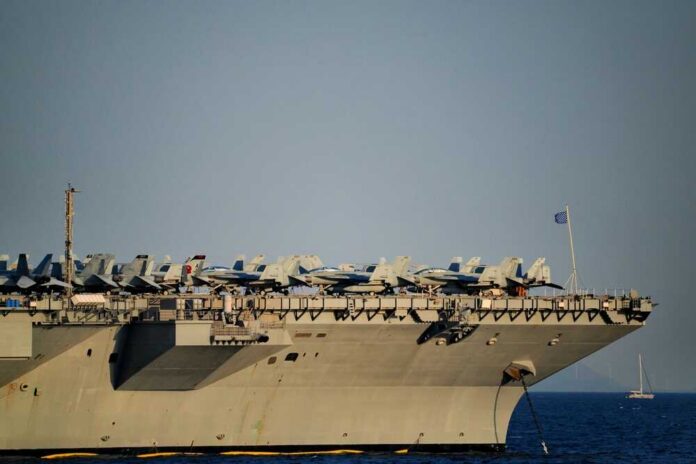
America’s premier $13 billion supercarrier, USS Gerald R. Ford, faces up to 14 months sidelined after a laundry fire, exposing Navy readiness cracks amid war with Iran and chronic ship failures.
Story Highlights
- USS Gerald R. Ford pulled from Red Sea ops after March 12, 2026, fire injured sailors and revealed deferred maintenance from 9-month deployment.
- First-in-class carrier’s unique systems could demand 12-14 months repairs, straining U.S. naval power projection against Iran.
- Potential three-carrier outage looms as USS Harry S. Truman enters overhaul, testing limits during President Trump’s second term.
- History of fires, plumbing clogs, and tech glitches underscores risks of rushed high-tech designs over proven reliability.
Fire Ignites Crisis in Red Sea Operations
On March 12, 2026, a fire erupted in the main laundry area of USS Gerald R. Ford during intense Red Sea operations supporting U.S.-Israeli actions against Iran. The blaze injured sailors, with reports ranging from two to 200 affected, and damaged living quarters. Propulsion systems remained intact, but the incident forced immediate reassessment. Navy pulled the carrier from combat duties, highlighting vulnerabilities after nearly nine months of extended deployment since June 2025.
Prolonged Deployment Exposes Deferred Maintenance
USS Gerald R. Ford deployed in June 2025 for what became an unprecedented 9-plus month mission, far exceeding typical 6-7 month cycles. Crew deferred routine maintenance amid combat strain, leading to cumulative wear. The ship stopped at Souda Bay, Crete, in February 2026 for resupply before the fire. Late March saw it arrive in Split, Croatia—or possibly Crete—for initial repairs, addressing fire damage alongside backlog issues.
First-in-Class Challenges Amplify Downtime Risks
As the lead Ford-class carrier commissioned in 2017, USS Gerald R. Ford features advanced electromagnetic catapults, automation, and reduced crew needs. Yet it has battled teething problems like elevator failures, weapon glitches, past fires, and flooding. Experts warn the laundry fire, combined with deployment stress, could sideline the $13 billion asset for 12-14 months due to complex, non-routine repairs. Official timelines remain undisclosed, with estimates varying from weeks to over a year.
Vice Chief of Naval Operations Admiral Jim Kilby previously cautioned on risks of such extensions. U.S. Navy prioritizes rapid restoration for power projection, relying on contractors for unique fixes. European bases provide interim support, but first-in-class hurdles complicate efforts.
Nuclear Aircraft Carrier USS Gerald R. Ford Might Be Out of Action for 2 Yearshttps://t.co/KsHOEa0ruW
— Harry J. Kazianis (@GrecianFormula) April 14, 2026
Strategic Implications for National Security
Short-term, Ford’s absence reduces Red Sea presence, straining other assets during Iran conflict. Long-term, it signals overstretch, eroding deterrence. With USS Harry S. Truman entering Refueling and Complex Overhaul in June 2026—lasting to 2029—the Navy risks three carriers unavailable. This tests readiness under Republican control of government, as President Trump’s America First policies demand strong defenses against global threats. Injured sailors and families bear immediate costs.
Chronic issues like daily sewage clogs—averaging one maintenance call per day, costing $400,000 per acid flush—underscore deeper flaws in high-tech designs. Defense analysts call it an embarrassment, questioning if elite-driven innovations prioritize politics over warfighter needs. Both conservatives frustrated by past overspending and liberals wary of military overreach share concerns over government failures delivering reliable strength.
Sources:
U.S. Navy Nuclear Aircraft Carrier USS Gerald R. Ford Might Be Out of Action for 14 Months
The U.S. Navy Will Soon Have 3 Aircraft Carriers Out of Action
Supercarrier USS Gerald R. Ford Might Not Be Combat Ready for 12 to 14 Months
USS Gerald Ford limps out of hot war and into embarrassment. Why?