A family torn apart by tragedy and forced relocation discovered that a simple microchip reunited them with their beloved cat after seven years of separation, proving technology can restore what government failures and life’s hardships take away.
Story Snapshot
- Dodger, a cat adopted in Fresno, went missing in 2018 when the Davidson family relocated following the father’s death
- Seven years later, a microchip scan in California triggered a cross-country reunion orchestrated by a Good Samaritan traveler
- Only 2% of shelter cats reunite with owners, highlighting how microchip technology succeeds where shelter systems fail
- The family drove seven hours at 5 AM to reclaim their pet, demonstrating determination amid economic hardship
Seven-Year Journey From Tragedy to Reunion
The Davidson family adopted Dodger as a kitten in 2016 from Winkle’s Pet Adoption Center in Clovis, California, making him a cherished family member. Two years later, tragedy struck when the father passed away, forcing an emergency relocation from Fresno to Florida and eventually Georgia. During the chaos of moving while grieving, Dodger vanished without a trace. The family had no resources or time to conduct an extensive search while managing cross-country moves under financial and emotional strain. For seven years, they carried the loss alongside their grief, unaware Dodger had survived on California streets.
Microchip Technology Delivers Where Bureaucracy Cannot
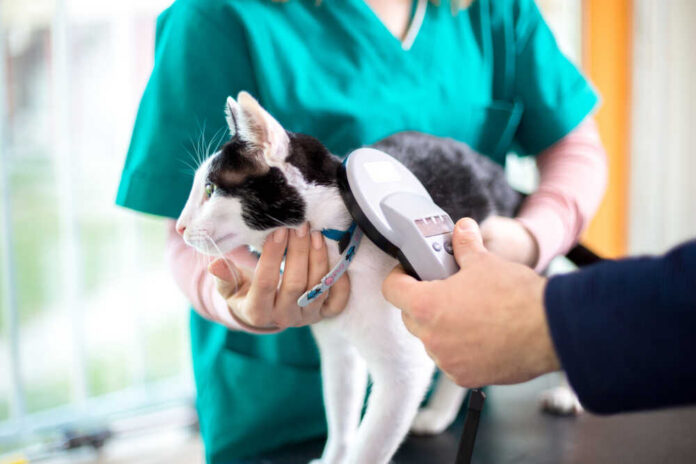
In March 2026, the Davidsons received an 11 PM email notification that Dodger’s microchip had been scanned in the Sherman area of California. The rice-sized RFID implant, standard since the 1990s, stored the family’s contact information permanently despite their multiple relocations. While government pet recovery systems fail spectacularly—with only 2% of shelter cats ever reuniting with owners according to Sacramento SPCA data—this private-sector technology succeeded. Microchips cost roughly $50-100, a pittance compared to inefficient taxpayer-funded shelter operations that lose 98% of lost cats. The chip worked flawlessly for nearly a decade without government intervention or bureaucratic red tape.
Stranger’s Kindness Overcomes Distance and Obstacles
After the microchip scan, a traveler named Sherman volunteered to transport Dodger from California to Florida, embodying the community spirit that flourishes when ordinary citizens step up where institutions fall short. The family drove seven hours through the night to meet Sherman at 5 AM on March 24, 2026, absorbing travel costs that strained their budget. Mom Davidson recounted how transportation plans fell through in 2018 during their crisis, leaving Dodger behind. This reunion required no government assistance, just determination and a stranger’s generosity. The emotional reunion highlighted what matters to working families: loyalty, persistence, and the bonds that endure despite hardship caused by circumstances beyond their control.
Shelter System Failures Expose Larger Government Incompetence
California’s Fresno and Central Valley regions face massive stray cat populations, yet shelters reunite only 2% of lost cats with owners—an abysmal failure rate that would bankrupt any private business. Despite taxpayer funding for Ventura County Animal Services, Sacramento SPCA, and similar facilities, these institutions rely on viral reunion stories to promote microchips rather than fixing their broken processes. The Dodger case mirrors other California reunions: Chebon, a tabby lost for seven years, and Lily, missing six years, both required microchip scans to succeed where shelter databases failed. These rare “miracles” underscore systemic incompetence, where simple technology outperforms bloated agencies designed to serve the public but primarily serve their employees’ paychecks and pensions.
Family Resilience Triumphs Over Systemic Indifference
The Davidson family’s story resonates because it reflects struggles millions face: economic disruption from death, forced relocation, and institutional failures that abandon citizens in crisis. They received no government help locating Dodger in 2018 or reuniting with him in 2026—only a late-night email generated by private microchip technology and a stranger’s altruism. Skylar Davidson, who carried Dodger as a child before losing him, exemplifies how ordinary Americans persevere through tragedy without relying on elites or bureaucrats. The reunion offers hope to families navigating loss and instability, proving that personal responsibility and community goodwill achieve what government programs promise but rarely deliver. Dodger’s return won’t fix broken systems, but it reminds us that determination and technology can restore what matters most.
Sources:
Missing Cat Returns Home After 7 Years
Cat Missing 6 Years Reunited With Owner Thanks to Microchip