The Trump administration has unleashed a crushing wave of sanctions on Iran’s oil industry, targeting 115 entities and vessels in a single day while threatening severe penalties on any nation daring to purchase Iranian petroleum.
Story Snapshot
- July 2025 sanctions hit 115 Iran-linked entities and vessels, marking the most aggressive economic pressure campaign since 2018
- Treasury Department disrupted billion-dollar money laundering networks tied to the Islamic Revolutionary Guard Corps
- Trump’s renewed “maximum pressure” strategy targets shadow fleets and front companies evading previous sanctions
- Iran has lost $60 billion in energy investments while ordinary citizens face healthcare and education barriers
Maximum Pressure Returns With Unprecedented Force
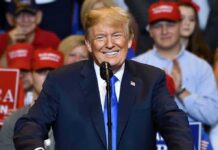
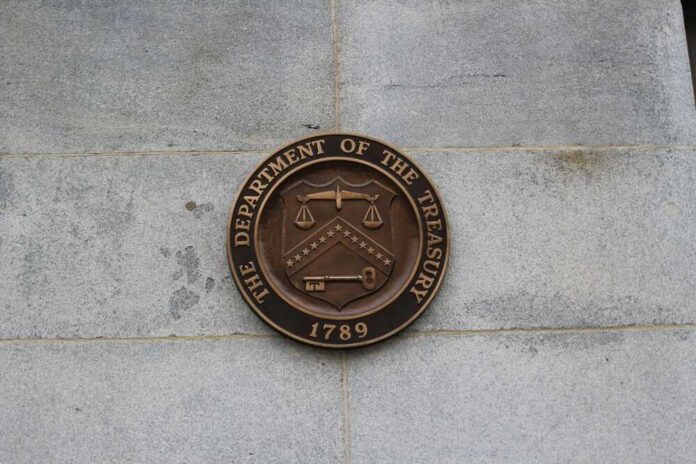
The Treasury Department’s Office of Foreign Assets Control has systematically dismantled Iran’s sanctions evasion infrastructure throughout 2024 and 2025. Starting with December 2024 actions against vessels and petroleum trading companies, the campaign escalated dramatically by July 30, 2025, when sanctions slammed 115 targets involved in oil and petrochemical exports. President Trump personally warned that any country purchasing Iranian oil would face secondary sanctions, effectively cutting off access to U.S. financial systems. This represents a fundamental shift from the multilateral Joint Comprehensive Plan of Action relief that briefly existed before Trump’s 2018 withdrawal.
Following The Money Through Shell Companies
Treasury officials have traced billions of dollars flowing through elaborate evasion schemes designed to circumvent American economic restrictions. In April 2025, sanctions targeted the Reza Zarrab network for liquefied petroleum gas exports, followed by June actions against the Zarringhalam brothers who laundered funds for the Islamic Revolutionary Guard Corps. These networks utilized companies in the United Arab Emirates and Hong Kong, operating vessels like the MS Enola to transport Iranian petroleum under false documentation. The sophistication of these schemes demonstrates Iran’s determination to preserve revenue streams despite facing economic isolation, raising serious questions about whether international financial institutions are adequately policing illicit transactions.
Economic Warfare With Devastating Consequences
The sanctions regime has inflicted measurable damage on Iran’s economy, reaching a peak impact of 19.1 percent of GDP in 2012 and maintaining severe pressure through subsequent waves. Iran has forfeited an estimated $60 billion in energy sector investments while American companies like Boeing and ExxonMobil lost $25 billion in potential exports. Yet the human cost extends beyond statistics. Despite humanitarian exemptions, Human Rights Watch reports document how banking sanctions create barriers to accessing healthcare and educational materials for ordinary Iranians. Meanwhile, the Iranian rial faces persistent devaluation pressure, and the aviation sector remains crippled by parts embargoes that create legitimate safety concerns.
A Strategy Decades In The Making
This economic confrontation traces back to November 1979 when President Carter froze $8.1 billion in Iranian assets following the U.S. Embassy hostage crisis. Sanctions evolved through the 1980s and 1990s targeting terrorism and weapons of mass destruction support, culminating in a full trade embargo under Executive Orders 12957 and 12959 in 1995. The 2010-2012 period saw secondary sanctions force global oil buyers to reduce Iranian purchases, temporarily relieved by the 2015 JCPOA before Trump’s withdrawal reinstated comprehensive restrictions through Executive Order 13846. The current approach differs fundamentally by hyper-targeting specific evasion networks rather than relying solely on broad sectoral bans.
Questionable Effectiveness Against Determined Resistance
Despite the Treasury Department’s claims of disrupting illicit financial networks and curbing Iran’s nuclear and missile programs, evidence suggests limited strategic success. Iran has adapted through domestic substitution programs and continues funding proxy forces across the Middle East. Paradoxically, 2007 banking sanctions may have shielded Iran from the 2008 global recession by isolating its financial system. Energy policy experts at Columbia University note that while sanctions impose costs, they have not fundamentally altered Iranian behavior or forced meaningful concessions on nuclear development. This raises the uncomfortable reality that decades of economic warfare have primarily harmed ordinary citizens while the regime maintains power, benefiting from nationalist sentiment against foreign pressure while unelected bureaucrats continue policies that appear more focused on justifying their existence than achieving results.
Sources:
Timeline: U.S. Sanctions – The Iran Primer
Iran Sanctions – Office of Foreign Assets Control
The Humanitarian Impact of US Sanctions on Iran – Atlantic Council
A Brief History of US Sanctions on Iran – Columbia University
Iran Sanctions – U.S. Department of State