
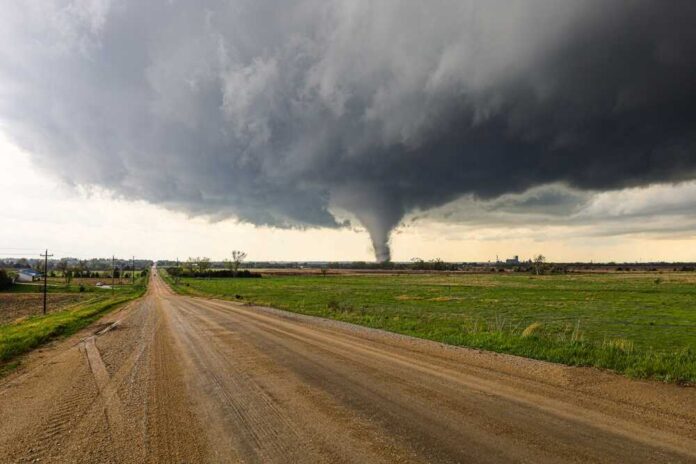
An unprecedented tornado strikes North Dakota, challenging assumptions and sparking discussions on preparedness.
Story Highlights
- First EF5 tornado in the US since 2013, hitting North Dakota.
- Catastrophic damage along a 12-mile path causes three fatalities.
- The event challenges assumptions about tornado risk in northern states.
- Ongoing recovery efforts and discussions on improved readiness.
Historic Tornado Devastates North Dakota
On June 20, 2025, at 11:00 p.m. CDT, an exceptionally powerful tornado touched down near Enderlin, North Dakota. Rated EF5, the highest on the Enhanced Fujita scale, it was the first in the United States since 2013. With winds exceeding 210 mph, it caused catastrophic damage over a 12-mile path, reaching a width of 1.05 miles, and resulted in three fatalities. This rare event underscores the unpredictable nature of severe weather, especially in a state not typically associated with such violent tornadoes.
The tornado struck rural areas, damaging farmsteads and infrastructure, including a train derailment. Occurring late at night, the tornado increased risks to residents due to reduced visibility and slower warning response times. The National Weather Service (NWS) conducted damage surveys and confirmed the EF5 rating through forensic analysis, noting the tossing of rail cars and extensive tree debarking. This event has prompted a reevaluation of tornado risk profiles for northern states.
Watch: Deadly North Dakota tornado upgraded to EF5
Recovery and Response Efforts
In the aftermath, local emergency management teams coordinated response and recovery efforts. Residents and property owners were directly affected, facing significant challenges in rebuilding and claiming insurance. Railroad companies, impacted by the train derailment, are conducting safety reviews and infrastructure repairs. The NWS and local authorities are working closely to improve warning systems and public safety measures, acknowledging the need for enhanced preparedness in light of this unprecedented disaster.
As recovery continues, discussions are underway regarding potential changes to building codes and emergency protocols. Meteorologists and storm chasers provided real-time data and post-event analysis, emphasizing the importance of understanding tornado dynamics to improve forecasting. This event has sparked discussions on climate variability and its potential influence on tornado patterns, although consensus remains elusive.
Implications for Future Preparedness
The North Dakota tornado has broader implications for disaster readiness in the US. It underscores the need for increased focus on preparedness in regions previously considered low-risk for high-end tornadoes. The event has highlighted the importance of forensic damage analysis in confirming tornado intensity, and the potential need for stronger construction standards in tornado-prone areas. As debates continue over climate change’s role in tornado frequency and intensity, this event serves as a critical reminder of the need for vigilance and adaptability in the face of extreme weather.
As the nation processes this devastating event, the economic, social, and political impacts are becoming evident. There is a heightened public awareness of the risks posed by severe weather, leading to potential policy discussions on disaster readiness. The insurance industry is facing large claims, and emergency management agencies may revise protocols to better handle rare, high-end tornadoes. This event is a stark reminder of the unpredictable nature of Mother Nature and the importance of being prepared for the unexpected.
Sources: