Ukraine’s latest deep-strike on Russian oil in the Caspian Sea is a stark reminder that Putin’s war machine still rides on energy cash.
Story Snapshot
- Ukrainian security services used long-range drones to hit Russian Caspian Sea oil platforms three times in one week.
- The targeted Lukoil facilities help fund Moscow’s war, partially skirting Western sanctions.
- The attacks expose how fragile global energy supplies remain after years of Biden-era anti-fossil-fuel policies.
- The campaign shows why a strong America First energy strategy matters for U.S. families and retirees.
Ukrainian Drones Take the War Deep Into Russia’s Energy Heart
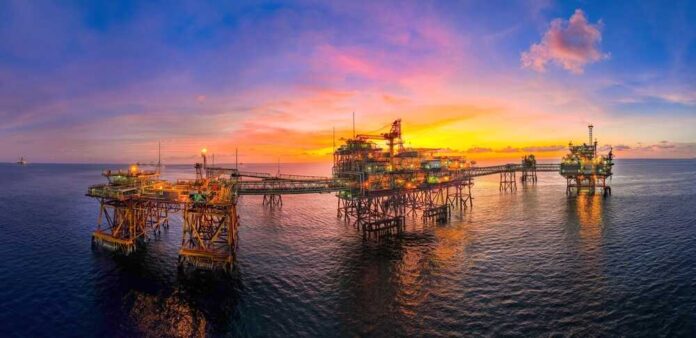
Ukraine’s Security Service, the SBU, has opened a new front in the energy war against Russia by repeatedly striking offshore oil platforms in the Caspian Sea. Within a single week, long-range drones reportedly hit Lukoil-operated platforms at the Filanovsky and Korchagin fields three separate times, damaging critical equipment and forcing production to halt. Ukrainian sources frame these operations as “long-range sanctions,” designed to hit the Kremlin where it hurts most: oil revenues that bankroll its grinding invasion.
The first reported strike came on December 11 against the Filanovsky platform, one of Russia’s largest offshore fields. A second wave the very next day expanded the target list to include both Filanovsky and the nearby Korchagin platform. By December 15, a third successful attack on Korchagin was reported, with enough damage to stop output entirely. These operations rely on specialized long-range drones launched and coordinated by the SBU’s elite Alpha Special Operations Center, underscoring how technology is leveling the playing field.
High-Value Caspian Targets and the Kremlin’s Oil Lifeline
The chosen targets are not random symbols; they are pillars of Russia’s energy machine. Filanovsky holds an estimated 129 million tons of oil and around 30 billion cubic meters of gas, making it a crown jewel in Moscow’s offshore portfolio. Korchagin, though smaller, still pumped roughly 20,000 barrels per day in 2023. Both fields sit in Russia’s sector of the Caspian Sea and are operated by Lukoil-Nizhnevolzhskneft, a subsidiary positioned to feed exports that help Moscow dodge some sanctions.
Watch: https://www.youtube.com/watch?v=uqQEZ8hjKvU
By striking assets far from the front lines, Ukraine is signaling that geography no longer guarantees safety for infrastructure feeding Putin’s war economy. Before these Caspian hits, Kyiv had already gone after Russian refineries, ports, and even the so-called “shadow fleet” of tankers moving sanctioned oil across global waters. Now, with production suspended at both Filanovsky and Korchagin, Russia faces a new headache: expensive offshore projects that suddenly look vulnerable, and investors forced to consider whether any high-value facility is truly secure.
“No Russian Object Working for the War Is Safe”
Anonymous SBU sources have framed these strikes with an unambiguous message: no Russian object serving the war effort is safe regardless of location. That statement is not empty rhetoric. By reaching deep into the Caspian, Ukraine has demonstrated that even heavily protected or remote energy assets can be reached by relatively low-cost drones. For Ukrainians, this offers a badly needed morale boost at a time when ground fighting has been grinding and casualty-heavy. For Moscow, silence has been the immediate response. Lukoil has not commented publicly, and Russia’s Defense Ministry has declined to answer questions about the damage or the apparent gaps in air defenses around these platforms.
Energy Warfare, Sanctions, and American Gas Prices
These attacks land in a world still digesting the economic hangover from years of Biden-era climate rhetoric and restrictions that choked domestic production and drove prices higher for American families. When a major producer like Russia takes hits to offshore fields, even far away in the Caspian, traders and speculators start recalculating risk. The short-term effect is a reduction in Russian output and potential upward pressure on prices, exactly the kind of instability that punishes retirees, truckers, and working parents at the pump. European policymakers have tried to tighten the screws on Moscow with sanctions targeting its “shadow fleet” and other export channels.
Drone Warfare, Escalation Risks, and What Comes Next
Strategically, Ukraine’s campaign introduces a new phase of warfare, where inexpensive unmanned systems repeatedly stress-test an adversary’s most valuable infrastructure. There is little doubt that Russia will now move to harden offshore platforms with better air defenses and surveillance, driving up costs and stretching its military resources. At the same time, Kyiv has signaled it will keep going, calling these operations an ongoing effort rather than a one-off gesture, despite Russia’s superior conventional firepower along the front.
Ukrainian drones struck a Russian oil platform in the Caspian Sea for the third time in a matter of days, security source says https://t.co/bLSmX9t94L
— Insider (@thisisinsider) December 15, 2025
An America First approach—securing our own supply, resisting climate extremism, and staying tough on regimes that weaponize oil—helps insulate U.S. families from exactly the kind of instability now unfolding in the Caspian. Ukraine’s drones have exposed how fragile the system really is; it is up to our leaders to make sure Americans no longer pay the price.
Sources:
Ukrainian drones struck Russian oil platforms at sea: source
Ukrainian drones strike Russian oil production platforms in Caspian Sea – Ukrainska Pravda
Third time’s the charm: SBU drones hit Lukoil oil platform in the Caspian Sea – United24Media