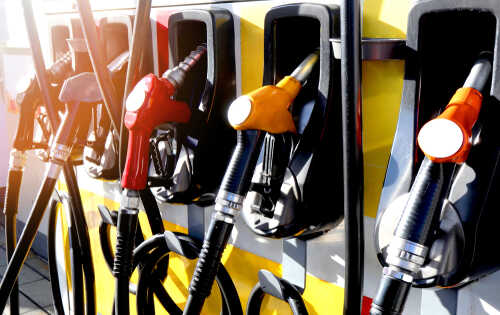
American drivers are paying over $4 per gallon at the pump for the first time since 2022, as escalating Middle East conflict drives crude oil prices skyward and strains household budgets nationwide.
Story Snapshot
- National gas average reached $4.257 per gallon by late April 2026, up 30% year-over-year
- U.S.-Israel military strikes on Iran sparked war, sending oil past $90 per barrel with 36% weekly surge
- California drivers face highest costs at $5.89 per gallon while demand drops to 8.68 million barrels daily
- Price spike challenges Trump administration’s campaign promises to lower energy costs for Americans
War in Middle East Triggers Energy Crisis
U.S. and Israeli military operations against Iran approximately one week before late April 2026 escalated into full-scale conflict, sending shockwaves through global energy markets. American crude oil prices surged to $90.90 per barrel while Brent crude hit $92.69, representing increases of 36% and 27% respectively within a single week. The Strait of Hormuz, a critical shipping chokepoint for global oil transport, closed amid the hostilities, constricting supply and amplifying price pressures across gasoline, diesel, and jet fuel markets nationwide.
US gas prices hit new high since start of war with Iran rising to $4.23 today, according to AAA. The milestone comes as oil prices have surged higher over past week amid dual blockade by US and Iran of Strait of Hormuz, the critical chokepoint for transporting crude and…
— Paul Mooney 慕亦仁 (@pjmooney) April 29, 2026
Pump Prices Exceed Key Threshold
The national average for regular gasoline crossed $4 per gallon on April 2, 2026, reaching $4.08 and marking the first time prices exceeded this threshold since August 2022. By April 9, prices climbed further to $4.16 before experiencing brief relief following a temporary ceasefire announcement. The respite proved short-lived as prices stabilized around $4.03 to $4.09 through mid-April, then rose again to $4.257 per gallon by the week of April 27. This represents a dramatic 30.26% increase compared to the same period in 2025.
Regional Disparities Hit Households Hardest
California motorists bear the heaviest burden at $5.89 per gallon, followed by Hawaii at $5.50 and Washington at $5.36, while Colorado drivers pay $3.82. Small businesses report severe operational strain as fuel costs cut into already thin profit margins. The Energy Information Administration documents gasoline demand declining to 8.68 million barrels per day, reflecting how higher prices force Americans to reduce driving and modify consumption habits. Research indicates consumers may further curtail discretionary travel, including reduced drive-thru restaurant visits, as financial pressures mount across middle-class households nationwide.
Political Pressure Mounts on Administration
President Trump campaigned extensively on lowering energy costs for American families, contrasting his platform against the $5.02 per gallon peak reached in June 2022 under the Biden administration following Russia’s invasion of Ukraine. Current price levels now exceed Election Day 2024 figures of $3.10 per gallon, creating political headwinds for the administration. While the American Automobile Association notes crude oil prices recently fell below $100 per barrel, providing modest relief, ongoing Middle East volatility threatens sustained high costs. The situation underscores how foreign military commitments can undermine domestic economic priorities, frustrating voters who expected government focus on pocketbook issues rather than international entanglements.
U.S. gas prices hit new high as U.S.-Iran diplomatic deadlock continueshttps://t.co/i8lS9cfh61
— SCMcGee Never Give Up On Hope (@McGee06708992) April 29, 2026
The confluence of geopolitical instability and energy market disruption demonstrates the vulnerability of American consumers to conflicts abroad, regardless of which party controls Washington. Airlines face mounting jet fuel expenses while trucking companies struggle with diesel costs, threatening to ripple through supply chains and consumer prices broadly. Production stands at 9.6 million barrels per day with inventories at 240.9 million barrels, levels insufficient to offset supply shocks from war-induced shipping disruptions. Whether temporary ceasefires provide lasting relief or prices climb further toward 2022 peaks remains uncertain as military operations continue and diplomatic solutions prove elusive.
Sources:
YCharts U.S. Gas Price Indicator
AAA: National Average Exceeds $4 Per Gallon
Empower: Gas Prices by State News