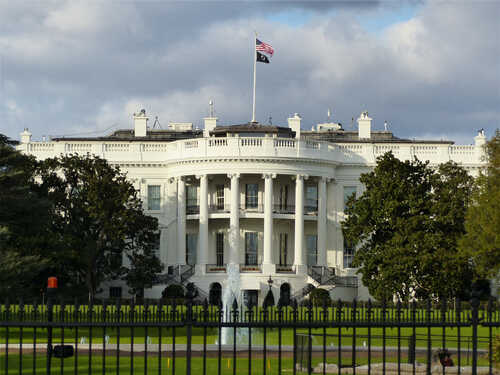
A $17.4 million “urgent” no-bid fountain repair across from the White House is igniting a taxpayer-trust fight that goes far beyond a couple of broken water features.
Story Snapshot
- The National Park Service awarded Clark Construction a no-bid contract to repair two long-idle Lafayette Park fountains, citing an “urgency” exception tied to America’s 250th anniversary timeline.
- Reporting says a 2022 estimate under the Biden administration put the job at $3.3 million, while the Trump-era deal rose from $11.9 million to $17.4 million as tasks expanded.
- President Trump disputed the coverage on Truth Social, calling the work legitimate and time-sensitive, and claiming it was completed “under budget and ahead of schedule.”
- An independent consultant tied to the earlier estimate said the added costs were not justified by his calculations, fueling questions about how the price changed.
A No-Bid Contract Lands in the Middle of a Trust Crisis
The controversy centers on a National Park Service contract awarded to Clark Construction, a Maryland-based firm also associated with building a new White House ballroom. According to the reporting summarized in the research, the fountains in Lafayette Park had been idle for more than a decade due to deteriorating equipment, and the administration moved quickly after January 2026 to get them running again. The key political flashpoint is not the fountains themselves, but the decision to bypass competitive bidding.
A no-bid award can be legal, but it immediately raises the stakes because it asks the public to accept “trust us” at a time when many voters—right and left—think government insiders protect their own. Conservatives tend to see a familiar problem: big spending with limited transparency. Liberals tend to focus on favoritism allegations. In this case, both concerns are intensified by the contractor’s connection to another high-profile White House project.
How $3.3 Million Became $17.4 Million—and What’s Still Unclear
The price tag is the detail that made the story travel. The research summary cites a 2022 estimate commissioned under the Biden administration of $3.3 million, prepared by independent consultant Stephen Kirk. After Trump returned to office in January 2026, the government reportedly agreed to pay $11.9 million, later increasing the deal to $17.4 million as additional tasks were added. The reporting does not fully itemize the full breakdown of each increase.
Kirk, according to the research, disputed the jump in cost and said it was not supported by his calculations—suggesting that money was layered on without technical justification. That claim is significant because it is specific and comes from someone tied to the original estimate. At the same time, the available reporting summarized here leaves gaps that matter for accountability: the precise scope changes, the timeline pressures, and the procurement documentation that would show whether the government paid for legitimate added work or simply accepted a higher price.
The “Urgency” Exception: A Narrow Tool with Big Consequences
The National Park Service cited an “urgency” exception to avoid soliciting bids, with the Interior Department saying the process was “above board” and tied to completing improvements before the nation’s 250th anniversary. Contracting experts described the use of that exception as unusual, based on the research summary. That matters because urgency authorities are typically associated with emergencies—events where delay would cause clear harm—rather than commemorative deadlines.
From a limited-government standpoint, the concern is precedent. When agencies normalize expedited contracting for politically important deadlines, it becomes easier for any administration to steer work without market competition—the main tool taxpayers have for price discipline. Even if the end product looks good and the public enjoys it, bypassing competition invites suspicion, and suspicion is costly. It deepens the belief that the system is designed to serve well-connected players, not citizens paying the bills.
Trump’s Pushback, Media Warfare, and the Accountability Test
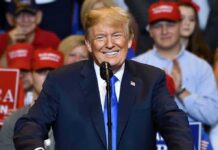
President Trump responded on Truth Social after a New York Times report, disputing how the story framed the contract and arguing that restoring the park was necessary and time-sensitive. The research summary also notes that Trump posted a video showing the fountains operating with colored lighting and described it as an honor to have funded the project, while saying Clark completed work “under budget and ahead of schedule.” Those claims, as presented here, are difficult to independently verify without final cost and performance records.
Politically, the episode fits a familiar pattern: mainstream outlets emphasize process and potential favoritism, while the White House emphasizes results, speed, and public-facing improvements. The deeper issue is that neither side’s messaging substitutes for clean documentation. If the contract was properly justified and priced, releasing clear procurement and scope records would help rebuild trust. If it wasn’t, Congress and inspectors general have a responsibility to treat it as a warning sign, not a partisan talking point.