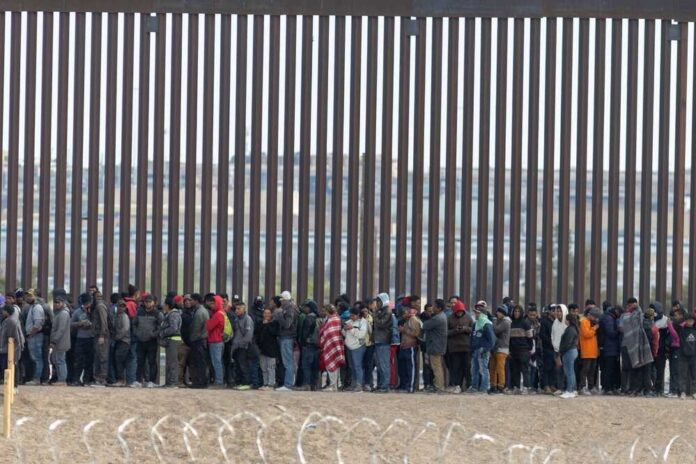
ICE’s latest crackdown in the Denver area has left communities reeling, revealing a stark reality: nearly half of those arrested have no criminal record, challenging the administration’s narrative of targeting serious offenders.
At a Glance
- ICE arrested 243 individuals in Denver, many without criminal records.
- The Trump administration tripled ICE’s daily arrest quotas.
- Current detainee population at a record high.
- Critics argue the policy harms families and communities.
ICE’s Aggressive Enforcement Under Trump
U.S. Immigration and Customs Enforcement (ICE) recently executed a sweeping operation in the Denver area, resulting in the arrest of 243 undocumented immigrants. While the Trump administration has emphasized the removal of individuals posing serious threats, data reveals a more nuanced picture: nearly 45% of those detained lack any criminal record. This marks a significant policy shift from previous administrations, focusing less on border apprehensions and more on interior enforcement.
🚨 ICE arrests 243 illegals in the Denver area in a week-long operation pic.twitter.com/nF3GNvQjUa
— Rapid Response 47 (@RapidResponse47) July 24, 2025
The administration has instructed ICE to arrest at least 3,000 individuals daily, tripling previous quotas. However, ICE is currently averaging closer to 1,200 arrests per day, with some days exceeding 2,000. This aggressive interior enforcement strategy has led to a record 59,000 immigrants currently detained, overshadowing previous records. The focus ostensibly remains on serious offenders, but the data tells a different story, with a substantial portion of arrests involving non-criminals.
243 migrants arrested by ICE in Denver operation
Impact on Communities and Families
The implications of this enforcement strategy are profound. For undocumented immigrants and their families, the increased risk of arrest and detention has stoked fear and uncertainty. Families face disruptions and economic hardship, while local communities witness heightened tensions and increased reports of family separations. Legal and advocacy organizations are overwhelmed by the demand for representation and support services.
Economically, industries reliant on immigrant labor may experience labor shortages, while the legal system grapples with a surge in immigration-related cases. The detention industry, meanwhile, continues to expand, fueled by private contracts and facility growth. Socially, the policy exacerbates tensions, undermining trust between immigrant communities and law enforcement.
Critics and Supporters: A Polarized Debate
Critics, including immigrant advocacy groups and some legal scholars, argue that these broad enforcement sweeps undermine due process and disproportionately affect individuals without serious criminal histories. They highlight the gap between the administration’s tough-on-crime rhetoric and the reality of non-criminal arrests. Austin Kocher from Syracuse University notes that the current detainee population is the highest on record, emphasizing the significant shift towards interior enforcement.
In contrast, administration officials maintain that aggressive enforcement is essential for public safety and deterrence. They argue that the policy is necessary to uphold the rule of law and protect American citizens. Yet, the discrepancy between public statements and actual data, as highlighted by the Deportation Data Project at UC Berkeley, raises questions about the policy’s efficacy and alignment with stated priorities.