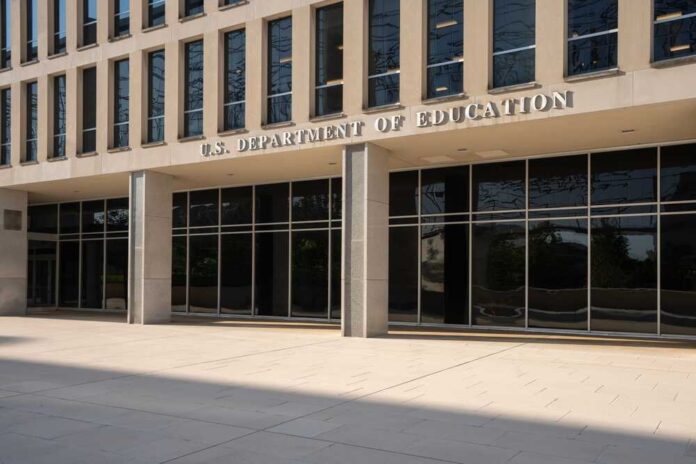
Trump’s Education Department abruptly pauses wage garnishments on defaulted student loans, handing taxpayer-funded relief to millions.
Story Snapshot
- The Education Department halts all involuntary collections just days after sending initial garnishment notices to 1,000 defaulted borrowers.
- Pause benefits 5 million defaulted and 4 million delinquent borrowers, providing short-term relief while new repayment plans launch July 1, 2026.
- Fiscal watchdogs slam the move as incoherent, projecting up to $5 billion annual loss in collections to taxpayers.
- No end date specified for the temporary hold, leaving uncertainty for responsible taxpayers footing the bill.
Timeline of the Sudden Reversal
The U.S. Department of Education sent initial wage garnishment notices to approximately 1,000 borrowers during the week of January 7, 2026. Officials had announced in December 2025 that collections would restart that month. On January 17, 2026, the department reversed course, pausing all involuntary efforts including Administrative Wage Garnishment, Treasury Offset Program, and tax refund seizures. This followed a five-year payment pause from March 2020 through much of 2025 that shielded borrowers from default.
Administration Justifies Pause Amid Broken System Claims
Under Secretary Nicholas Kent stated the pause ensures collections function more efficiently after the Trump administration fixes the broken student loan system. Education Secretary Linda McMahon noted a massive drop in repayments under Biden due to confusing options like the scrapped SAVE Plan. The department urges defaulted borrowers to contact servicers during the hold. Defaults still report to credit agencies, preserving consequences for non-payment. New income-driven plans arrive July 1, 2026, per the Working Families Tax Cuts Act.
Watch: https://www.youtube.com/watch?v=tLOEgMT97Qo
Fiscal Conservatives Decry Taxpayer Burden
The Committee for a Responsible Federal Budget calls the pause ridiculous, estimating $5 billion yearly in forgone collections that balloon loan balances. CRFB President Maya MacGuineas argues no crisis justifies backing off debt recovery after years of Biden handouts. This reversal undercuts Trump’s pledge to end pandemic-era leniency, prioritizing system tweaks over immediate accountability. Taxpayers, already strained by past overspending, face higher costs as borrowers retain full wages.
Borrower advocates like Protect Borrowers hail the move as avoiding economic recklessness for 9 million at risk. Yet fiscal hawks highlight how the prior administration’s policies fueled non-repayment, leaving conservatives frustrated with delayed justice for defaulted debts.
🚨 #BreakingNews 🚨 Education Department delays wage garnishment plan for defaulted student loans https://t.co/ZXPASeBZ0N
Grab #amazon #deals here:
For #USA https://t.co/XSLcMcH5fl
For #INDIA https://t.co/4c1HvUGtfn#TrendingNews #BigBreaking #trending #viralnews January 17,…— Instant News ™ (@InstaBharat) January 17, 2026
Impacts on Borrowers and Taxpayers
Five million defaulted borrowers—mostly lower-income—gain immediate relief from wage hits and refund losses, retaining more for families. Delinquent borrowers numbering nearly 4 million avoid escalation. Employers skip garnishment processing. Long-term, simplified plans aim to boost compliance, but without an end date, uncertainty lingers. The policy balances relief with credit reporting, yet fiscal losses underscore tensions between compassion and fiscal discipline conservatives champion.
Sources:
ABC News: Education Department delays plan to garnish wages of those with defaulted student loans
CBS News: Trump administration delays garnish wages for student loan borrowers in default
Politico: Education Department pauses wage seizures for unpaid student loans