With global oil flows at risk in the Strait of Hormuz, France is racing to build a naval shield—while Americans watch what another Middle East flare-up could do to prices back home.
At a Glance
- France announced an “unprecedented” deployment: 10 additional warships plus the aircraft carrier Charles de Gaulle to the Middle East, centered on protecting shipping lanes.
- The Strait of Hormuz—through which roughly one-fifth of global crude typically moves—has seen traffic nearly halted amid a regional war that erupted Feb. 28, 2026.
- Macron framed the mission as defensive and tied it to EU security after Iranian-made drones struck Cyprus and a UK base on the island.
- A coalition of European navies is discussed, but escort operations have no firm start date and appear dependent on fighting de-escalating.
Macron’s Naval Pledge and What France Says It’s For
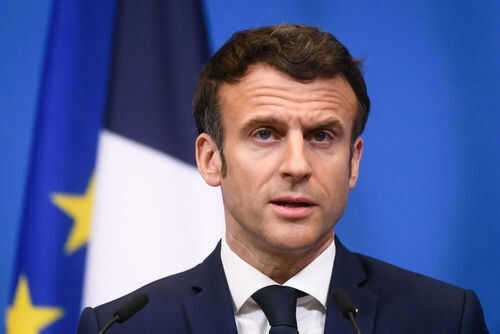
French President Emmanuel Macron announced March 9, 2026, in Cyprus that France will deploy an “unprecedented” naval force to the Middle East: 10 additional warships—reported as eight frigates and two amphibious helicopter carriers—alongside the aircraft carrier Charles de Gaulle. French messaging centers on escorting merchant shipping through the Strait of Hormuz and restoring “freedom of navigation” after traffic was choked off by the region’s widening conflict.
French officials also tied the deployment directly to European security after Iranian-made drones reportedly hit Cyprus—an EU member—and also struck a UK base on the island. Macron described the response as defensive, casting strikes on Cyprus as an attack on Europe itself. For American readers, the practical point is simple: when Hormuz stops moving, energy prices don’t stay “over there,” and the ripple reaches U.S. wallets fast.
Why the Strait of Hormuz Matters to U.S. Families
The Strait of Hormuz is a narrow maritime chokepoint that typically carries about 20% of global crude oil, making it one of the most economically sensitive waterways on Earth. The current disruption follows a broader regional war that broke out Feb. 28, 2026, with reports that much maritime traffic has been halted. In the past, even limited threats in the area have spiked prices; this time, the disruption is linked to active conflict.
Oil markets reacted sharply, with reports describing the largest one-day jump since the COVID era. That kind of volatility is exactly what fuels inflation pressure, especially on fixed-income households and retirees already wary of the “everything costs more” reality that defined much of the early 2020s. The uncomfortable truth is that the cost of instability in the Gulf shows up in commuting, groceries, and heating bills—no matter how far away the fighting sounds.
Europe’s Coalition Talk, and the Limits Behind the Headlines
France’s plan is described as coordinated with EU and non-EU navies, with multiple European partners discussed in reporting. The coalition picture matters because escort missions require persistent presence, air defense, and clear rules of engagement—especially with drones and missiles in play. Macron’s announcement referenced escorting ships, but reporting also notes there is no fixed timeline for when escorts through Hormuz will begin, suggesting operations depend on conditions improving.
The story also exposed a capability gap inside Europe. French reporting emphasizes that France’s force would outscale what the UK can put to sea quickly, while the UK contribution cited in coverage centers on a destroyer expected to sail within days. For U.S. observers, it’s a reminder that “strategic autonomy” rhetoric often collides with readiness reality, leaving allies leaning on the few fleets that can surge when events turn ugly.
Iran’s Threat Signaling, NATO’s Role, and the Escalation Risk
Reporting describes Iran warning of attacks on European targets tied to support for U.S.-Israeli operations, alongside a fast-moving set of incidents that widened the risk picture. One report described a missile fired at Turkey that was downed, drawing NATO into the broader regional security environment. Meanwhile, drone activity has been highlighted in multiple accounts, including incidents connected to Cyprus and UK facilities, reinforcing why air defense is central to any escort plan.
Macron characterized France’s mission as defensive, but escort operations near a contested chokepoint always carry escalation risk, especially if adversaries interpret multinational naval presence as pressure rather than protection. Analysts cited in reporting also described Iran employing psychological intimidation tactics toward Europe, aiming to shape political decisions without necessarily committing to the highest level of military attack. The bottom line: even “defensive” deployments can turn into long, expensive commitments.