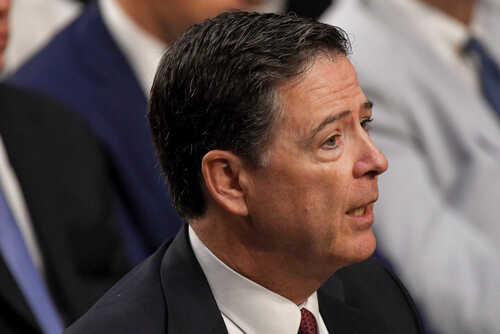
A sweeping Florida grand jury probe is forcing former FBI Director James Comey back into the spotlight, testing whether “accountability” can be pursued without turning the Justice Department into a political weapon.
Quick Take
- Federal prosecutors in the Southern District of Florida have subpoenaed James Comey as part of a “grand conspiracy” investigation tied to the Trump-Russia era and later Trump prosecutions.
- The investigation reportedly involves more than 130 subpoenas and is examining actions from 2016 through the present, including the 2017 Intelligence Community Assessment and Steele Dossier issues.
- Supporters say the probe could expose misuse of federal power against President Trump; critics argue it looks like retaliation and “forum shopping” in a Trump-friendly venue.
- No charges have been filed, and legal analysts caution that proving a wide-ranging conspiracy years later could be difficult, especially where statutes of limitations have run.
Comey subpoena signals broader push to revisit the Trump-Russia era
Federal investigators in the Southern District of Florida delivered a subpoena to former FBI Director James Comey last week, according to reporting that describes an expansive inquiry into an alleged “grand conspiracy” against President Trump. The probe is tied to the Trump-Russia investigation era and later Trump prosecutions, and it reportedly spans 2016 through the present. Reports say the effort has already generated more than 130 subpoenas, suggesting prosecutors are casting a wide net.
The inquiry’s focus includes the January 2017 Intelligence Community Assessment on Russian election interference, a document Comey helped shape while leading the FBI. Reports also connect the case to controversy surrounding the Steele Dossier, opposition research that has been widely criticized and described as discredited in later reviews. The practical question for Americans who watched years of investigations unfold is straightforward: is this a credible, evidence-driven reexamination, or another chapter in the cycle of politicized law enforcement?
Why Fort Pierce matters: venue, oversight, and the appearance problem
The grand jury is operating in Fort Pierce under U.S. District Judge Aileen Cannon, a Trump appointee whose prior high-profile rulings have already drawn national attention. That location is now central to arguments about legitimacy. Critics describe the choice as “forum shopping,” claiming the venue offers a more favorable jury pool for Trump-aligned prosecutors. Supporters counter that where misconduct is investigated should be driven by jurisdiction and evidence, not by the political preferences of commentators.
What makes the venue debate more than inside-baseball is the long-term institutional risk. When major criminal investigations appear tailored to a friendly district, trust in equal justice takes a hit regardless of party. Conservatives who felt the system was previously tilted against Trump will see a chance for overdue scrutiny. Americans who fear retaliatory prosecutions will see a warning sign. Either way, the justice system’s credibility depends on transparent procedures and provable facts, not slogans.
Targets, timelines, and the legal challenge of an all-encompassing “conspiracy” theory
Beyond Comey, reports say subpoenas have gone to or involved former officials such as ex-CIA Director John Brennan, former FBI figures Peter Strzok and Lisa Page, and former Deputy Director Andrew McCabe. The investigation’s apparent theory is that separate decisions and episodes—intelligence assessments, investigative steps, and later legal actions—can be tied together into a single prosecutable pattern. That is a high bar, especially when key events are nearly a decade old and have already been reviewed in other contexts.
Time is not a minor detail here. Reporting indicates prosecutors may be exploring conspiracy-style charges in part because certain alleged false-statement conduct would now be time-barred under typical statutes of limitations. That reality explains the investigation’s structure while also highlighting its vulnerability: if the legal theory is primarily a workaround to reach otherwise expired conduct, it will face intense scrutiny in court. So far, no charges have been announced, and prior related efforts reportedly stalled elsewhere.
Competing claims: accountability versus weaponization—both sides cite warning signs
Attorney General Pam Bondi has framed the investigation as an effort to address rules that were allegedly bent to protect Democrats while targeting Republicans, echoing a broader conservative complaint about two-tier justice. Meanwhile, attorneys for some subpoena recipients have described the conduct as irregular and politically pressured, with one lawyer calling it a “vendetta in search of a crime.” Those dueling narratives matter because they point to the same underlying issue: Americans want law enforcement to be tough, but also constrained.
The reporting also notes limits that conservatives should not ignore if the goal is lasting reform rather than a news-cycle win. Inspectors general and earlier reviews scrutinized aspects of the Russia probe but did not establish a sweeping criminal conspiracy in court-ready terms, and analysts question whether prosecutors can stitch together disparate acts into a single case. If the new investigation can produce concrete evidence and legally durable charges, it could strengthen faith that abuses get punished. If it collapses, it could deepen cynicism and normalize tit-for-tat prosecutions.
Sources:
Comey subpoenaed in alleged ‘grand conspiracy’ against Trump
James Comey subpoenaed in alleged ‘grand conspiracy’ against Trump
James Comey subpoenaed in conspiracy case against ex-officials, sources say