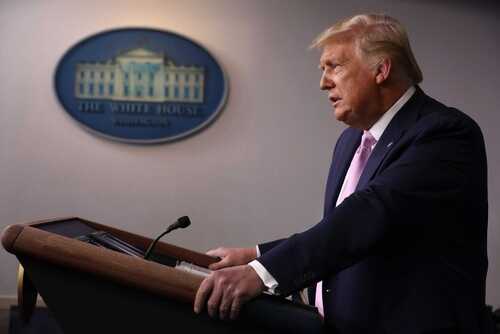
President Trump has announced his plan to eliminate mail-in voting through executive order before the 2026 midterm elections.
Story Highlights
- Trump promises executive order to ban mail-in voting nationwide before 2026 midterms
- Constitutional experts question federal authority to override state election laws
- Move targets voting method that expanded significantly during COVID-19 pandemic
- Legal challenges expected from states and voting rights organizations
Trump’s Executive Order Promise
President Trump announced on August 18, 2025, during an Oval Office meeting with Ukrainian President Volodymyr Zelenskyy that he will “lead a movement” to end mail-in voting in U.S. elections. Trump declared mail-in ballots “corrupt” and promised the Republican Party will do everything possible to eliminate them through executive action. The White House legal team is currently drafting the proposed executive order targeting the 2026 midterm elections.
President Trump released a Truth Social statement Monday morning announcing he will sign an executive order outlawing mail-in ballots nationwide… read more at https://t.co/dS9FPT2Qry pic.twitter.com/x9NAKYtUvT
— CPAC (@CPAC) August 18, 2025
Constitutional Authority Questions
Legal scholars and election experts immediately questioned Trump’s constitutional authority to unilaterally ban mail-in voting through executive order. The Constitution grants states primary responsibility for election administration, including setting voting procedures and ballot access methods. This fundamental principle of federalism creates significant legal obstacles for any federal executive attempt to override state election laws, particularly those already established by state legislatures.
Watch: Trump promises executive order to ‘get rid of’ mail-in ballots and voting machines
Historical Context and State Rights
Mail-in voting has existed in American elections for decades, with significant expansion during the 2020 COVID-19 pandemic to ensure voter safety. Since then, the debate has remained highly polarized between parties, with Republicans generally pushing for restrictions while citing election integrity concerns. Multiple states have already passed laws either tightening or expanding mail-in voting requirements, demonstrating the traditionally state-controlled nature of election administration that Trump’s executive order would challenge.
Election security experts consistently refute claims of widespread mail-in ballot fraud, pointing to security measures including barcodes, signature verification, and chain-of-custody protocols. Organizations like VoteAmerica emphasize that extensive safeguards make mail-in voting as secure as in-person voting, contradicting the fraud allegations driving Trump’s proposed ban.
Impact on Vulnerable Populations
The proposed mail-in voting ban would disproportionately affect elderly voters, disabled Americans, military personnel overseas, and other groups who rely on mail-in ballots for accessibility reasons. State and local election officials express concern about the logistical and financial challenges of rapidly restructuring voting procedures if such an executive order takes effect. The uncertainty surrounding potential implementation creates planning difficulties for election administrators preparing for the 2026 midterm elections.
The resulting litigation could create a precedent-setting constitutional battle over federal versus state authority in election administration, potentially reaching the Supreme Court before the 2026 midterms.
Sources:
Trump says he will sign executive order to ban mail-in voting before 2026 midterm elections