North Korea’s latest threat of “resolute counteraction” against the U.S.–South Korea Ulchi Freedom Shield drills exposes the persistent dangers to American interests and global stability from hostile, totalitarian regimes.
Story Snapshot
- North Korea vows “resolute counteraction” over upcoming U.S.–South Korea joint military exercises.
- Pyongyang’s warning is less inflammatory but signals continued hostility toward U.S. influence and regional order.
- Allied drills are scaled back due to severe weather, yet remain crucial for deterrence and readiness.
- North Korea’s deepening ties with Russia and ongoing militarization threaten the stability of the Korean Peninsula.
North Korea’s Threat: A Direct Challenge to U.S. and Allied Security
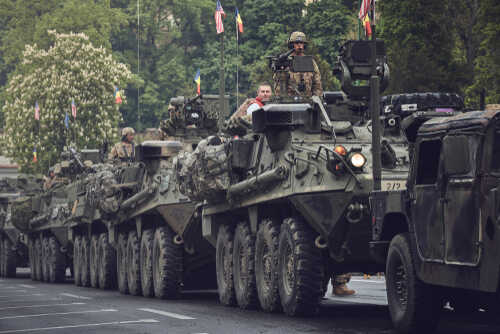
On August 11, 2025, North Korea’s defense minister publicly threatened “resolute counteraction” if the annual Ulchi Freedom Shield (UFS) joint U.S.–South Korea drills, set for August 18–28, were perceived as provocative. Despite the exercises being partially scaled back due to a heatwave and flooding, Pyongyang labeled them a direct military provocation, accusing the U.S. and its allies of threatening regional stability and sovereignty. This warning, though less inflammatory than in previous years, underscores North Korea’s ongoing hostility to America’s global presence and leadership.
Watch: N. Korea condemns planned ROK-U.S. exercises, threatens ‘self defense’ actions
North Korea’s rhetoric has shifted tactically, signaling a possible preference for careful calibration over open escalation. Analysts observed that this year’s language was noticeably less aggressive, suggesting Pyongyang seeks to maintain diplomatic leverage while still posturing as a military threat. This calculated approach complicates deterrence efforts and highlights an evolving security dilemma for the U.S. and its regional allies, who must balance readiness with efforts to avoid unnecessary escalation. The North’s warning comes as the regime further aligns with Russia, introducing additional uncertainty for U.S. interests in East Asia.
North Korea denounced a major joint exercise planned by the South Korean and U.S. militaries as "direct military provocation" and warned of counteraction. https://t.co/x7zR6prY7A
— NEWSMAX (@NEWSMAX) August 11, 2025
Background: Historic Tensions and Persistent Threats
The Korean Peninsula has remained technically at war since the 1953 armistice, with annual joint drills serving as critical defense measures for South Korea and the broader Indo-Pacific. North Korea has long denounced these rehearsals as invasion threats, using them to justify its rapid missile and nuclear development. The breakdown of U.S.–North Korea denuclearization talks in 2019 and subsequent military provocations by Pyongyang—including missile tests and cyberattacks—demonstrate the regime’s commitment to challenging U.S. power in the region. Unlike recent years, about half of this year’s field exercises have been postponed, but the core focus on cyber, kinetic, and nuclear readiness remains.
Regional Implications: Russia’s Role and the Erosion of Trust
North Korea’s deepening partnership with Russia further destabilizes the geopolitical landscape. As Pyongyang offers military support to Moscow in its ongoing conflict with Ukraine, the risk of spillover effects grows. The U.S.–South Korea alliance now faces not only a direct military threat from the North but also the challenge of Russian-backed provocation, which could embolden further defiance of international norms. This situation heightens alertness among U.S. forces, regional allies, and civilians in South Korea, who must remain vigilant against the potential for unexpected escalation.
The long-term consequences of this standoff include continued militarization, erosion of diplomatic trust, and the potential for increased humanitarian crises. Defense sector investments in missile and cyber capabilities are rising, while regional markets brace for volatility. America’s commitment to a strong, constitutional defense posture is more vital than ever as adversaries test the limits of international resolve.
Sources:
SAN News (Aug 11, 2025): US and South Korea combined exercise rankles the North
Stars and Stripes (Aug 13, 2025): North Korea drills mortar units ahead of US-South Korea drills