After years of Iran threatening global shipping, the Trump administration’s Operation Epic Fury is being reported as a near-total wipeout of Tehran’s Gulf of Oman surface fleet—raising the stakes for energy markets and U.S. resolve.
Quick Take
- U.S. Central Command (CENTCOM) publicized imagery and video claiming Iran’s Gulf of Oman fleet went from 11 ships to “zero” within days of strikes.
- Reports say key Iranian vessels were destroyed, including the drone carrier Shahid Bagheri and forward base ship IRIS Makran, with ship-loss totals varying by source.
- Iran’s closure of the Strait of Hormuz and the reported 85% drop in traffic puts immediate pressure on global energy flows and prices.
- U.S. officials say aircraft carriers remained operational despite Iranian claims; independent confirmation of some battlefield claims remains limited.
Operation Epic Fury Targets Iran’s Naval Power Centers
U.S. and Israeli strikes under Operation Epic Fury, reported as beginning February 28, 2026, focused heavily on Iran’s naval infrastructure and ships tied to the Islamic Revolutionary Guard Corps’ ability to intimidate traffic near the Strait of Hormuz. Military reporting highlighted attacks around major ports and facilities, including the Bandar Abbas area, a hub for naval operations. The key operational claim: Iranian surface combat power in the region was rapidly degraded over several days.
Multiple outlets described the destruction of headline vessels central to Iran’s recent “modernization” effort, including the Shahid Bagheri, described as a converted container ship with a ski-jump-style flight deck for drones, and the IRIS Makran, a forward base ship associated with longer-range operations. Those platforms symbolized Iran’s push for power projection—less about traditional blue-water parity with the U.S., and more about enabling drones, small craft, and harassment in chokepoints.
Competing Numbers, Similar Direction: Iran’s Fleet Took Heavy Losses
The precise count of ships destroyed remains one of the clearest areas of disagreement in publicly available reporting. President Trump was quoted in early March describing 9 ships sunk, later saying 10 were “knocked out,” while CENTCOM messaging pointed to a before-and-after comparison of 11 warships reduced to “zero” in the Gulf of Oman. That spread matters for analysts, but the overall direction is consistent: Iran suffered a major loss of usable hulls.
Visual evidence cited across coverage included satellite imagery and footage showing damage and fires at naval facilities, along with video releases attributed to CENTCOM that appeared to show ship strikes and post-strike conditions. Iran, for its part, issued counter-claims, including assertions that it had struck U.S. carriers—claims U.S. reporting treated as unverified and denied. Without independent access to Iranian bases, some details remain difficult to confirm beyond U.S.-aligned sourcing.
Hormuz Shock: Energy Chokepoint Pressure Meets U.S. Freedom-of-Navigation Goals
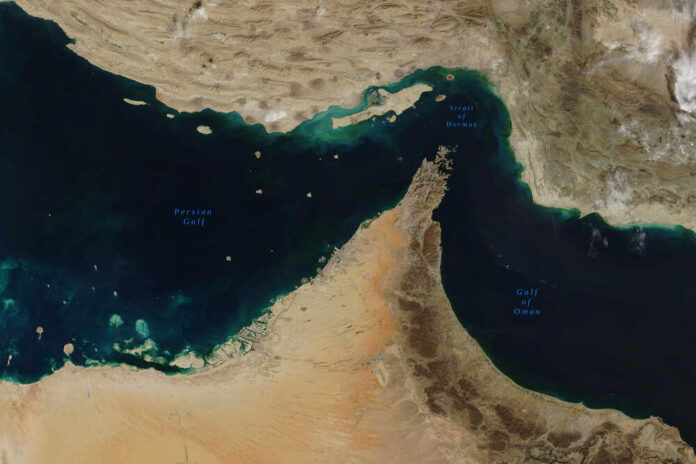
The most immediate global effect centers on the Strait of Hormuz, a narrow corridor through which a significant share of the world’s oil moves. Reporting tied Iran’s retaliation to a closure of Hormuz and a sharp reduction in maritime traffic—figures cited as an 85% drop. Even if temporary, that kind of disruption can ripple into fuel prices and broader inflation pressures, an issue that remains politically raw after years of fiscal strain and cost-of-living spikes.
From a conservative perspective grounded in the reporting, the strategic logic is straightforward: the U.S. Navy exists to keep sea lanes open and deter regimes that use coercion to extort the world economy. Iran’s doctrine has leaned on asymmetric tools—mines, swarming small boats, drones, and seizures—because it cannot match American naval power ship-for-ship. Degrading the mothership-style platforms and port infrastructure hits the enabling layer behind that harassment strategy.
What We Know, What We Don’t, and What Comes Next
Public reporting offers several points of clarity: the campaign’s start window, the emphasis on naval targets, and the destruction of specific named vessels. At the same time, major uncertainties persist, including how many Iranian ships remain serviceable outside the described area, how durable any Hormuz closure is in practice, and the extent of Iran’s ability to regenerate capability through dispersed small craft and shore-based missiles. Those gaps are normal in fast-moving conflict reporting.
Politically, the episode underscores a broader shift from the prior era’s cautious escalation management to a more decisive use of force under President Trump, at least as described in the available sources. Supporters will see an argument for deterrence restored; critics will focus on escalation risks. What’s not in dispute is that the strikes, if the reported damage holds, impose a steep cost on a regime that has long treated maritime pressure as a bargaining chip.
Sources:
U.S. Strikes Destroy Iran’s Main Naval Assets
9 Iranian naval ships have been destroyed and sunk, Trump says
Iran’s Key Naval Base On Strait Of Hormuz Set Ablaze From Strikes
Iranian Naval Forces are Major Target in Operation Epic Fury Strikes