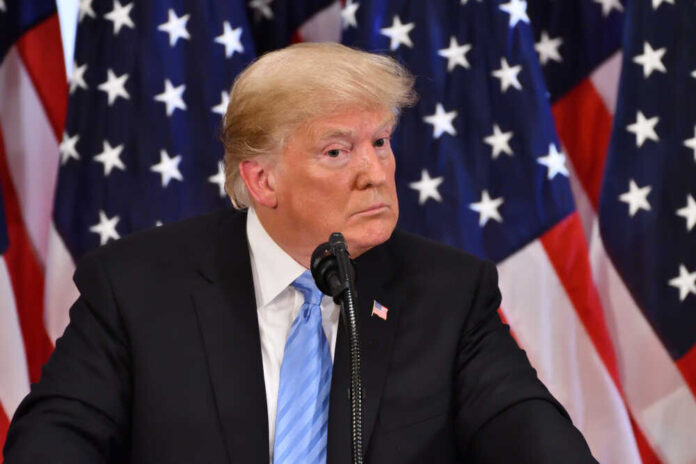
Trump’s Election Takeover Ignites GOP Fury
President Trump’s call for Republicans to “take over” elections in at least 15 states has ignited a constitutional firestorm, with even GOP leaders pushing back against a federal power grab that threatens the bedrock principle of state-controlled elections.
Story Snapshot
- Trump urged Republicans to “nationalize” voting in up to 15 states during a February 2026 podcast, citing unsubstantiated claims of illegal immigrant voting and fraud ahead of midterms
- White House clarified remarks support SAVE Act legislation requiring proof-of-citizenship and photo ID, not literal federal takeover
- Senate Majority Leader John Thune and House Speaker Mike Johnson oppose full nationalization, citing federalism and cybersecurity concerns
- Constitutional experts confirm Elections Clause reserves election administration to states, explicitly excluding executive branch control
- Justice Department already sued 24 states and D.C. demanding voter lists, while FBI raided 2020 ballots in Georgia’s Fulton County
Trump’s Federal Election Takeover Proposal
President Trump told Dan Bongino’s podcast on February 2, 2026, that Republicans must “take over” voting in states he labeled “crooked,” claiming Democrats enable undocumented immigrants to vote illegally. He repeated this demand during a February 3 Oval Office event with lawmakers and Cabinet members, arguing states acting as “agents of the federal government” must run elections honestly or face intervention. The White House later framed these remarks as support for the SAVE Act, legislation mandating in-person proof-of-citizenship, photo ID requirements, no-excuse mail-in ballot bans, and ending ballot harvesting. No evidence of widespread illegal immigrant voting has been provided, echoing Trump’s debunked 2020 election fraud claims.
Constitutional Barriers and GOP Resistance
The U.S. Constitution’s Elections Clause reserves election administration to states, with Congress permitted limited oversight but the executive branch explicitly excluded from control. Election law professor Justin Levitt of Loyola Marymount University confirmed Trump lacks unilateral authority to seize state election processes, a fact affirmed by CBS News constitutional analysis. Senate Majority Leader John Thune cited cybersecurity risks in nationalizing elections, while House Speaker Mike Johnson and Rep. Don Bacon opposed federal control, favoring decentralized state authority. This represents a critical defense of federalism, a foundational conservative principle now under threat from within Republican ranks.
Justice Department and FBI Escalation
Trump’s rhetoric aligns with aggressive federal actions already underway. The Justice Department has sued 24 states and Washington D.C. demanding comprehensive voter lists, tracked by the Brennan Center for Justice as an unprecedented overreach. The FBI recently raided 2020 ballots in Fulton County, Georgia, an action election experts characterized as a potential “dry run” for broader interventions. Former Maricopa County recorder Stephen Richer noted the GOP’s disturbing drift from federalism, warning these FBI actions set dangerous precedents. Michigan Republicans separately requested federal monitors and oversight, contrasting broader Republican resistance but signaling intra-party divisions on election control ahead of the 2026 midterms.
Echoes of 2020 and Weakened Guardrails
Trump’s 2026 push mirrors his 2020 pressure campaign against officials like Georgia’s Brad Raffensperger and Pennsylvania’s Al Schmidt, which stalled due to Republican resistance and court rejections. Former election officials told Votebeat that guardrails protecting state autonomy are weaker now, with Trump wielding executive power and fewer internal checks. The risk of “preemptive obedience” among officials fearing retaliation has grown, particularly as Trump targets likely Democratic-leaning states. Professor Levitt warned that without consistent pushback, Trump’s messaging will worsen, though he emphasized officials retain constitutional agency to resist. Courts dismissed dozens of 2020 fraud lawsuits, and former Attorney General Bill Barr debunked Trump’s claims, yet the narrative persists absent credible evidence.
Trump suggests Republicans should nationalize voting. Here's what to know. https://t.co/mx2tXD8rvv
— CBSColorado (@CBSNewsColorado) February 4, 2026
The tension between election integrity concerns and constitutional limits defines this moment for conservatives. The SAVE Act’s citizenship verification and photo ID mandates address legitimate worries about ballot security, principles that resonate with voters frustrated by lax standards in some jurisdictions. However, a wholesale federal takeover of state elections would obliterate the Tenth Amendment’s reserved powers, a move antithetical to limited government and individual liberty. True election reform must strengthen verification without centralizing power in Washington, preserving the federalist framework our founders established to prevent tyranny. The path forward requires Republicans to champion secure elections while defending constitutional boundaries against overreach from any source.
Sources:
Trump suggests Republicans should nationalize voting. Here’s what to know – CBS News
Election officials: 2020 guardrails weaker as Trump seeks to nationalize voting – Votebeat
Trump Wants to Take Over Voting. Mike Johnson Is Willing to Help – Democracy Docket
Trump says he wants Republicans to nationalize elections – KOSU