Panama’s highest court is now the battleground for a dramatic showdown over Chinese control of the nation’s most vital ports—a fight that could redefine sovereignty in the U.S. backyard.
Story Snapshot
- Panama’s Comptroller General has filed lawsuits to nullify a decades-old contract with a China-linked port operator, citing “abusive” terms and threats to national sovereignty.
- The controversial contract, automatically renewed in 2021, allegedly cost Panama over $300 million and bypassed proper state oversight.
- President Mulino is backing the lawsuits, calling for a new era of port policy and greater national control over strategic infrastructure.
- The legal battle underscores rising concerns about Chinese influence in the Americas and its implications for U.S. interests and regional security.
Panama’s Supreme Court Faces Historic Test Over Chinese-Controlled Ports
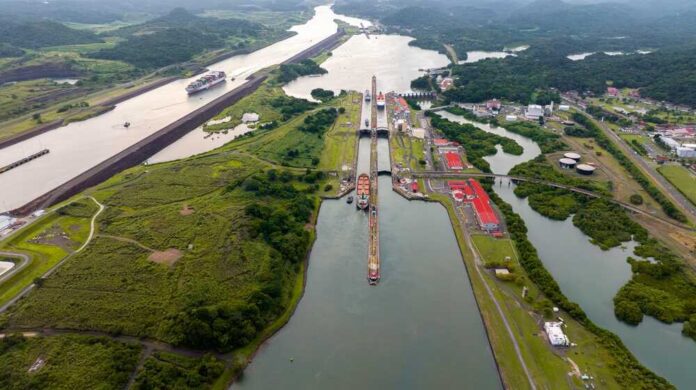
Panama’s Supreme Court of Justice has become the arena for a high-stakes struggle over control of the Balboa and Cristóbal ports, which flank the world’s most strategic shipping corridor. On July 30, 2025, Comptroller General Anel Flores filed lawsuits to annul the contract with Panama Ports Company (PPC), a subsidiary of Hong Kong’s Hutchison Port Holdings. Flores’ move is an unprecedented direct challenge that accuses the deal of “abusive” and “leonine” terms, pointing to irregularities and a lack of proper state endorsement, especially in the 2021 renewal that extended Chinese management for another quarter-century.
Panama Brings ‘Abusive’ Ports Contract with China-Linked Company to Supreme Courthttps://t.co/c4gQvXXrDO
— Michael P Bryant (@MichaelPBryant2) July 31, 2025
President José Raul Mulino has publicly thrown his support behind this legal offensive, echoing widespread frustration among Panamanians who see the port contract as a symbol of lost revenue and foreign encroachment. Mulino has called for a new port policy, asserting that the nation “has paid dearly” for the lack of oversight and transparency that allowed the contract to persist despite mounting evidence of financial losses exceeding $300 million.
Decades of Chinese Control under Fire
The roots of this controversy stretch back to 1997, when Panama’s government granted PPC a 25-year concession to run both ends of the canal. That same contract included an automatic renewal clause that kicked in during 2021, reportedly without the required Comptroller endorsement and with little public scrutiny. The result: a Chinese-controlled operator retained control of infrastructure critical not just to Panama, but to global shipping and U.S. national interests—raising alarms among security analysts and American policymakers alike.
Audits by the Comptroller’s office have uncovered what officials describe as significant breaches, with the Panama Maritime Authority accused of misrepresenting financial data. The lawsuits now challenge not just the contract’s legality but its constitutionality, framing the issue as one of national sovereignty—and, by extension, a test of Panama’s ability to reclaim control from foreign powers that have long leveraged “colonial”-style agreements[1][2].
Panama Brings ‘Abusive‘ Ports Contract with China-Linked Company to Supreme Court https://t.co/c6Hl6L3XMj via @BreitbartNews
— Ares Unchained (@AresUnchained) July 31, 2025
Implications for Panama, the U.S., and Global Trade
Legal uncertainty now hangs over the operation of Panama’s most important ports. If the lawsuits succeed, Panama could renegotiate or terminate the Chinese contract, potentially setting a precedent for reviewing other foreign infrastructure deals in the region. For American interests, a rollback of Chinese control at the canal’s gates would be a strategic win, realigning the region closer to U.S. influence and security priorities.
For Panamanians, the controversy has become a rallying cry for sovereignty and good governance—a chance to reclaim control of their country’s destiny after decades of what many see as foreign exploitation. The outcome of this legal battle will send a powerful message about the region’s future direction, the limits of foreign influence, and the enduring importance of defending national interests.
Sources: