
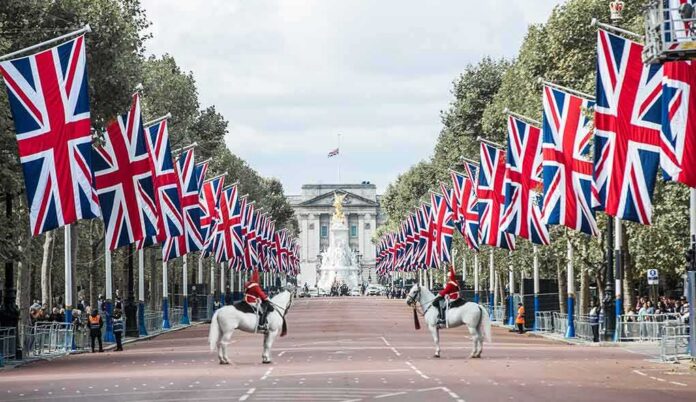
A British city council moved to use court power to strip Union Jack and St George’s Cross flags from public view in the name of “safety.”
Story Snapshot
- Birmingham City Council applied for a High Court injunction to stop unauthorized flags on public fixtures.
- The council says removals protect safety, manage roads lawfully, and reduce tensions.
- Critics say the row divides locals and chills simple national pride.
- Recent Oxfordshire rulings are shaping a national blueprint for such bans.
Council Seeks Court Order To Halt Flag Displays On Public Structures
On August 26, Birmingham City Council applied to the High Court for an injunction to stop people from attaching British and English flags to street fixtures like lampposts and railings. The application targets an anti-migration campaign, Raise the Colours, which has hung Union Jack and St George’s Cross flags around the city. The council says the move follows an evidence-led process focused on safety, proper road management, and community cohesion.
The council’s public statement says any items attached to lamp columns, railings, or other street furniture without permission “are not allowed and will be removed.” Officials warn that unauthorized attachments can obstruct maintenance and pose risks to workers, drivers, cyclists, and pedestrians. The authority also links the activity to heightened local tensions in some areas. The policy applies to flags, bunting, posters, and other materials placed on public structures without consent.
How Injunctions Turn Street Disputes Into Enforceable Court Orders
The Birmingham filing sits inside a wider legal trend in Britain. Councils and public bodies increasingly use civil injunctions to shift recurring street conflicts into the courtroom. Courts have granted similar orders against highway disruption and unauthorized attachments, including a recent case in Oxfordshire. There, judges made an injunction permanent against placing flags on highway infrastructure, citing trespass, obstruction, and safety concerns, and set a path other councils can copy.
These injunctions can carry sharp penalties for contempt of court if breached. That power makes enforcement swift once a judge agrees an order is needed. Supporters say this protects road workers and the public and keeps infrastructure clear. Critics argue the tool can chill civic expression, because it can sweep in “persons unknown” and last for years. Birmingham’s leaders frame their ask as targeted at unauthorized fixtures, not a ban on lawful flag-flying with permission.
Community Reaction: Pride, Peace, And A Public Line In The Sand
Local voices show a split. Some residents say street flags boost pride and do no harm. One man told reporters he saw “absolutely no problem with it.” Others back the council and say the displays fuel division. Local coverage describes the city as “divided” over the issue and notes the proposed order would not affect flags on private property or permitted flags on public buildings.
Birmingham City Council seeks High Court injunction to stop unauthorised flags
The Council said unauthorised attachments to street furniture 'can create highway safety risks, obstruct visibility, and contribute to tensions &disorder'https://t.co/QfYEtoBoiT
— Pickles U Fat Get (@torysmasher) September 1, 2026
Advocacy groups hostile to the campaign say the flag surge is not harmless. They call it an organized push that targets migrants and stokes fear, and they want authorities to treat it as intimidation, not only a safety matter. Supporters of the displays reject that framing and cast the flags as ordinary patriotism. Raise the Colours has said it had not yet reviewed full court papers and could not comment on the detailed claims at this stage.
What It Means For Free Expression And Order On The Streets
If the High Court grants Birmingham’s application, city crews will have clearer legal cover to remove new flags and deter repeat activity. The order would mark another step in a growing set of cases where courts treat unauthorized fixtures as trespass and obstruction, not protected protest. The facts show the council says this is about safety and stewardship, not outlawing the Union Jack. The effect, however, will be fewer public flags without prior approval.
For conservative readers in the United States, the stakes are familiar. Government can claim “safety” while curbing common expressions many people see as normal and proud. Birmingham says permitted flags remain fine. Yet the court tool they seek is broad and strong. It turns a simple act—hanging a flag on a lamppost—into a contempt risk once a judge signs. That is why this British fight matters beyond one city’s streets.
Sources:
townhall.com, bbc.com, birmingham.gov.uk, theguardian.com, x.com, inshorts.com, newstatesman.com