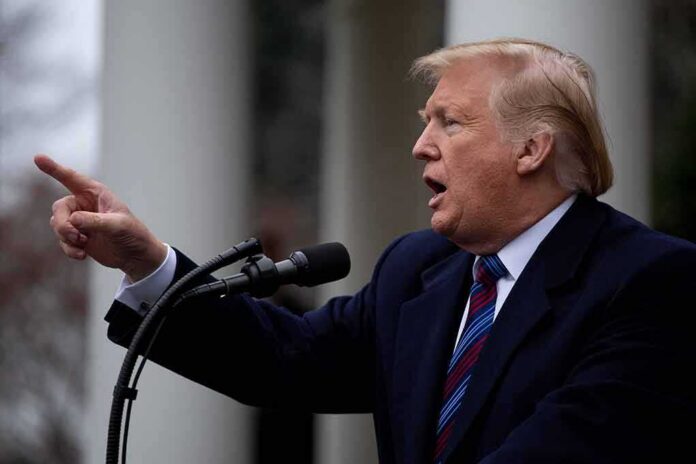
President Trump signaled he may ask Europe to release diesel reserves to help cut fuel costs at home, as his team presses allies to move fast.
Story Snapshot
- Trump said he may ask European countries to tap diesel reserves to ease prices.
- Reports say the White House had already explored this option with partners.
- U.S. officials urged Europe to make extra supplies available immediately.
- Reuters reported pressure on Germany and France tied to a possible export limit.
Trump Signals Push for European Diesel to Ease U.S. Prices
President Trump said he may ask Europe to release diesel reserves as prices climb and supply tightens. His remark came as several outlets reported the United States urged allies to move fuel into the market now. The public line matches a push to ease price pressure on truckers, farmers, and working families. Anadolu quoted Trump saying, “We may do that. They have some diesel”. BBC and others reported the administration’s call for immediate action by partners.
Politico reported the White House had already considered a European stock release before Trump’s public comment. Sources familiar with talks said the plan was on the table as one option to address tight diesel supplies. That reporting places the President’s remark within an active policy track, not a stray idea. It also shows coordination across agencies focused on energy, trade, and inflation control through supply measures rather than higher taxes or new mandates.
Direct Pressure Reported on France and Germany
Reuters reported that U.S. officials told Germany and France to draw down emergency diesel inventories or face a possible U.S. diesel export limit. That tactic aims to boost supply where stocks are concentrated and to keep more barrels at home if allies do not act. Such pressure is unusual but not without precedent during energy crunches, when governments use reserve tools to blunt price spikes and protect critical sectors like freight.
The idea fits a broader pattern in crisis energy policy. The United States and other International Energy Agency members hold emergency stocks for supply shocks. Past releases focused on crude oil, but diesel is now the pinch point that hits food delivery, farming, and construction hardest. Using reserves to smooth supply can reduce short-term pain for families and small businesses. It also signals that the administration will use leverage abroad before restricting American producers at home.
What Europe Holds and Why It Matters Now
Reuters data show European Union countries hold large emergency gasoil and diesel stocks, with Germany and France together accounting for about a third of those reserves. Tapping part of those inventories could cool prices during a tight window and free up trade flows to the United States and other markets. That step would align with past coordinated actions designed to counter supply shocks and stabilize essential fuels that keep economies moving.
The U.S. Shared the Last of Its Crude Buffer. Now it Wants Europe’s.
The U.S. just released the last of its committed diesel. Now, it’s asking Germany and France to pony up, or risk an export ban by the https://t.co/CO83Wl3K1o’s the situation: America's Strategic Petroleum…
— TechAndTensions (@Berlin8x6) October 1, 2026
France24 and other outlets reported that U.S. officials urged Europe to make additional supplies available immediately. The message aims to speed up deliveries, not just authorizations, so barrels hit the market in days and weeks, not months. Quick relief helps truckers and commuters who feel price jumps right away. A narrow caveat remains: Trump’s own phrasing used “may,” which signals an active consideration rather than a final directive at the time of the remarks.
How This Fits Conservative Goals on Energy and Inflation
The push favors supply-side solutions over new spending or rules. Asking allies with ample diesel to share in a crunch defends family budgets, restrains inflation, and keeps small businesses running. It also avoids draining America’s crude reserves further while still easing fuel costs. If Europe moves first, the United States can hold more of its own buffer for a true emergency, while keeping pressure on global suppliers who benefit from tight markets and high prices.
Next Steps to Watch
Watch for on-record statements from European energy ministries confirming volumes and timing of any drawdown. Look for U.S. notices that would govern exports if Europe declines or moves too slowly. Track delivery schedules and spot prices in key hubs to see if reserve barrels arrive and prices fall. Clear readouts would show whether the diplomatic push results in actual barrels on the water, which is what matters for truck stops, farms, and families paying at the pump.
Sources:
insiderpaper.com, bbc.com, lemonde.fr, reuters.com, finance.yahoo.com, aa.com.tr, telegraph.co.uk