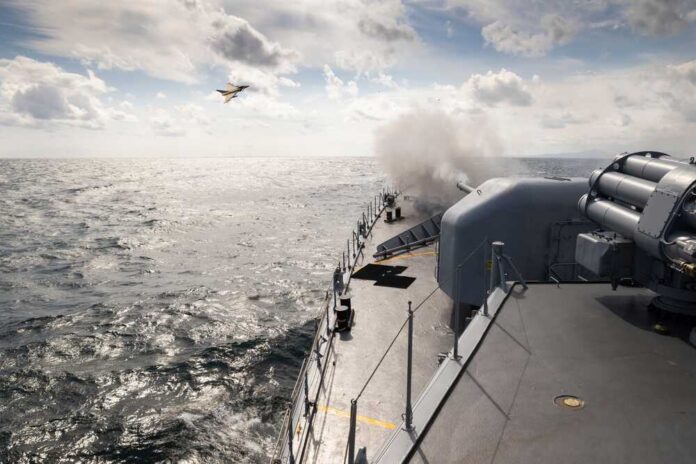
The Navy is moving ahead with a plan to homeport up to nine McClung-class medium landing ships at Pearl Harbor, and the project now carries a formal environmental review tied to new wharf work and roll-on, roll-off facilities.
Quick Take
- The Navy plans to base up to nine medium landing ships at Joint Base Pearl Harbor-Hickam.
- The plan includes a new berthing wharf on Ford Island and roll-on, roll-off support facilities.
- The ships are meant to help Marine Corps operations in the Pacific, including area denial and sensing.
- The Navy opened a public comment period and is holding a public meeting on the project.
What the Navy Is Planning
The United States Department of the Navy says it is preparing an Environmental Impact Statement for the homeporting plan at Joint Base Pearl Harbor-Hickam. The proposed action would place up to nine Medium Landing Ship-class vessels at the base and would include demolition of an existing wharf, construction of a dedicated berthing wharf along Ford Island, and roll-on, roll-off facilities to support the ships.
The Navy’s own project materials say the public comment period runs from June 24 through July 24, 2026, and that a public meeting is set for July 13 at the Oʻahu Veterans Center. Reporting from Stars and Stripes said the Navy expects to finish the environmental study by late summer 2027 and plans to begin taking delivery of the ships in 2029. That timeline shows this is still a planning and review process, not a finished buildout.
Why the Fleet Wants These Ships
The McClung-class ships are being built for the Marine Corps’ future fight in the Pacific. Reporting says the ships are meant to support area denial and sensing operations, which fits the broader Marine Corps idea of moving smaller forces and equipment across island chains rather than relying only on large amphibious assault ships. That approach is designed for the kind of contested Pacific environment the Pentagon has focused on for years.
Defense reporting also says the Navy approved the McClung-class design in December 2025 and has linked the class to expeditionary advanced base operations and distributed wartime operations. In plain terms, these ships are meant to help Marines move quickly, set up, and support operations from smaller positions ashore. The Navy has also said it expects the class to close a mobility gap for the Marine Corps.
Why Pearl Harbor Matters
Pearl Harbor gives the Navy a strategic home for Pacific operations, but it also places more military construction inside a place that has long seen disputes over land, culture, and environmental impact. Hawaii has a long history of military buildup and public pushback, especially when projects touch sensitive shorelines or heritage sites. This plan is no different, because it places new wharf work near Ford Island and the USS Utah Memorial.
That location will matter to local residents, because the Navy’s preferred berth site is on the northern shoreline of Ford Island and would replace an existing wharf with a slightly different footprint. Stars and Stripes said the change would create a larger buffer from the USS Utah Memorial, which sits where the battleship was sunk in 1941. Even so, the project will draw close scrutiny from people who have watched Hawaii’s military footprint expand for generations.
What Comes Next
The next step is public review. The Navy is taking comments through July 24 and has posted project materials for the Environmental Impact Statement process. That makes the project part of a larger pattern in Hawaii, where military expansion often moves forward only after environmental and cultural review sparks strong debate. For supporters, the plan strengthens America’s Pacific posture. For critics, it is another sign of how much land and shoreline the military still wants to control.
Sources:
realcleardefense.com, news.usni.org, natsecpulse.com, facebook.com, culturalsurvival.org, civilbeat.org, youtube.com