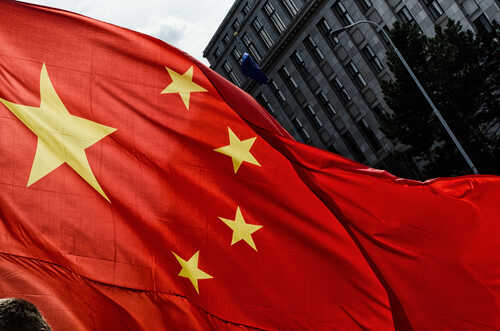
China just showed Europe how easily Beijing can weaponize trade to punish anyone who helps Taiwan defend itself.
Quick Take
- China announced export restrictions on seven European entities tied to Taiwan-related arms sales or supplies.
- Beijing framed the move as a sovereignty issue under its “One China” position, treating Taiwan as a red-line dispute.
- Early reports did not name the seven entities, and no official EU or company responses were widely quoted in initial coverage.
- The curbs risk disrupting niche defense supply chains while adding new strain to already-tense EU-China economic ties.
China’s New Play: Export Controls as Political Punishment
China’s Ministry of Commerce said it imposed export curbs on seven European entities connected to arms sales or supplies involving Taiwan, according to multiple reports published the same day. The announcement came on a Friday and was described as an immediate restriction rather than a warning. Beijing’s message was straightforward: involvement with Taiwan’s defense sector can trigger economic consequences, even for firms operating inside the European Union.
The lack of detail is part of what makes the announcement consequential. Initial coverage indicated the targets were European, defense-sector entities, but the reporting available did not include the names of the seven organizations or a full breakdown of what goods, components, or technologies are covered. That uncertainty can create compliance risk across a broader network of suppliers—because companies often tighten transactions beyond what’s legally required when rules are unclear.
Taiwan, “One China,” and Why Beijing Keeps Escalating with Commerce
China’s objection to foreign arms support for Taiwan is rooted in its “One China” policy, under which Beijing claims Taiwan as part of China and rejects actions that treat Taiwan as a separate political entity. By tying export restrictions directly to Taiwan-linked defense dealings, China is using the leverage it knows best: access to its market and its role in global supply chains. The approach mirrors earlier precedents aimed at U.S. defense firms over Taiwan-related deals.
European businesses have long assumed trade could be kept somewhat separate from geopolitical disputes, especially when the EU tries to balance commerce with values-based diplomacy. This episode challenges that assumption. The reports describe the move as retaliation aimed at deterring arms flows to Taiwan. That makes it less about a narrow trade compliance question and more about whether Beijing can pressure Europe into limiting what it sells, repairs, or transfers—directly or indirectly—into Taiwan’s defense ecosystem.
What the Curbs Could Mean for EU Defense Firms and Supply Chains
The most immediate impact is potential disruption for the targeted firms, particularly if they rely on Chinese-origin inputs, specialized materials, or downstream manufacturing steps. Even if a company does not sell heavily into China, export controls can complicate procurement and logistics, forcing redesigns, substitutions, or new vendor qualification. Over time, the defense sector can drift toward bifurcated supply chains—one set aligned with China and another aligned with the U.S., Europe, and partners.
Because the initial reports did not identify the seven entities, it is hard to quantify market exposure, revenue risk, or the specific bottlenecks likely to appear. That limitation matters for investors and policymakers trying to judge scale. Still, the political direction is clear: China is willing to apply entity-specific restrictions to impose costs. For Europe, the question becomes whether strategic industries can stay resilient without accepting Beijing’s implied conditions on Taiwan-related policy choices.
Why This Matters in Washington and Across the West
For U.S. audiences, this episode is a reminder that trade dependency can become a vulnerability quickly, especially when authoritarian states treat commerce as leverage. The Trump administration and a GOP-led Congress have emphasized reducing exposure to hostile supply chains and strengthening friendly production networks. If Europe faces penalties for defense ties with Taiwan, it could push more allies toward the same conclusion: industrial capacity and secure sourcing are national-security issues, not just economic ones.
BREAKING – 🇨🇳🇪🇺 China says imposed export curbs on 7 European entities over Taiwan arms sales
— Technopolitik (@Technopolitik_) April 24, 2026
Politically, the development also lands in a moment when many voters—right and left—believe elites are too slow to confront obvious risks, whether that’s energy dependence, outsourcing, or supply-chain fragility. The facts available so far show a coercive tactic: using export restrictions to influence another region’s security relationships. What remains unclear is how the EU will respond, whether any countermeasures follow, and whether this expands beyond seven entities as the Taiwan dispute intensifies.
Sources:
China says imposed export curbs on 7 European entities over Taiwan arms sales
China slaps 7 EU firms with export restrictions over Taiwan linked arms
China says imposed export curbs on 7 European entities over Taiwan arms sales