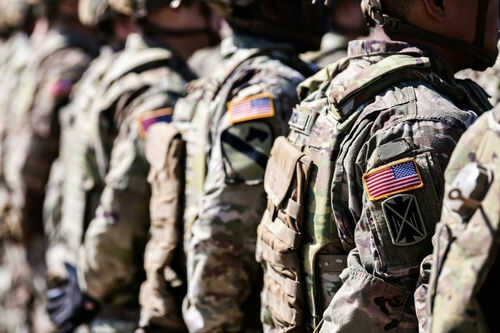
Six U.S. Army Reserve soldiers paid the ultimate price when an Iranian drone struck their logistics base in Kuwait, exposing the deadly reach of Tehran’s retaliation against American forces supporting Operation Epic Fury.
Story Snapshot
- Iranian drone strike killed six U.S. Army Reserve soldiers at Port of Shuaiba, Kuwait, on March 1 during Operation Epic Fury
- All victims served with the 103rd Sustainment Command from Des Moines, Iowa, providing logistical support far from frontlines
- Pentagon identified four soldiers: Capt. Cody Khork, Sgt. 1st Class Nicole Amor, Sgt. 1st Class Noah Tietjens, and Spc. Declan Coady
- Attack marks first confirmed U.S. combat deaths in the U.S.-Israel air campaign against Iranian military targets
- Two additional victims remain unidentified pending family notification as investigation continues
Deadly Drone Attack Claims American Lives
Iranian forces launched a retaliatory drone strike on March 1, 2026, targeting U.S. military facilities at Port of Shuaiba and Camp Arifjan in Kuwait. The unmanned aerial vehicle struck a command center and housing unit, killing six American soldiers and wounding several others with shrapnel and blast injuries. CENTCOM initially reported three killed in action on March 2, revised to four later that day, before confirming the final death toll of six on March 3. The attack occurred as Iran unleashed widespread counterstrikes across U.S. bases in Kuwait, Israel, Bahrain, UAE, Qatar, and Cyprus following the launch of Operation Epic Fury.
Heartland Heroes Identified
The Pentagon released names of four fallen soldiers between March 2-4: Captain Cody A. Khork, 35, from Lakeland, Florida; Sergeant First Class Nicole M. Amor, 39, from White Bear Lake, Minnesota; Sergeant First Class Noah L. Tietjens, 42, from Bellevue, Nebraska; and Specialist Declan J. Coady, 20, from Des Moines, Iowa. All served with the 103rd Sustainment Command based in Des Moines, providing critical logistics support for the ongoing military operation. Two additional victims remain unnamed as the military works to notify their families. These soldiers represented the backbone of America’s military capability, handling supply chains and sustainment operations essential to combat readiness.
Operation Epic Fury Escalation
The U.S. and Israel launched Operation Epic Fury on February 28-March 1, 2026, conducting preemptive air strikes against Iranian military infrastructure. American and Israeli forces hit over 1,700 targets across Iran in the operation’s first 72 hours, marking a significant escalation in Middle East tensions. Former military aviation experts noted Iran’s conventional military capabilities degraded significantly under the assault, yet warned that asymmetric threats like drone warfare remain potent dangers. The operation stems from escalating Israel-Iran proxy conflicts, with Tehran viewing the strikes as an existential threat requiring forceful response against U.S. regional assets.
Reserve Component Vulnerabilities Exposed
The attack highlights critical vulnerabilities facing U.S. military personnel stationed at logistics hubs throughout the Middle East. Army Reserve soldiers performing sustainment missions operate in areas previously considered relatively secure, yet Iran’s drone capabilities demonstrated these rear-echelon positions face grave danger. Lieutenant General Robert Harter praised the fallen as representing the “heart of America” who served fearlessly. The strike disrupted logistics operations at Kuwait’s vital port facilities while damaging housing and command infrastructure. This reality check underscores warnings from military analysts like Adam Weinstein of the Quincy Institute, who predicted Iran would inflict pain on U.S. troops, embassies, and civilians in retaliation.
Army Secretary Daniel Driscoll honored the soldiers who “bravely volunteered” while local political leaders from Iowa, Nebraska, Minnesota, and Florida called for prayers and tributes. The tragedy struck hardest in Des Moines, where the 103rd Sustainment Command maintains its headquarters, and surrounding heartland communities that sent their sons and daughters to serve. Beyond the six deaths, additional service members sustained serious injuries requiring medical treatment, further straining unit cohesion and morale. The Trump administration continues Operation Epic Fury as investigations proceed into the March 1 attack, with two families still awaiting official notification about their loved ones.
Sources:
Responsible Statecraft – Servicemembers Killed in Operation Epic Fury
The National Interest – First American Planes Shot Down in Operation Epic Fury by Friendly Fire