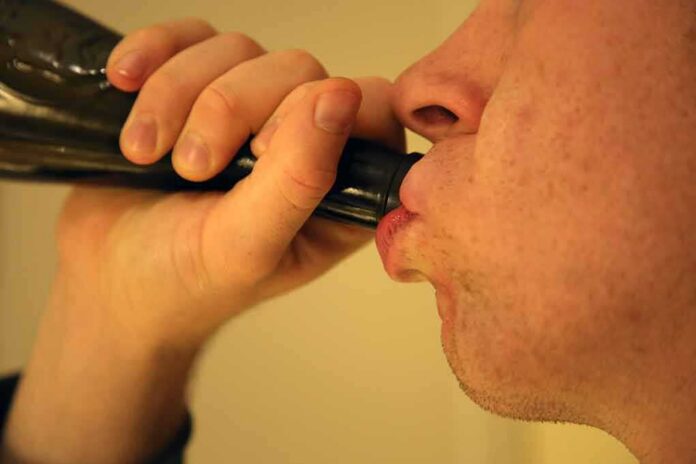
A 25-year-old’s eyes turned yellow from alcohol-driven liver damage, a stark sign of a youth drinking crisis that experts say is rising fast.
Story Snapshot
- A British man says doctors diagnosed alcohol-related liver disease after his eyes turned yellow at 25.
- He reports years of extreme drinking, including heavy vodka and strong cider intake.
- Medical references confirm heavy drinking can trigger jaundice and severe liver injury.
- Studies show alcohol-related liver disease is growing among young adults worldwide.
Visible Jaundice Led To Fast Diagnosis
Winson says he called an ambulance after noticing the whites of his eyes had turned yellow at age 25. Hospital staff told him he had alcohol-related liver disease and discussed transplant risk. He described being “completely yellow and jaundice,” which signals high bilirubin and stressed liver function. Later, he said his bilirubin measured 403 on admission, a level in line with severe jaundice, before falling with recovery and sobriety.
National health guidance explains that alcohol-related liver disease comes from drinking too much, too often, over time. It warns that yellow eyes or skin, called jaundice, can appear when the liver is inflamed or failing to clear bilirubin. That symptom requires urgent care because it can point to serious alcohol-associated hepatitis or other liver injury. These references align with Winson’s report of visible jaundice and rapid clinical concern.
Self-Reported Intake Showed Severe, Prolonged Use
Winson told reporters he drank a litre and a half of vodka daily during part of a seven-year addiction. He later moved to large volumes of strong white cider. He also described seizures and hallucinations when he tried to quit on his own, which are known features of severe withdrawal in dependent drinkers. He has since stated publicly that alcoholism brought him liver disease at 25, and that he is now sober.
His later comments add details about recovery. He said a scan showed his liver was no longer fatty or enlarged, and a stiffness test showed no remaining scarring. Those statements suggest improvement after he stopped drinking. They also match medical guidance that some alcohol-related damage can heal with sustained abstinence, though advanced scarring can be permanent.
A Growing Young-Adult Liver Crisis
Peer-reviewed research finds alcohol-related liver disease rising among young adults. One global review reports higher prevalence in ages twenty to forty-five and notes that alcohol has become a leading cause of liver transplant in the United States and Europe. That trend means a case at age twenty-five is troubling but not rare. Public health researchers have also found increasing hospitalizations for alcohol-associated liver disease in younger age groups.
Major medical centers warn that heavy drinking can inflame the liver and cause jaundice. They explain that when inflammation is strong enough to turn the eyes and skin yellow, doctors may diagnose alcohol-associated hepatitis, which can be life-threatening. They stress that stopping alcohol use is the key step, often paired with hospital care, nutrition support, and monitoring for bleeding or infection.
What This Means For Families And Communities
Parents and spouses should know the alarm signs. Yellow eyes, belly swelling, confusion, or vomiting blood need urgent care. Doctors say steady heavy drinking drives most alcohol-related liver disease, and the body often gives warnings before failure. Simple steps help: count drinks, take alcohol-free days, and get help early if quitting triggers shakes or anxiety. Primary care teams can check liver tests and point to treatment options that protect life and family stability.
For many readers, this story cuts close to home. Our communities value personal responsibility, strong families, and honest talk about risk. Alcohol can wreck health, drain savings, and strain marriages. But recovery is possible, and early action saves lives. This case shows the tipping point can arrive fast and young. Do not wait for yellow eyes. Set firm limits, back loved ones who seek help, and keep faith that discipline and support can turn a hard corner.
Sources:
mirror.co.uk, youtube.com, linkedin.com, itv.com, nightingalehospital.co.uk, nhs.uk, my.clevelandclinic.org, mayoclinic.org, pubmed.ncbi.nlm.nih.gov