
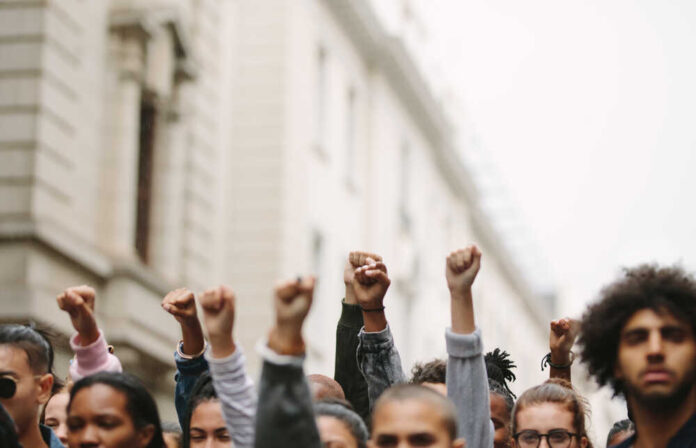
Protesters delivered a coffin to the home of GOP Congressman Bryan Steil in a dramatic escalation of political activism that has renewed national debate over the boundaries between protest and intimidation.
Story Highlights
- Activists staged a mock funeral at Rep. Bryan Steil’s private residence, leaving a cardboard coffin and flowers on his doorstep.
- Organizers claim the demonstration symbolized the “Death of Democracy” in response to Steil’s votes on healthcare and election law.
- Steil condemned the action as intimidation, while protest groups defend it as necessary for political accountability.
- The incident underscores a surge in direct actions targeting lawmakers and intensifies calls for increased congressional security.
Protesters Bring Political Theater to GOP Congressman’s Doorstep
More than two dozen activists, including members of the Southern Wisconsin Grassroots Network and the Working Families Party, marched to the home of Congressman Bryan Steil (R-WI) carrying a cardboard coffin, ringing cowbells, and donning black attire. The event, staged on June 19, 2024, was filmed and widely shared on social media. Protesters dropped the faux coffin and flowers on Steil’s front porch, declaring the act a symbolic funeral for American democracy and denouncing the congressman’s recent votes as harmful to public welfare.
Protesters deliver coffin to GOP congressman’s front door in mock funeral procession, wild video shows https://t.co/LTPSz7tJTF pic.twitter.com/dCW5ueYK9Z
— New York Post (@nypost) July 31, 2025
Organizers tied their grievances to Steil’s leadership as Chairman of the House Administration Committee, particularly his positions on election law and healthcare. The demonstration was part of a broader campaign of direct action, reflecting mounting frustration among progressive groups over what they characterize as anti-democratic legislation. Several participants were identified as local Democratic activists, and the protest quickly drew attention online and from national media outlets.
Congressman Steil and Law Enforcement Respond
Rep. Bryan Steil, who has served Wisconsin’s First Congressional District since 2018 and currently chairs the influential House Administration Committee, responded forcefully to the protest. He issued a public statement denouncing the tactic as intimidation and reaffirmed his commitment to his legislative agenda. Steil stated, “It’s disappointing that Democrat leadership and the radical left resort to these type of tactics. I remain committed to my work to get this country back on track and will not be deterred by their threats.”
The incident was promptly reported to the U.S. Capitol Police. As of late June 2024, there was no public confirmation of criminal charges against any of the protesters. Law enforcement continues to monitor the situation, and congressional staff have flagged a 93.8% year-over-year increase in threats to members of Congress. This spike in security concerns has already prompted Congress to double its Member Security Allotment and increase the Monitoring and Maintenance Allotment for Fiscal Year 2025, aiming to better protect lawmakers and their families at home and at work.
Activists Defend Protest Tactics Amid Growing Tensions
Spokespersons for the protest, including the Working Families Party’s Ravi Mangla, defended the demonstration, arguing that policy decisions made by lawmakers like Steil have direct and devastating impacts on millions of Americans. Mangla stated, “17 million Americans are going to lose life-saving medical care because of Bryan Steil’s vote. Frankly, that’s a far scarier thing than a group of seniors holding some taped together cardboard.” Organizers contend that protesting at a lawmaker’s private residence is a justified escalation, given the stakes involved in current policy debates.
This incident is part of a growing trend where activists target the personal homes of elected officials to dramatize their causes and demand accountability. Similar tactics have emerged nationwide since 2020, as political polarization intensifies and traditional protest avenues are seen as increasingly ineffective by activist groups. While such actions have historic roots in civil disobedience, critics argue that targeting private residences crosses a line and risks personal safety, privacy, and public trust in the democratic process.