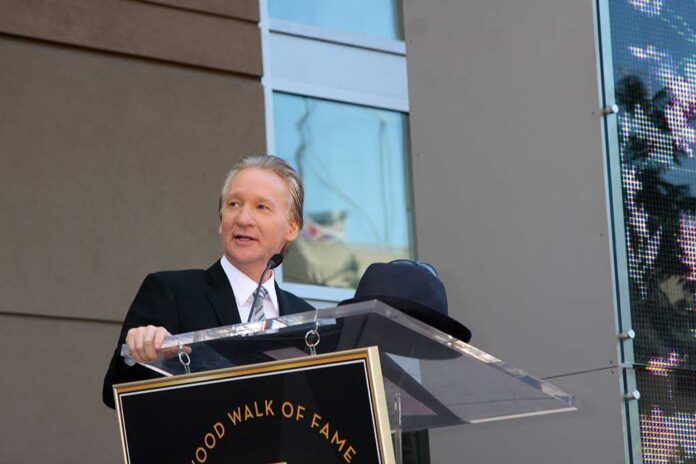
Bill Maher’s blunt case for defending free speech against Islamist intolerance is drawing fresh fire from the left—and fresh attention from Americans who refuse to surrender Western values.
Story Highlights
- Maher argues criticism of Islamist ideas protects core Western freedoms and equal rights.
- Affleck, Aslan, and others denounce Maher’s framing as racist or simplistic.
- The split reflects a larger fight over free speech versus accusations of bigotry.
- Debate centers on whether a “moderate” Islam meaningfully checks intolerance.
Maher’s Core Claim: Defend Free Speech, Confront Intolerance
Bill Maher has pressed a sharp point for years: Western societies must protect free speech and women’s and gay rights even when that critique targets Islamist ideas. He says liberal values of open debate and equal treatment demand this stance. In a major interview, he put it simply: he will criticize any person or group that violates liberal principles, and so should others. His argument targets ideas and social norms, not ethnicity or individual dignity.
Maher’s harshest phrasing came during his well-known exchange on Real Time. He compared enforcement of blasphemy taboos to a “mafia” style threat in parts of the Muslim world, where speech can invite violent retribution. Supporters say his point is about the chilling effect of intimidation on debate, art, and reform. Detractors argue the language is crude. The core dispute remains whether blunt talk helps defend liberty or needlessly smears millions.
The Backlash: Racism Claims And “Simplistic” Framing
Ben Affleck, writer Reza Aslan, and columnist Nicholas Kristof pushed back hard on-air and afterward. They called Maher’s framing gross, racist, and a stereotype that paints all Muslims with the same brush. Advocacy groups echoed that theme, saying his approach is simplistic and ignores abuses by non-Muslims. They argue that terms like “moderate Muslims” are flawed and that Maher’s rhetoric fuels bias rather than reform. These critics see harm in tying faith identity to extremism.
Salon and other outlets compiled quotes to argue that Maher treats Islam as uniquely dangerous and devoid of moderates. They say that view is false and inflammatory. Their case points to plural Muslim communities, many of whom reject extremism and support democratic life. This line of argument warns that broad cultural claims can alienate allies and invite discrimination. It insists that precision and empathy are needed to separate terrorists from ordinary believers.
The Larger Stakes: Free Speech Versus Accusations Of Bigotry
Governments, scholars, and civil society have wrestled with this line for years. One official British essay on extremism and Islamophobia stresses both the need to counter Islamist violence and the duty to defend free expression in open societies. That frame matches Maher’s emphasis: rights only matter when people may offend. Yet many rights advocates also warn that anti-Muslim hatred is real and must be confronted without curbing lawful speech. Finding that balance remains hard.
The policy question hits home for Americans who watched speech codes grow on campus and online. Many feel that the “hate speech” label now reaches any sharp critique of Islamist dogma. They worry that officials, media, and activist groups use the charge of bigotry to police debate. That fear gains force when critics of Islamist ideas face social punishment rather than argument. The result is a chill on speech that protects orthodoxy and punishes dissent, which undermines liberal norms.
Where Conservatives Land: Protect Liberty, Speak Clearly, Welcome Allies
Conservatives tend to agree with Maher on the baseline: free speech is non-negotiable, and Western norms—equal rights, religious liberty, and open debate—must not bow to threats. They also see the danger of sloppy talk that confuses ideas with people. The answer is clarity. Name the problem as Islamist intolerance, not Muslims as a group. Stand with Muslim reformers, dissidents, and neighbors who share constitutional values. Refuse pressure to label honest critique as hate.
Bill Maher thinks Islam is “the mother lode of bad ideas.”
Fareed Zakaria replies that this is not how you reform 1.6 billion people.
Both are still arguing on Bill’s turf.
Bill reduces a civilization, a faith, a moral tradition, a spiritual psychology, and fourteen centuries…
— Mazhar Mansoor (@MazMansoor) August 11, 2026
That approach keeps the focus where it belongs: the First Amendment, the dignity of the individual, and the safety of people who speak their mind. It rejects both cowardice and cruelty. It says America can defend its freedoms while treating every person as an equal under law. Maher is not a conservative, but on this question he defends a core American truth: free people must be allowed to challenge bad ideas. That is how we keep our children safe and our Republic strong.
Sources:
nytimes.com, vanityfair.com, theguardian.com, salon.com, x.com, bridge.georgetown.edu, freespeechunion.org, eclj.org