
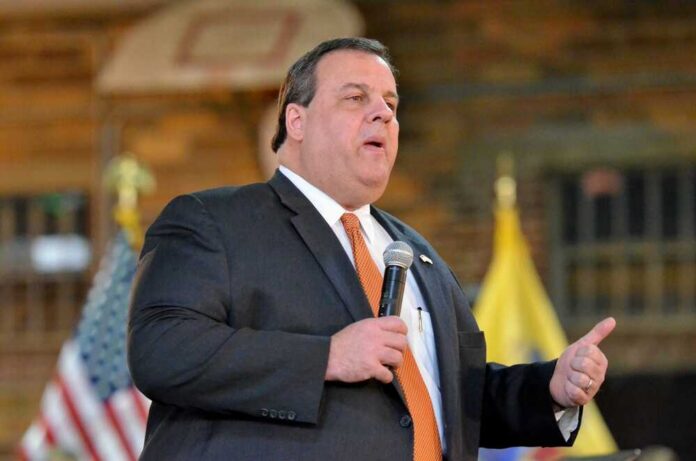
A decade after Trump’s first transition, Chris Christie is reviving a family-feud account that raises an uncomfortable question for voters who want competence over connections: who really ran the hiring and firing decisions behind the scenes?
Story Snapshot
- Chris Christie says Jared Kushner pushed President Trump to fire him from the 2016 transition team as payback for Christie’s prosecution of Kushner’s father, Charles.
- Christie’s latest telling came in a March 12, 2026, interview, echoing earlier versions from his book and prior media reporting.
- The underlying 2004 case involved Charles Kushner’s guilty plea to multiple federal counts, including tax and campaign-finance crimes and witness tampering.
- Christie’s account does not support the viral framing that Trump asked for “dirt” to break up Ivanka Trump’s relationship; the available sources point to retaliation against Christie instead.
Christie Recasts His 2016 Exit as a Kushner-Led Purge
Chris Christie says Jared Kushner engineered his removal as co-chair of Donald Trump’s 2016 presidential transition, framing it as personal retaliation rather than a management decision. In Christie’s telling, Trump initially kept Christie in place after hearing objections, but later reversed course following Kushner’s direct appeal. Christie also claims Trump and Steve Bannon later affirmed Kushner’s role, a detail that keeps the story alive in 2026.
The core allegation is not that Christie performed poorly in the transition role, but that he was deemed “immoral” because he prosecuted Charles Kushner years earlier. Christie describes Kushner arguing that the case should have been handled as a “family dispute” rather than by federal prosecutors. If accurate, that framing clashes with a basic conservative expectation: equal justice under law, regardless of wealth, family name, or political access.
The 2004 Charles Kushner Case Still Sits at the Center of the Dispute
The feud traces back to 2004, when Christie served as U.S. Attorney in New Jersey and brought a federal case against real estate executive Charles Kushner. According to the reporting Christie cites, Charles Kushner later pleaded guilty to 18 counts and served a prison sentence. The case gained lasting notoriety because it included witness intimidation involving a scheme to lure a relative into a compromising situation and distribute the recording within the family.
That history matters because it explains why Christie views his firing as revenge, and why Kushner allies reportedly viewed the prosecution as excessive. Christie’s argument implies that prosecutors should not be punished for doing their jobs, especially when the case involves financial crimes and tampering with witnesses—conduct that goes to the integrity of the justice system. Kushner has denied some related claims, including allegations about media “hit jobs” tied to his later ownership of a newspaper.
Transition Fallout: Vetting Disrupted, Loyalty Tests Elevated
Christie’s account also revives a practical, non-gossip consequence: what happens when a presidential transition is shaped by personal grudges. Reporting tied to the episode says Christie’s transition materials, including vetting binders, were discarded after his exit. The immediate concern is not partisan point-scoring; it is whether the federal government lost institutional discipline at a moment when staffing choices and background checks help prevent avoidable scandals, conflicts of interest, or security risks.
For conservatives who want a smaller, more effective government, transition competence is not a side issue. A lean state still depends on capable leaders and rigorous screening, because weak hiring decisions usually trigger bigger bureaucracies later—more oversight, more investigations, more damage control. Christie’s story, whether one agrees with him or not, highlights how “who you know” can overpower process, even in administrations that campaign against entrenched elites.
What the Story Does—and Doesn’t—Support About Trump, Ivanka, and “Dirt”
The headline claim circulating online—that Trump asked Christie for “dirt” on Kushner’s family to break up Jared Kushner’s relationship with Ivanka Trump—does not match the substance of the provided reporting. The material here centers on Christie’s belief that Kushner targeted Christie over the prosecution of Charles Kushner, not on a breakup plot. Where the sources are clear, they point to a transition power struggle and a long-running grudge, not a relationship intervention.
The most grounded takeaway is narrower but still significant: Christie is describing a system where proximity to power can override merit and institutional norms. That concern resonates across the right and left in 2026, especially among voters convinced that government too often serves insiders first. At minimum, the episode is a reminder that personalities and family dynamics can shape federal decisions that ultimately affect staffing, policy capacity, and public trust.
Sources:
Chris Christie Reveals Jared Kushner Got Him Fired for Revenge After Sending His Dad to Jail