
A single household’s ledger — $3.78 in checking, one cent in savings, six pennies rattling in a piggy bank — can carry more evidentiary weight in the public mind than a spreadsheet of federal statistics, and understanding why reveals as much about how Americans process policy as it does about the policy itself.
Key Points
- New York Times columnist Nicholas Kristof drove roughly 1,000 miles across the United States to report on hardship following federal cuts to food stamps and health care, profiling Oklahoma City resident Trinity Goodman, who sells blood plasma twice weekly to get by.
- Goodman’s finances — $3.78 in her checking account, a single cent in savings, and six pennies in a piggy bank — became the emblematic detail of the column, illustrating a broader argument about post-2025 safety-net reductions.
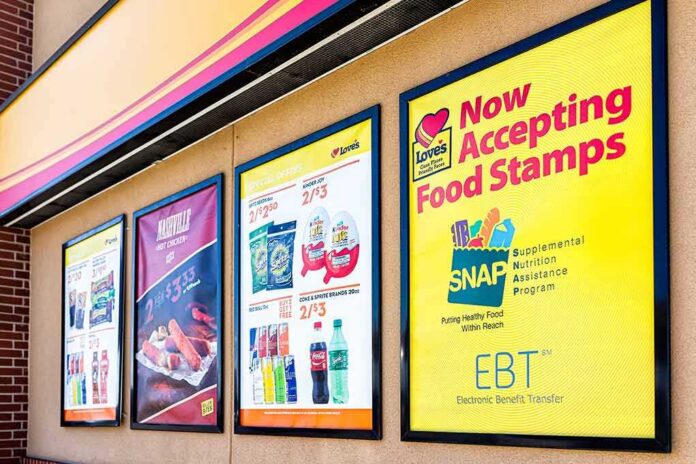
- The reporting lands amid documented federal changes: the 2025 budget law cut projected SNAP funding by roughly $186 billion over a decade, the steepest reduction in the program’s history, with millions losing benefits or facing reduced monthly support.
- Kristof’s method — building an argument around one vividly rendered life rather than aggregate data — is decades old and has drawn both admiration and criticism throughout his career, including a notable 2018 controversy over his portrayal of the Central African Republic.
- The single-case approach is not counter-evidence to the underlying trend; independent estimates from the Federal Reserve Bank of New York and academic researchers corroborate that food insecurity and SNAP disenrollment rose in the same period Kristof describes.
What the road trip actually documented
The column, published in the Times on August 1, 2026, describes a journey of roughly a thousand miles through parts of the United States, culminating in Kristof’s account of Trinity Goodman, a 44-year-old Oklahoma City woman he describes as upbeat and talkative despite a bandage on her arm — a visible mark of her twice-weekly plasma donations, which she relies on to supplement her income. The specificity of her finances is the article’s rhetorical center: not a general claim about “the poor” but three concrete numbers — checking, savings, piggy bank — that a reader can hold in their head. Kristof reiterated the same figures in a social post summarizing the piece, framing Goodman as representative of Americans whose hardship has been “compounded” by cuts to food stamps and health care.
This is not a one-off technique. It is the organizing principle of Kristof’s entire journalistic career, formalized decades ago in the Times’ “Win-a-Trip” contest, which since 2006 has sent a student along with him to report from places like the Democratic Republic of Congo, Darfur, and Sierra Leone precisely because, in his words, individual stories “open a pathway” that statistics cannot. He has said as much explicitly in public remarks on journalism and empathy: audiences disengage once the number of affected people grows past one or two, and narratives that dwell only on despair, without a “sense of possibility,” lose their audience entirely. That philosophy explains both the durability of his format and the recurring criticism it attracts.
The policy backdrop the story rests on
Goodman’s story does not exist in a vacuum; it is offered as evidence for a specific claim — that recent federal cuts to food stamps and health care have deepened hardship for low-income Americans. The underlying policy change is well documented independent of Kristof’s reporting. The 2025 budget legislation, often referred to as the One Big Beautiful Bill Act, reduced projected SNAP funding by approximately $186 billion over ten years, the largest cut in the program’s history, with roughly 4 million people expected to lose benefits or see reductions in monthly support. Separate analysis reported that at least 3.5 million people had already lost food stamp access as the law’s provisions took effect, and the Federal Reserve Bank of New York separately flagged a “notable surge in food insecurity” over the same window. A Reuters count put the number of people who had lost SNAP access at more than 4.7 million nationwide, with Arizona identified as the hardest-hit state.
This convergence matters. A single anecdote proves nothing about scale by itself — one household’s empty savings account cannot tell you whether hardship is rising across a state or a nation. But when independent administrative data, a Federal Reserve regional analysis, and a named academic study all point in the same direction as the anecdote, the anecdote stops functioning as an isolated claim and starts functioning as an illustration of a trend already established through other means. That is a meaningfully different epistemic position than an anecdote offered with no corroborating data at all, and it is the position Kristof’s Goodman profile occupies.
Where the genuine disagreement lies
The dispute over this style of reporting is not, in any credible account, about whether Trinity Goodman exists or whether her balances are what Kristof reported. It is about whether a vivid individual case is the right instrument for judging a policy’s aggregate effect. Critics of “anecdote-led” poverty journalism — a critique leveled at Kristof specifically after a 2018 column on the Central African Republic drew criticism for its framing — argue that a single household’s distress can be moving without being representative, and that policy judgments should rest on administrative data, representative sampling, or causal analysis rather than a memorable face. This is a legitimate methodological concern, and it recurs every time a benefit reduction, work requirement, or eligibility change makes news.
Kristof’s own defense, offered repeatedly across two decades of reporting from Congo to Oklahoma, is that statistics alone numb readers into inaction, while a specific person’s ledger compels attention and, ideally, response. Both things can be true simultaneously: the SNAP cuts are real and independently measured at scale, and a single Oklahoma City woman’s checking account balance is still, on its own, anecdotal rather than statistical proof of causation for any individual case. The honest reading is that Kristof’s reporting technique is a rhetorical choice with a long professional pedigree, not a factual claim in dispute — and the policy backdrop it illustrates is corroborated by sources entirely independent of his column.
Why this pattern of reporting persists
Poverty and safety-net journalism has leaned on individual case studies since long before Kristof’s byline existed, and it will continue after this particular column is forgotten, because the format solves a real communication problem: aggregate numbers describe populations, but only stories move policy conversations among ordinary readers who are not going to read a Congressional Budget Office table. Kristof has been explicit that this is a deliberate craft choice, not an oversight — he has said the goal is to offer both the scale of a need and a “sense of possibility” that action can help, because narratives of pure despair cause audiences to disengage rather than act. Readers evaluating any such story should ask two questions: is the individual case corroborated by independent data, and does the source disclose the broader numbers alongside the human example. In this instance, both conditions are reasonably well met.
Sources:
journalism.missouri.edu, dailymotion.com, africasacountry.com, nytimes.com, x.com, pbs.org