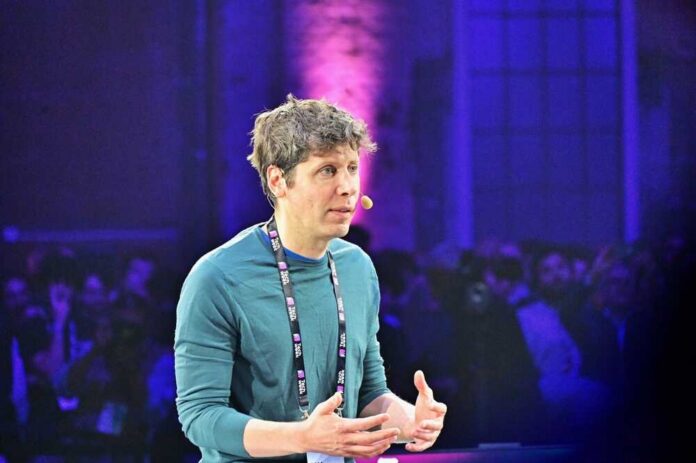
OpenAI’s CEO Sam Altman wields unprecedented control over artificial intelligence development that could reshape humanity’s future, yet mounting evidence suggests his personal ambitions may override the public interest Americans deserve in such transformative technology.
Story Snapshot
- Sam Altman controls OpenAI’s explosive AI growth with minimal oversight, raising concerns about centralized power over technology affecting every American
- Critics across the political spectrum question whether one unelected tech executive should determine AI’s role as public utility or commercial product
- Altman advocates for government as “insurer of last resort” for AI’s economic upheaval, potentially positioning taxpayers to fund his vision
- Online forums and investigative journalists challenge Altman’s trustworthiness, citing self-centered motivations behind his public optimism
Centralized Power Over Transformative Technology
Sam Altman leads OpenAI through explosive growth in generative AI, steering the organization from nonprofit origins to a capped-profit model that positions him as gatekeeper to technologies like GPT-6 and autonomous AI agents. His management style relies on extensive delegation, hiring hardware and AI specialists while focusing on operational efficiency amid capital-intensive scaling challenges. This concentration of decision-making authority in one individual raises fundamental questions about accountability when the technology promises to revolutionize healthcare costs, housing affordability, and entire employment sectors. The structure grants Altman operational control without the democratic checks Americans expect when their economic futures hang in the balance.
Government Backstop for Private Ambitions
Altman publicly advocates for the federal government to serve as “insurer of last resort” for massive economic shifts triggered by artificial general intelligence, explicitly rejecting government as “first resort” controller. This framework positions taxpayers to absorb systemic risks from AI-driven job displacement and economic upheaval while OpenAI and Altman retain commercial benefits and strategic control. The arrangement mirrors financial crisis bailouts where elites privatized gains and socialized losses, a pattern frustrating citizens across the political spectrum. Altman’s vision for government intervention only at crisis thresholds—such as when AI agents become self-replicating threats—sidesteps preventive oversight that could protect workers and communities before damage occurs.
Trust Deficit and Calls for Accountability
Growing skepticism surrounds Altman’s motivations, with critics on platforms like Hacker News labeling OpenAI “too important to trust” to one CEO and calling for his removal in favor of public oversight. These concerns intensified following Altman’s 2023 ouster and rapid reinstatement at OpenAI, events that exposed internal tensions over his leadership. Critics point to what they characterize as “reputation laundering” through friendly media appearances and evolving public statements on free speech and AI ethics. Investigative journalism has challenged Altman’s narrative, contrasting his optimistic public persona with evidence of self-centered decision-making. This trust erosion transcends traditional partisan divides, uniting Americans who see unelected tech executives accumulating power that shapes society without genuine accountability to citizens.
The Public Good Versus Commercial Control Debate
The fundamental question centers on whether AI development should function as a public utility serving all Americans or remain a commercial product controlled by private interests. Altman’s approach keeps AI innovation within OpenAI’s corporate structure while selectively invoking government support for downside risks, a framework that concentrates benefits among shareholders and executives. His recent statements dismiss concerns about ordinary people using AI persuasively, focusing instead on distant superintelligence scenarios like queries to the Dalai Lama about ethical frameworks. This perspective overlooks immediate threats to American workers whose jobs face displacement and communities dependent on industries AI could disrupt. The concentration of AI’s trajectory under figures like Altman, without robust public input or oversight until crises emerge, represents precisely the elite-controlled governance frustrating citizens who feel locked out of decisions affecting their livelihoods and futures.
Sources:
Conversations with Tyler – Sam Altman Returns
Hacker News – Sam Altman may control our future – can he be trusted?