An official Pentagon memo now lets the D.C. National Guard roll marked patrol cars, Humvees, light towers, and patrol boats to back up police in crime sweeps.
Story Highlights
- A signed October 29 memo authorizes specific Guard vehicles and gear for law-enforcement support in Washington, D.C.
- Rules keep troops from making arrests or pursuits; vehicles must be clearly marked “National Guard.”
- Boats will secure river perimeters during gang and drug-trafficking operations in Anacostia.
- A recent Barracks Row shootout wounded a Guardsman, underscoring on-the-street risks.
What The New Authorization Covers
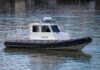
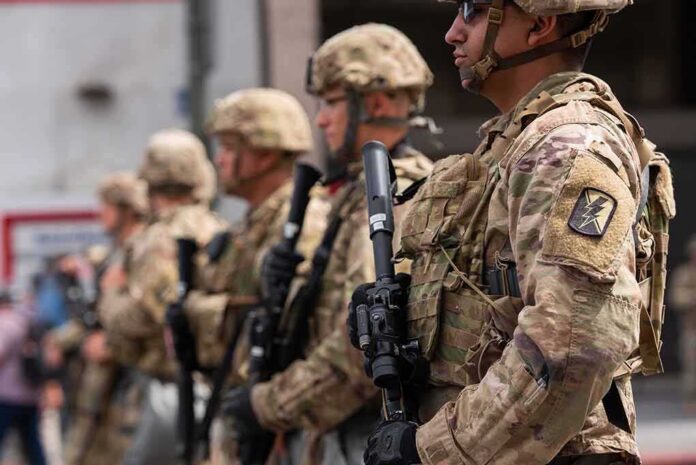
Defense Secretary Pete Hegseth signed guidance on October 29 that expands National Guard support to D.C. police and federal agents. The memo authorizes up to 60 marked patrol cars, military tactical vehicles such as Humvees, up to 20 light towers and generators, and D.C. Guard maritime boat assets. The Pentagon described the mission as direct support to law enforcement, with clear labeling and uniforms to show troops are Guard members, not undercover officers. The Associated Press and POLITICO reported obtaining the memoranda.
Reporters who reviewed the memo said it sets limits so support does not become policing. Troops must not make arrests or chase suspects using military vehicles. Marked “National Guard” patrol cars and visible uniforms aim to keep roles clear to the public and to police partners. Support includes lighting for night operations, secure moves, and perimeter control. These rules address legal lines that guard against federal military taking on direct police powers in the city.
How Boats And Tactical Vehicles Will Be Used
The memo adds a maritime layer tied to a common escape route: water. Guard boats will hold perimeter security during police actions in places like the Anacostia River. If suspects flee by boat, Guard crews provide presence and containment while federal officers aboard handle any arrest. Light towers and generators will help officers work through the night. Tactical vehicles offer safer transport near high-risk raids, not for street chases or stop-and-frisk patrols.
Officials framed the shift as part of an ongoing federal push against gangs and drug traffickers in defined hot spots. The guidance sets a support role and spells out that police keep arrest authority. That balance tries to deter crime and protect teams without crossing legal lines. POLITICO noted the policy could still “blur the line” in public view because battlefield-style vehicles will be visible on city streets, even with the no-arrest rule in place.
The Barracks Row Shooting Shows The Stakes
Metropolitan Police Department Interim Chief Jeffrey Carroll said Guard members stepped in during a fight on Barracks Row at about 11:10 p.m. on October 18. A man raised a gun, aimed it at a Guardsman, and exchanged fire. The suspect and one Guardsman were hit. The case is under review by police internal affairs and criminal investigators. The incident shows that deployed troops are meeting real threats as they assist police during late-night trouble spots. One event cannot settle the policy debate, but it is a hard fact.
Washington DC increases National Guard presence to combat, "gangs and drug traffickers" Memo sent on October 29th. Happened before, probably nothing https://t.co/hwmIk9KbEK
— Californian Trudeau (@Sizzzzlers) November 7, 2026
Local leaders and left-leaning outlets call the move militarization and demand withdrawals. Some D.C. councilmembers argue out-of-state Guard personnel are not trained in local laws and should go home. Others say the Guard should be used only for national emergencies, not day-to-day crime support. Those claims are political arguments, not new data. The signed memo, however, creates legal and operational guardrails that keep arrests with police while adding tools that help officers control space and time in dangerous operations.
Does The Evidence Show Results Yet?
Early data on crime changes are mixed. A cited Cato Institute analysis reported robberies and theft fell after earlier Guard deployments, while homicides did not move and assaults with dangerous weapons edged up. That means the toughest categories did not yet improve. The new memo adds focused tools like boats and lighting that may matter in raids and river-adjacent zones. Clear performance goals and before-and-after measures would help the public judge what works and what does not.
The reporting does not include the full text of the October 29 documents or the detailed legal reviews. It also does not show training records or command procedures for the new assets. Those gaps invite speculation and spin. The answer is transparency: publish the full guidance, rules of engagement, and outcome metrics. If the mission stays within legal limits, protects rights, and reduces violent crime, trust will grow. If parts fall short, data will show where to adjust.
Why This Matters To Public Safety And Liberty
Washington families deserve safe streets without turning the capital into a militarized zone. The memo aims for that balance by keeping arrests and pursuits with police, while using Guard gear for lighting, security, and containment. That approach supports order while respecting limits on military power at home. The next step is proof. Set targets, share results, and keep roles bright-line clear. Win the night against gangs and traffickers while guarding the Constitution in daylight.
Sources:
foxnews.com, usnews.com, politico.com, military.com