A heavy metal journalist says she was bombarded with racist slurs and monkey noises while working a Metallica concert, putting a spotlight on crowd behavior that clashes with the band’s “no politics” message.
Story Highlights
- Laina Dawes reports hearing the N-word and monkey noises at a Metallica show she covered.
- Her account dates to a Toronto arena concert around 2009 and was later restated in 2026.
- Dawes is a published author on race and heavy metal and has described similar incidents.
- The claim concerns specific audience behavior, not band members or management.
Journalist’s First-Person Account From a Metallica Concert
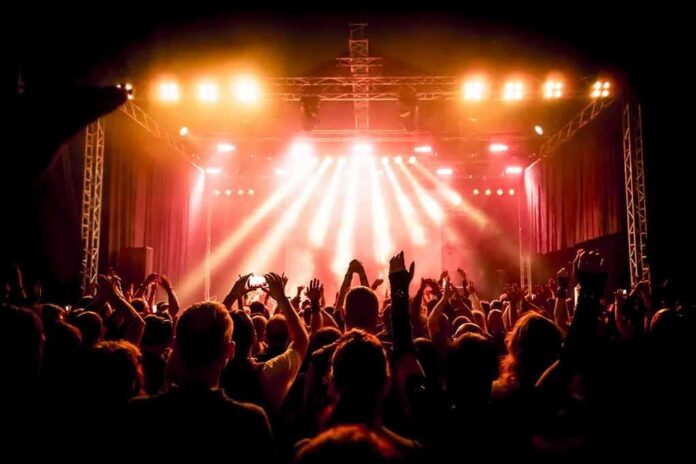
Music journalist and author Laina Dawes said men made “gorilla noises” at her and called her the N-word while she covered a 2009 Metallica concert at Toronto’s Air Canada Centre. Dawes described the incident in a Global Television interview reported in 2014. She called the scene “totally insane,” explaining that multiple people hurled slurs as she moved through the arena to do her job. Her account focuses on audience behavior during the show, not on the band itself.
Dawes later repeated the claim in a public statement dated October 13, 2026. She said she photographed Metallica at a concert and had never been called that slur so many times at a metal show in her life. She added that one man made monkey noises. Her post also argued that politics still shape metal spaces, pushing back on the idea that the scene is free of those forces. The later statement restates her earlier account of racist abuse in the crowd.
Who Is Laina Dawes and Why Her Perspective Matters
Dawes has written extensively about race and heavy music. She is the author of What Are You Doing Here?: A Black Woman’s Life and Liberation in Heavy Metal, a book that documents the experiences of Black women in a scene often seen as white and male. Her interviews describe feeling excluded at some mainstream metal shows, while finding more acceptance in underground scenes. That background supplies context for why she reports and studies these incidents in public.
Independent reporting has also placed her Metallica account within a wider pattern she has described. In a feature on racism in metal, Dawes said she had faced threats at shows and had objects thrown at her. Another reported incident in 2012 involved a man using a racial slur as she moved through a crowd. These reports do not speak for every concert. They do show she has documented repeated harassment in metal spaces over time.
How This Fits With the Debate Around “No Politics” in Metal
Recent coverage quotes Metallica frontman James Hetfield telling fans the band does not use concerts to push political messages. He framed shows as places for love, energy, and heavy music, not politics. Dawes’s 2026 post directly responded to that theme, saying politics are always present, especially in metal. Her account challenges the idea that a concert space can be set apart from real-world behavior when fans harass others in the crowd.
The research on metal culture notes a long-running image of the genre as mostly white and male, with ongoing concerns about racism and exclusion. That does not prove that racist abuse is common at Metallica shows. It does explain why a report like Dawes’s draws attention. This is an event-specific allegation that highlights a broader issue in parts of the scene, where many fans seek unity while some individuals act in ugly ways.
What Is Known and What Comes Next
The strongest facts come from Dawes’s own statements. She gave a specific time frame and venue in Toronto for the 2009 show in the 2014 interview. She restated the core claim in 2026. The available reporting does not name the abusers or show a venue report. The band and management were not accused of seeing or condoning the behavior. The focus stays on certain people in the audience who targeted a working journalist with racist taunts.
Concert safety depends on clear rules, fast security response, and respect for every fan. Venue managers and promoters can help by training staff to spot harassment and move quickly when it happens. Millions of Americans love metal’s power and community. Most show up to enjoy the music and go home safe. Holding bad actors to account protects that freedom and keeps the focus where it should be: great music, strong families, and a culture that treats people with basic decency.
Sources:
twitchy.com, blabbermouth.net, latimes.com, loudersound.com