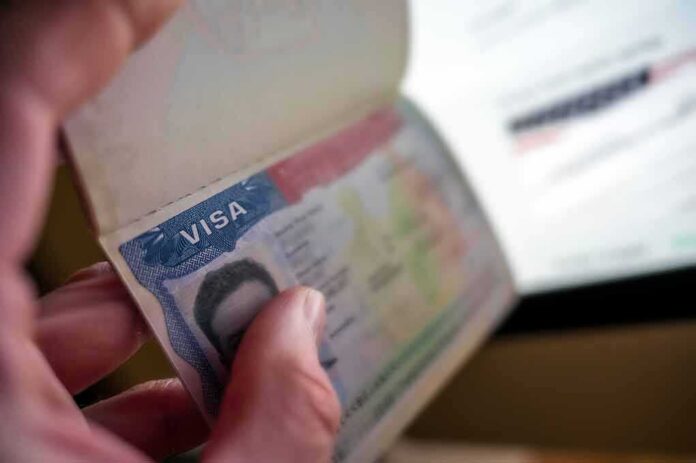
The State Department is preparing a rolling sweep to revoke up to 200,000 visitor and business visas tied to asylum filings — a hard reset on years of visa abuse that conservatives demanded.
Story Highlights
- Reports say up to 200,000 B1/B2 visas could be revoked on a rolling basis.
- State Department already announced over 175,000 visa revocations this month.
- Federal law gives the Secretary of State broad power to revoke visas at any time.
- Advocates warn about due process; a recent court ruling hit a separate visa freeze.
What the Reported Plan Targets and Why It Matters
State Department officials, according to reports, plan to revoke B1/B2 visas from foreign nationals who entered for short stays and then applied for asylum, treating it as misuse of a visitor category. A spokesperson described the effort as dynamic and rolling, rather than a single-day sweep, and tied the action to documented asylum applications by visa holders. This aims to curb a pattern where temporary visas become a back door to long-term stays through last-minute asylum filings.
The Department’s move follows a public announcement that it already revoked more than 175,000 visas this month for a range of violations, including threats to national security and abuse of the immigration system. That scale signals capacity and intent. For readers tired of lax enforcement and loopholes, this shows the administration working to restore order to a system strained by overstay cycles and shifting claims after entry.
The Legal Backbone for Visa Revocations
Federal law places visa issuance, refusal, and revocation authority with the Department of State. The Congressional Research Service explains that consular officers can revoke visas under immigration statutes, and the Secretary of State may revoke any visa at any time, in his discretion. Federal regulations also recognize this revocation power for nonimmigrant visas, underscoring that cancellation is a lawful, established enforcement tool, not an ad hoc invention. That framework backs targeted action against category misuse.
Secretary of State Marco Rubio has set a clear standard: if officials would not have issued the visa had they known new information, they will revoke it. That common-sense test matches how most Americans think about fairness and security. If the purpose of a visitor visa is a temporary trip, then a late asylum pivot can flag that the original intent may never have matched the visa’s rules. Using lawful discretion to cancel those visas protects integrity and deters repeat abuse.
Due Process Concerns and the Litigation Climate
Advocacy groups and allied lawyers argue mass actions can miss individual facts, and they have sued over past student-status terminations that they say lacked notice and individualized review. Those cases are distinct from today’s reported asylum-linked plan, but they preview the attacks the administration will face. A recent federal court also vacated a separate Rubio policy freezing immigrant visas for 75 countries, showing that broad measures can draw judicial pushback. Expect filings that test review steps and error rates.
The reporting does not publish the internal State Department documents that define case selection, nor does it list case-by-case findings for each revocation target. That limits outside visibility into screening thresholds. The Department’s rolling approach, however, suggests ongoing review instead of a one-time batch. The administration will need to show strong, consistent criteria to keep courts onside while keeping pressure on those who twist short-term visas into long-term stays.
What This Means for Borders, Order, and Fairness
Revoking visas tied to asylum filings made after entry aims to reset expectations: a visitor visa is for short visits, not a pathway to remain. Supporters see this as basic fairness to Americans who follow the rules and to lawful immigrants waiting their turn. The large 175,000-plus revocation milestone proves the system can act at scale when needed. Clear rules and firm follow-through reduce pull factors, lighten caseloads, and help restore public trust in legal immigration.
The Trump administration is preparing to revoke the business and tourist visas of as many as 200,000 foreign nationals who have applied for—or are pursuing—asylum in the United States, according to officials and documents obtained by The Associated Press.
If implemented, the…
— YAME Digital News (@SpaceYame) August 25, 2026
Next steps will hinge on transparency and disciplined execution. If the Department documents how each case meets legal standards and keeps a path for correction when errors occur, the campaign can endure courtroom tests while shielding the border from policy games. Congress built this authority for a reason. Used well, it protects communities, upholds the law, and sends a simple message worldwide: visas have terms, and terms matter.
Sources:
redstate.com, thehill.com, usnews.com, tass.com, theguardian.com, state.gov, congress.gov, myattorneyusa.com, gao.gov, community.lawschool.cornell.edu, classic.austlii.edu.au