
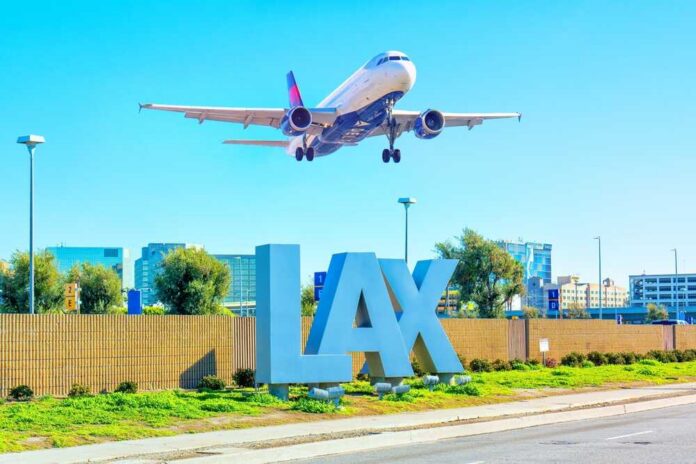
DHS Secretary Markwayne Mullin floated a proposal to pull federal customs officers from major sanctuary city airports, threatening to shut down international travel to hubs like Los Angeles and New York unless local officials cooperate with immigration enforcement.
Story Snapshot
- Secretary Mullin proposed removing CBP officers from sanctuary city airports refusing to partner on immigration enforcement
- The move would effectively halt international arrivals at major hubs like LAX and JFK
- Proposal comes amid a nearly two-month DHS shutdown and ongoing federal-local conflicts over immigration
- Democrats denounce similar tactics as federal overreach while Republicans see leverage to force compliance
Federal Leverage Against Sanctuary Cities
On April 6, 2026, Department of Homeland Security Secretary Markwayne Mullin questioned during a Fox News interview with Bret Baier why sanctuary cities should receive federal customs processing if they refuse to cooperate with immigration enforcement after travelers arrive. The proposal targets major international hubs in cities like Los Angeles and New York, where local policies shield undocumented immigrants from federal detention. Mullin’s statement reflects a hardline enforcement-first approach, asking whether non-cooperative jurisdictions deserve federal airport services while simultaneously undermining federal immigration law through sanctuary policies.
The proposal represents an escalation beyond previous legislative efforts like H.R. 7640, which sought to withhold federal funding from sanctuary jurisdictions. Unlike funding cuts requiring congressional approval, Mullin’s airport strategy could theoretically be implemented through executive authority over customs operations. This approach directly leverages federal control of international border entry points against local autonomy, creating immediate economic pressure on cities dependent on international travel and tourism revenue. The timing coincides with an ongoing DHS funding standoff that has strained airport security operations for nearly two months.
Sanctuary City Policies Under Fire
Sanctuary city policies emerged in the 1980s to limit local cooperation with federal immigration enforcement, expanding significantly after 2010 amid debates over states’ rights versus federal authority. These jurisdictions typically refuse to honor ICE detainer requests, which ask local authorities to hold arrested individuals beyond their release date for immigration pickup. Critics point to cases where sanctuary policies have resulted in the release of individuals with criminal records who later committed additional crimes. During confirmation hearings, Mullin highlighted these releases as policy failures that endanger public safety while undermining federal law enforcement partnerships.
The Trump administration has consistently targeted sanctuary cities through various mechanisms, from threatened funding cuts to highly publicized migrant relocations exposing resource strains. Cities like New York, Chicago, and Los Angeles provide benefits including schools and social services to undocumented residents, arguing these policies strengthen community trust and public safety. Democrats frame federal pressure tactics as unconstitutional blackmail violating local governance rights. Republicans counter that jurisdictions benefiting from federal services cannot selectively ignore federal law, particularly when non-cooperation forces ICE to conduct riskier community arrests rather than secure jail transfers.
Economic and Political Fallout
Removing customs officers from sanctuary city airports would immediately strand international travelers and cripple major economic hubs. Los Angeles International Airport and John F. Kennedy International Airport handle millions of international passengers annually, generating billions in economic activity through tourism, business travel, and cargo operations. Airlines would face operational chaos rerouting flights to compliant cities, while local businesses dependent on international visitors would suffer severe revenue losses. The aviation industry, already strained by the DHS shutdown affecting TSA staffing, faces additional uncertainty if customs operations become political bargaining chips in immigration enforcement battles.
Politically, Mullin’s proposal energizes the Republican base frustrated by sanctuary city defiance of federal immigration law while amplifying Democratic warnings about federal overreach. The strategy shifts resource allocation debates from abstract funding formulas to concrete service withdrawals with immediate public impact. Sanctuary city mayors must weigh immigrant protections against economic devastation and constituent anger over travel disruptions. This pressure tactic exemplifies growing tensions between federal enforcement priorities and local resistance, with ordinary citizens caught in the crossfire as both sides dig in on immigration policy. The proposal remains unimplemented as of early April 2026, awaiting potential linkage to DHS funding negotiations.
Sources:
Sec. Markwayne Mullin’s Newest Proposal Should Have the Left Terrified – Townhall
Mad About Migrant Flights? Open Border Liberals Look Mirror See Breaking Law – Fox News
ICE Deportation Immigrant Sanctuary Cities HR 7640 Congress – The American Prospect