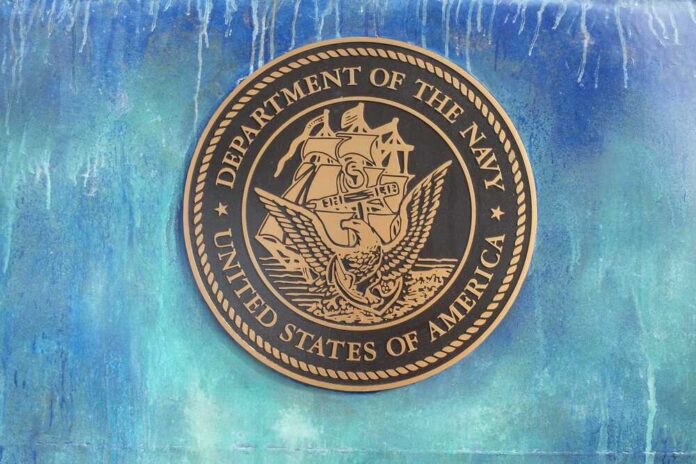
Under President Trump’s renewed leadership in 2026, the U.S. Navy’s USS Jimmy Carter stands as a pinnacle of American undersea dominance, tapping adversary ocean floor cables to safeguard national security against globalist threats from China and Russia.
Story Highlights
- USS Jimmy Carter, a modified Seawolf-class submarine, excels in covert cable-tapping and special operations, succeeding Cold War legends like USS Parche.
- Unique 100-foot Multi-Mission Platform enables ROV deployments, diver access, and real-time signals intelligence in contested Pacific waters.
- Costing $3.5 billion, it bolsters U.S. deterrence amid great-power competition, earning a Presidential Unit Citation for classified Mission 7.
- Operates secretly under Submarine Development Squadron Five, testing advanced drones and sensors vital for countering adversarial undersea ambitions.
From Cold War Roots to Modern Spy Powerhouse
USS Jimmy Carter (SSN-23), the third Seawolf-class nuclear attack submarine, traces its espionage lineage to 1970s Operation Ivy Bells. There, USS Parche tapped Soviet undersea cables in the Sea of Okhotsk, planting recording devices for critical intelligence. Parche’s 2004 retirement handed the mantle to Jimmy Carter. Keel laid in 1998, its hull received a 100-foot, 2,500-ton Multi-Mission Platform plug between 2001 and 2004. Commissioned February 5, 2005, it transformed into the longest attack submarine at 450 feet, prioritizing quiet speed and stealth for post-Cold War dominance.
Multi-Mission Platform: Engineering Marvel for Covert Ops
The MMP features a floodable “aquarium” hangar with moon pools, allowing remotely operated vehicles and divers to access the ocean floor undetected. Precision thrusters hold the sub stationary on the seabed for extended missions. Navy officials highlight enhanced payload for weapons, sensors, and undersea vehicles. This setup supports signals intelligence, mine warfare, special operations, and object recovery. SEAL teams deploy through it for sabotage, while ROVs splice into fiber-optic cables, shifting from Cold War recorders to real-time interception against modern adversaries.
Key Missions and Classified Achievements
Assigned to Submarine Development Squadron Five alongside USS Seawolf and Connecticut, Jimmy Carter tests cutting-edge undersea tech. In 2013, it earned a Presidential Unit Citation for Mission 7, deemed “extremely difficult and hazardous,” though details remain classified. Rumors persist of a 2010 drone launch over North Korea amid artillery clashes. As of 2026, it remains active, assuming Parche’s full spy role post-2024 retirement. Recent profiles call it the “best sub ever built,” vital for Pacific operations near Russia, China, and North Korea.
NSA benefits directly from cable taps carrying global communications. U.S. Navy operators and contractors like Electric Boat drive innovations in drones and submersibles. Norman Polmar, naval analyst, explains divers attaching recorders for retrieval, evolving with fiber optics.
USS Jimmy Carter: The Navy’s Secret Submarine That Can Tap the Ocean Floorhttps://t.co/ZLrmlE5hnP
— 19FortyFive (@19_forty_five) March 13, 2026
Strategic Edge in Great-Power Competition
Jimmy Carter delivers short-term wins like rapid SIGINT from enemy cables and missile recovery, denying adversaries comms secrecy. Long-term, it pioneers drone swarms and hunter-killer tactics, ensuring U.S. undersea superiority. The $3.5 billion investment strains budgets yet proves essential for multi-role utility from research to warfare. Politically, it strengthens deterrence under President Trump, countering globalist overreach. Civilian sectors gain from advanced ROV tech spillover into oceanography, while secrecy minimizes public impact.
Sources:
The Navy’s Most Shadowy Spy Is 450 Feet Long & Named After Jimmy Carter
We Now Have Details on USS Jimmy Carter Spy Submarine’s Secret Mission
The U.S. Navy’s Only Nuclear Spy Submarine Cost $3.5 Billion and Might Be Best Sub Ever Built
USS Jimmy Carter: The U.S. Navy Has a Seawolf Spy Submarine That Can’t Be Matched