
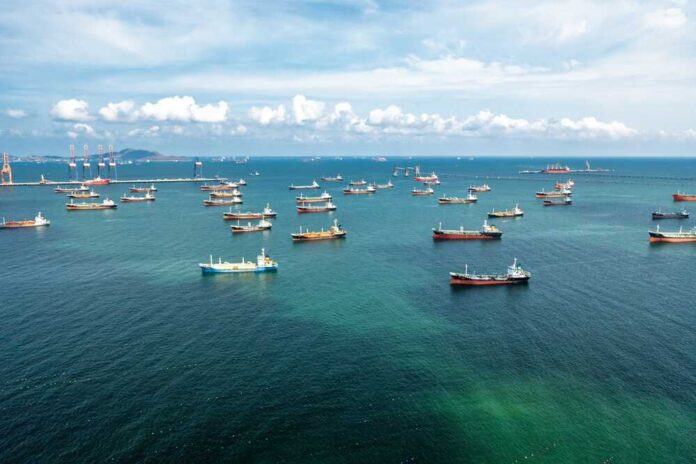
The United States military has answered Iran’s missile and drone attacks on three commercial ships in the Strait of Hormuz with a sweeping wave of “powerful strikes” on more than 80 Iranian targets.
Story Snapshot
- U.S. Central Command struck over 80 Iranian targets after attacks on three commercial vessels in the Strait of Hormuz.
- Iran’s Revolutionary Guard is accused of firing missiles and drones at tankers, damaging ships but sparing crews.
- President Trump says the ceasefire with Iran is “over” and has moved to reimpose tough oil sanctions.
- Democrats and globalists warn of “reckless war,” while Iran threatens revenge and hints at choking off energy shipping.
U.S. Strikes Hit Iran After Attacks on Commercial Ships
U.S. Central Command said American forces launched a “series of powerful strikes” against Iran after Tehran’s forces attacked three commercial vessels transiting the Strait of Hormuz. The Pentagon stated that missiles and drones from Iran’s Islamic Revolutionary Guard Corps hit tankers crewed by civilian sailors, damaging ships that were moving through a key international waterway. Officials stressed the attacks violated an interim ceasefire designed to pause the wider U.S.-Iran war and protect commercial shipping.
Central Command reported that U.S. forces targeted more than 80 locations inside Iran, including air defense systems, command and control nodes, coastal radar sites, anti-ship missile launchers, and over 60 small boats used by the Revolutionary Guard to threaten shipping in the Gulf. These strikes were meant to “impose heavy costs” on Iran for going after innocent crews and to reduce its ability to hit merchant traffic moving oil and gas through the strait. No U.S. casualties were reported from the ship attacks that triggered this response.
Pattern of Iranian Escalation in the Strait of Hormuz
Officials say these latest attacks on three ships came after a string of earlier Iranian moves against commercial vessels since 2024, often using one-way attack drones and anti-ship missiles. In one recent incident, a Panama-flagged tanker was struck by what the U.S. identified as an Iranian drone, prompting prior strikes on Iranian surveillance and mine-laying facilities linked to the Strait of Hormuz. Iran has repeatedly claimed a “right” to control shipping in the strait, warning foreign vessels and at times laying naval mines, boarding ships, or seizing them.
Iran’s Revolutionary Guard has issued public warnings telling tankers not to pass through the Strait of Hormuz and threatened to close the waterway if its demands are ignored. In this latest clash, Iran has avoided a full admission of responsibility for all three ship attacks, even as its media outlets brag about warning some vessels and “defending” Iranian waters. That careful wording fits a long pattern where U.S. officials present clear evidence of Iranian action while Tehran tries to deny or blur direct blame to manage pressure and keep negotiating leverage.
Trump Ends Ceasefire, Reimposes Oil Sanctions
President Donald Trump told reporters at the NATO summit in Ankara that the tentative ceasefire with Iran is “over” and “a waste of time” after the latest ship attacks. He authorized the new strikes and moved to revoke a license that had allowed limited sales of Iranian oil under the interim deal. A U.S. official said the oil waiver was pulled because Iran’s actions in the strait were “unacceptable” and had to carry real consequences, signaling a harder line on both military and economic fronts.
Trump has repeatedly accused Iran of firing one-way attack drones at ships crossing the Strait of Hormuz and called a previous strike on a cargo vessel a “foolish violation” of the ceasefire. At the same time, he has tried to calm markets by saying the firing was “not heavy” and that U.S. forces intercepted several incoming drones. His message to Iran has been that the United States will keep energy flowing and protect navigation, even if that means more strikes to destroy Iranian missile and drone stockpiles.
Political Pushback and Global Risks for Energy and Security
Senate Democrats have condemned the growing clashes as a “reckless war” that risks U.S. troops and could drag America into a deeper ground conflict with Iran, despite the fact that the ship attacks clearly targeted civilian commerce. Some media outlets highlight Iran’s refusal to fully admit responsibility for all three tankers, raising doubts among skeptics even as they confirm the damage to vessels. This political fight matters because it shapes how long Congress will back Trump’s use of force to defend shipping and punish ceasefire violations.
Strategic analysts warn that Iran may try to use threats against the Strait of Hormuz as a bargaining chip, hinting it could choke off one of the world’s most important energy shipping routes if pressure rises. Israel’s government, led by Prime Minister Benjamin Netanyahu, has focused on collapsing Iran’s regime and ending its nuclear program, goals that go beyond Washington’s stated aim of enforcing ceasefires and protecting trade lanes. That difference feeds claims from critics that U.S. strikes serve an Israeli agenda, even as Trump frames them as necessary self-defense.
Sources:
youtube.com, wsj.com, aljazeera.com, apnews.com, facebook.com, pbs.org, maritime.dot.gov, crisisgroup.org, dia.mil