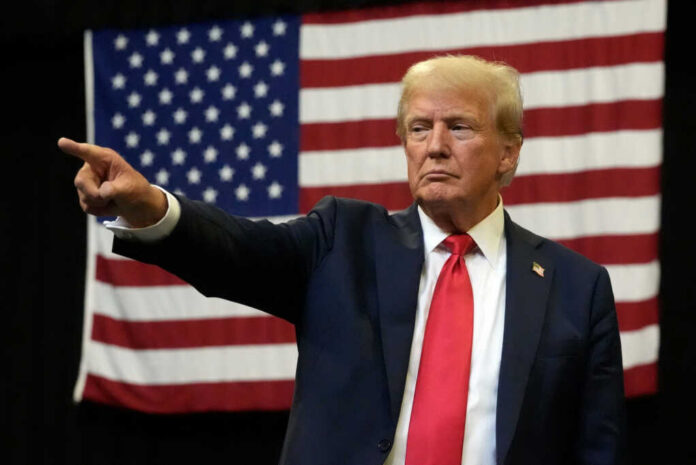
President Trump’s military engagement in Iran has shattered his core promise to keep America out of new wars, triggering an energy crisis that has torched household budgets and exposed the painful reality that MAGA voters are footing the bill for yet another regime change operation.
Story Snapshot
- Iran war disrupts Strait of Hormuz, spiking oil prices to $112 per barrel and erasing emerging market gains in 2026
- Trump deploys Marines and warships despite campaign vows to avoid new conflicts, fueling frustration among his base over broken promises
- Asia and Europe face recession risks while US consumers absorb inflation from energy shocks, with analysts warning of prolonged economic damage
- Recent signals suggest both sides willing to negotiate an end, sparking stock rallies but leaving experts cautious about lingering growth and inflation risks
Trump’s Broken Promise on War Triggers Energy Shock
The Trump administration’s military strikes against Iran, conducted jointly with Israel, have escalated into a full-scale conflict that has closed the Strait of Hormuz for the first time since the 1970s. This vital chokepoint handles roughly 20 percent of global crude oil shipments, and its disruption has sent Brent crude prices soaring to $112 per barrel while US crude hovers around $102. The war represents a direct contradiction to Trump’s 2024 campaign pledge to avoid new military entanglements, leaving conservative voters who supported him on an anti-interventionist platform questioning whether his second-term foreign policy serves American interests or perpetuates the globalist regime change agenda they rejected.
Middle East Conflict Hammers American Wallets and Portfolios
Energy shortages stemming from the Strait closure have forced Middle East producers to confront storage crises, threatening production halts that compound supply disruptions. Emerging market equities have wiped out all 2026 gains, while Asian economies dependent on imports for over 80 percent of their energy face severe supply shocks. Europe confronts inflation increases of 0.5 percentage points, and recession risks loom across both regions. US consumers are not insulated; gasoline prices climb as inflation pressures mount, raising fears the Federal Reserve will hike interest rates further, with the 10-year Treasury yield already reaching 4.39 percent as markets price in tighter monetary conditions.
Analysts Model Three Scenarios with Grim Outlooks
Financial strategists at Charles Schwab and other institutions have outlined three conflict scenarios with divergent market impacts. The moderate baseline, currently in play, envisions weeks-long military operations pushing oil to the $75-90 range and triggering tighter financial conditions that hurt international stocks. An upside resolution under four weeks could see oil retreat below $70 with equity rebounds, but analysts deem this unlikely. The downside scenario, lasting beyond three months with oil hitting $100-150, risks bear markets and flights to safety as Europe and Asia slip into recession. Experts note historical geopolitical crises since 1980 barely moved the S&P 500, but this war’s combination of Strait blockade and storage shortages creates unprecedented supply shock dynamics that defy past patterns.
Markets Rally on Ceasefire Signals but Risks Persist
Late March 2026 brought tentative optimism as Iranian state media signaled willingness to end the war with conditions, prompting a positive US response and a 2 percent surge in the S&P 500. Oil prices retreated slightly from peaks, Treasuries advanced, and gold rose as investors recalibrated. Yet analysts caution the dust has not settled on growth and inflation risks, with lingering effects projected over six to twelve months even if a ceasefire holds. Strategists at Oxford Economics and Chatham House warn that prolonged conflict could cement higher energy costs and deepen recessions in vulnerable regions, while US resilience hinges on dollar strength that may not shield consumers from pain at the pump. For Trump’s base, the question remains whether the administration will prioritize extricating America from this costly entanglement or continue operations that contradict the anti-war mandate that helped secure his election.
MAGA Base Confronts Reality of Another Endless War
Conservative voters who backed Trump to end globalist interventions now face the uncomfortable truth that his administration has plunged America into a conflict with profound economic consequences. The war’s impact extends beyond markets to household budgets, as energy price spikes fuel inflation that erodes purchasing power and threatens the economic recovery many hoped a second Trump term would secure. Analysts across institutions from Triodos to Morningstar agree that Asia and Europe bear the brunt, but US exposure through inflation and potential Fed hikes undermines the America First promise. The deployment of Marines and warships without a clear exit strategy evokes the regime change wars conservatives rejected under previous administrations, raising concerns that Trump’s foreign policy has veered into the same interventionist path his supporters believed they had repudiated at the ballot box.
Sources:
Iran War: Potential Impact on Global Equities – Charles Schwab
Financial Markets Are Responding to the Iran Conflict in Unexpected Ways – Morningstar
Financial Market Implications of the War Against Iran – Triodos Investment Management
The 2026 Iran War: An Initial Take and Implications – Oxford Economics
How Will Iran War Affect Global Economy – Chatham House