A beloved family donkey was shot dead during a missing-child search, and officials still refuse to release the body-camera video that could settle what really happened.
Story Highlights
- Police chief confirms an officer killed a one-year-old miniature donkey named HeeHaw during a nighttime search on private property.
- The officer is on paid leave while the Georgia Department of Agriculture’s law-enforcement division investigates.
- Owner says HeeHaw was bottle-raised and people-friendly, disputing claims the donkey was a threat.
- Officials have not released body-camera footage or detailed reports during the probe.
Confirmed Facts From Police And Local Officials
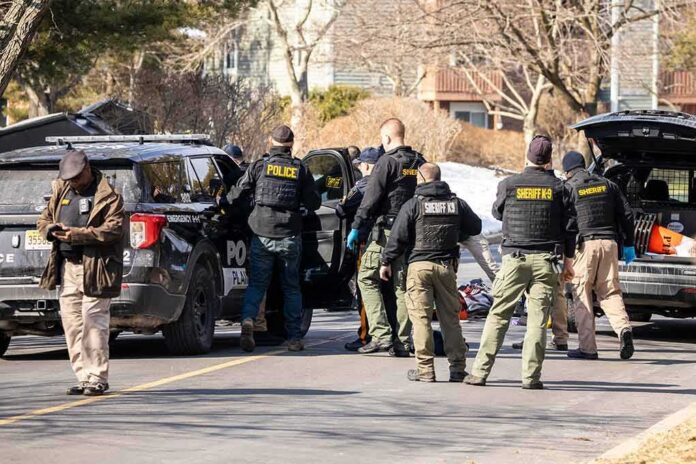
Cedartown Police Chief Jamie Newsom said one of his officers shot and killed a one-year-old miniature donkey named HeeHaw during a nighttime search for a missing child on private property. The chief said body-camera video exists and that he personally viewed it, but he will not describe what it shows while the case is under review. The officer has been placed on administrative leave, which is standard during a shooting investigation.
The Georgia Department of Agriculture Law Enforcement Division is handling the investigation, an unusual route that reflects the animal aspect of the case but also raises questions about transparency and rigor when deadly force is used. A Cedartown statement framed the event as occurring during an urgent search, which can heighten risk and confusion in the dark. Officials have not provided key timeline details such as distances, warnings, or lighting at the scene.
Competing Accounts On Threat And Force Used
Reason reported that the officer wrote he fired to protect himself, another officer, and a team of bloodhounds from a “charging” donkey, a claim that suggests an immediate threat. Several outlets say officers tried a Taser first, then fired the fatal shot, which fits a force-escalation story if true. But neither the full incident report nor the body-camera video has been released to confirm the sequence or the danger the team faced.
HeeHaw’s owner, Hannah Israel, strongly disputes the idea that the donkey posed a threat. She says officers entered her pasture without permission around 12:45 a.m., tased the donkey, and then shot him. She describes HeeHaw as bottle-raised and people-friendly, a petting-zoo donkey who would run toward people out of affection, not aggression. Her account conflicts with the “charging” narrative and intensifies public anger over the killing of a named pet on private land.
What The Public Still Does Not Know
The most important facts remain sealed from view. The chief confirmed there is body-camera video but declined to describe it. No agency has released the footage, synchronizing audio, dispatch logs, or the detailed report that would show warnings, distance, posture, or whether officers were cornered. Without those concrete facts, the public is left with two stories and rising emotion over a dead family animal. One clear step can fix this: release the full video and primary documents.
🚨🐴 JUSTICE FOR HEEHAW – HE DESERVED TO LIVE. 💔
📍 Location: Polk County, Georgia, USA 🇺🇸
At around 12:45 a.m. on August 30, 2026, officers reportedly entered the pasture at Elsberry Riding and Farm while searching for a missing person. According to HeeHaw’s owner, Hannah… https://t.co/YuSwhpo3Yb pic.twitter.com/u8BuUhYrry
— 𝐉𝐄𝐄𝐕𝐀𝐍𝐒𝐇 𝐀𝐑𝐘𝐀 🇮🇳 (@jeevansharya) September 3, 2026
Courts have held that unreasonably killing a companion animal can violate the Fourth Amendment’s protection against unreasonable seizures. Training and policy groups also say officers should shoot an animal only to stop imminent injury after other reasonable options are tried. Those standards do not prejudge this case. They do show why clear evidence matters. If the donkey charged and no safer option existed, the shooting may be deemed reasonable. If not, accountability is owed.
Why This Matters To Property Rights And Trust
This story is about more than a small donkey. It is about the line between urgent police work and respect for private property and family life. Conservatives believe in law and order and also in limits on government power. A search for a missing child is noble work. But entering a pasture at night and killing a family’s animal demands strong proof and clear reporting. Transparency can protect good officers and reassure a shaken community.
What Accountability Should Look Like Now
Officials should release the unedited body-camera video, synchronized audio, dispatch logs, and the incident report with minimal redactions. Investigators should interview all personnel on scene, including the bloodhound handlers, and note distances, warnings, and light conditions. If the “charging” claim is supported, say so and show it. If mistakes were made, own them and reform training on animal encounters so families and officers are safer next time. Sunshine builds trust; silence erodes it.
Sources:
reason.com, abc7chicago.com, police1.com, wsbtv.com, local3news.com, youtube.com, facebook.com, theguardian.com