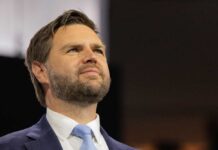
Eric Swalwell’s bold pledge to revoke ICE agents’ driver’s licenses marks a significant challenge to federal authority, intensifying the ongoing immigration enforcement debate.
Story Highlights
- Swalwell’s pledge targets masked ICE agents in California.
- The policy is part of his gubernatorial campaign strategy.
- California’s mask-ban law faces federal litigation.
- Federal authorities claim the pledge is unconstitutional.
Swalwell’s Pledge and Its Implications
Rep. Eric Swalwell (D-California), a candidate for governor, made headlines by pledging to revoke the driver’s licenses of masked ICE agents conducting operations in California. His stance positions him as a defender of vulnerable populations against what he claims are aggressive federal enforcement tactics. This move aligns with California’s broader efforts to restrict ICE by banning masks during operations, a law currently tangled in federal legal battles.
California’s legislative push against ICE operations highlights its status as a sanctuary state. The mask-ban law, intended to increase accountability, is seen by opponents as a risk to federal agents’ safety. Despite the legal and constitutional challenges, Swalwell’s pledge serves his political campaign, appealing to immigration rights advocates and showcasing his commitment to progressive policies.
Watch: https://www.youtube.com/watch?v=4nqjlp6NCZ4
Federal-State Legal Tensions
The Trump administration has actively contested California’s mask-ban law, emphasizing federal supremacy in immigration matters. The Department of Homeland Security (DHS) and ICE argue that the mask ban poses security risks and is an overreach of state authority. Critics like Harmeet K. Dhillon, Assistant Attorney General for Civil Rights, have publicly challenged the feasibility of Swalwell’s pledge, citing constitutional constraints.
The constitutional tension between federal authority and state rights is at the core of this debate. While the mask-ban law remains on hold pending judicial review, the outcome could set a legal precedent regarding state powers over federal law enforcement operations. This legal ambiguity leaves the future of Swalwell’s pledge uncertain, as it hinges on the court’s interpretation of state licensing authority.
Political and Social Consequences
Swalwell’s stance has intensified the political discourse around immigration enforcement in the U.S. As the gubernatorial race unfolds, his position may influence California’s political landscape, particularly among voters focused on immigration rights. The broader implications for federal enforcement operations in California remain significant, as any successful restriction could impact ICE’s operational capacity and strategy in the state.
For undocumented immigrants and vulnerable communities, the debate carries potential benefits in terms of reduced enforcement visibility and increased accountability. However, for federal agents, the risks associated with being unmasked during operations could lead to heightened safety concerns and operational challenges. The ongoing litigation and legislative efforts reflect a deep national divide over immigration policies and the balance between state and federal authority.
Sources:
Swalwell threatens to revoke drivers’ licenses of masked ICE agents operating in California
Swalwell pledges to arrest ICE agents and take away their drivers’ licenses
Swalwell threatens to revoke drivers’ licenses of masked ICE agents operating in California