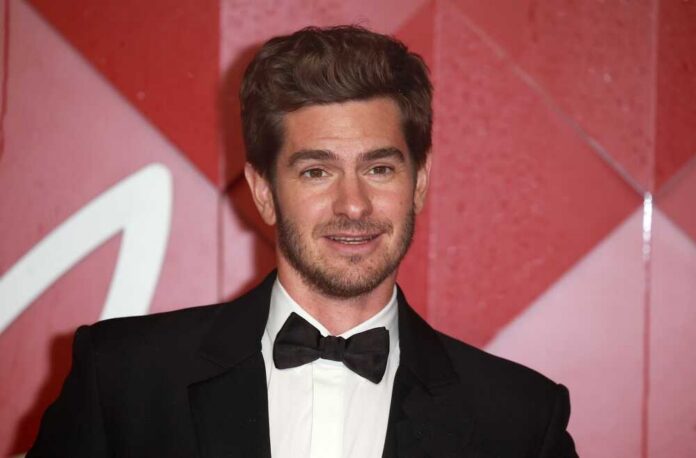
A Hollywood star just called watching a beloved kids’ fantasy series “controversial” because he fears it might financially empower politics he opposes—showing how fast entertainment is being turned into a moral compliance test.
Story Snapshot
- Andrew Garfield said he watched the Harry Potter films for the first time and praised their “soul and spirit,” while warning it’s “controversial.”
- Garfield avoided naming author J.K. Rowling, referring to her as “she that shall remain nameless,” and tied viewership to indirectly funding what he called “inhumane legislation.”
- The comments revived the “separate the art from the artist” debate as a new Harry Potter TV reboot looms.
- Coverage to date is largely entertainment-media driven; no primary transcript or response from Rowling or Warner Bros. was reported in the initial wave.
Garfield’s Comments Put a Pop-Culture Staple Back in the Political Crosshairs
Andrew Garfield’s remarks came from a March 27, 2026, interview on Hits Radio’s My Life in Movies, where he said he recently watched the Harry Potter films for the first time. Garfield reportedly called the movies “really good,” praising performances such as Daniel Radcliffe’s, but framed the act of watching as “controversial.” His reasoning centered on the difficulty of separating the franchise from author J.K. Rowling’s views on gender identity and activism.
Garfield’s line that raised the most eyebrows was not just the warning, but the framing: he suggested that consuming the films could mean “putting money in the pocket” of causes he considers harmful. He also used a Voldemort-style dodge—“she that shall remain nameless”—to refer to Rowling. That rhetorical choice signals how culturally loaded the topic has become: not merely disagreement, but a sense that even naming the author publicly invites backlash.
What the Reporting Actually Establishes—and What Remains Unclear
Multiple outlets summarized Garfield’s comments similarly, describing his concern that entertainment purchases can translate into royalties and influence for Rowling. Reports also tie the renewed controversy to Rowling’s post-2020 public statements about transgender issues and her support for groups aligned with her views. However, coverage so far appears to rely on paraphrases of the radio segment rather than a full public transcript, making exact wording and context difficult to independently verify from the reporting alone.
The reporting also references political implications in the United Kingdom, including discussion of legal rulings and activism connected to sex-based definitions. Those claims may be accurate, but the entertainment-focused sources do not provide documentary detail in the article text itself beyond broad summaries. In practical terms, readers are being asked to evaluate serious political allegations based on limited context—one reason culture-war controversies can escalate quickly while the public still lacks complete information.
Why This Resonates With Conservatives: Boycotts, Speech Pressure, and Corporate Leverage
For many conservatives, Garfield’s comments feel like a familiar pattern: public figures implicitly urging audiences to police each other’s consumption habits and speech. The underlying logic is that ordinary Americans must treat movies, games, and books like political donations—and that enjoying a story can be recast as moral wrongdoing. That approach tends to expand social pressure while shrinking free cultural space, especially when dissenters are labeled “controversial” simply for watching mainstream entertainment.
The Franchise Reboot Raises the Stakes for Studios—and for Fans
The timing matters because a new Harry Potter TV series is in the works, keeping the brand in the spotlight and raising questions about promotion, casting, and audience targeting. The more the franchise is positioned as a referendum on current ideology, the harder it becomes for studios to sell it as entertainment first. For fans, the fight becomes exhausting: people who simply want to watch a movie are pulled into political signaling battles they never asked for.
Garfield’s comments also highlight a broader double standard in modern activism: cultural gatekeeping often falls hardest on everyday consumers, not on the executives and institutions best positioned to shape policy. If a celebrity can praise a film’s “soul and spirit” while simultaneously warning viewers away, the message is that enjoyment must come with a public confession. Americans who are already weary of being lectured by elites may see this as another attempt to turn private life into a public loyalty test.
Andrew Garfield warns fans against watching 'Harry Potter,' calls Rowling ‘she that shall remain nameless’ – wow – the woke virus has smashed this guy soon. He hates women and women sports. Good job Rowling!
— Benjamin Roussey (@BenRousseyUOP) March 28, 2026
No reported response from Rowling or Warner Bros. accompanied the initial coverage wave, and the story remains mostly a snapshot of one interview ricocheting through social media. What is clear is that the “separate the art from the artist” debate is not going away—especially when major studios keep rebooting legacy franchises tied to living creators with strong political views. Until full context from the original interview is broadly available, readers should treat sweeping claims with caution and focus on verifiable facts.
Sources:
Andrew Garfield sparks controversy with ‘Harry Potter’ remarks
Andrew Garfield Defends Harry Potter Amid J.K. Rowling’s Trans Views
Andrew Garfield Shades J.K. Rowling