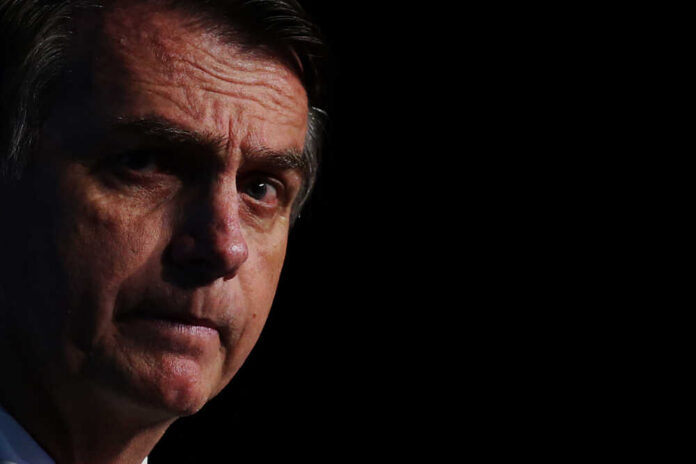
A sensational claim that Brazil’s Lula government is “slowly murdering” Jair Bolsonaro collapses under basic scrutiny, but the facts still expose a troubling fight over a jailed opponent’s medical care.
Story Snapshot
- Jair Bolsonaro was hospitalized with bilateral bronchopneumonia after being transferred from Papuda prison in Brasília.
- Family statements describe fear and frustration over court-controlled transfer decisions, not documented evidence of deliberate harm.
- Medical reporting ties Bolsonaro’s vulnerability to his 2018 stabbing and repeated major surgeries, with added risk due to age.
- Brazil’s Supreme Court has remained central to decisions on hospitalization and requests like house arrest, keeping politics intertwined with health.
What Bolsonaro’s Hospitalization Actually Shows
Doctors hospitalized former Brazilian President Jair Bolsonaro after he developed chills, vomiting, and what reporting described as bilateral bronchopneumonia, with his care moving from prison custody to DF Star clinic in Brasília. Updates indicated gradual improvement across the week after admission, with shifting descriptions of whether he was still in the ICU or moved to a different intensive-care setting. Across reporting, the core medical narrative is consistent: pneumonia in a man over 70 can be serious and slow to resolve.
Bolsonaro’s wife, Michelle Bolsonaro, publicly shared optimistic notes about improvement in inflammation indicators, while other updates emphasized there was no clear discharge date. Those two points can both be true: improving lab markers do not automatically mean a patient is ready to leave intensive monitoring. The available reporting does not document deliberate medical neglect by the Lula administration; it documents a high-profile prisoner whose treatment decisions are inevitably pulled into political conflict.
The “Slowly Murders” Allegation vs. What the Evidence Supports
The viral framing that Lula’s “regime” is “slowly murdering” Bolsonaro leans heavily on emotionally charged rhetoric rather than on verified proof. Flávio Bolsonaro’s quote that authorities are “playing with my father’s life” reflects his family’s belief that court delays and rigid procedures place Bolsonaro at risk. That complaint raises a legitimate civil-liberties question—whether a state can adequately care for a prisoner—while still falling short of evidence that the government is intentionally causing harm.
Multiple reports instead point to longstanding medical fragility tied to Bolsonaro’s 2018 stabbing during the campaign, which triggered recurring complications and a pattern of hospitalizations and surgeries. That context matters because it offers a straightforward explanation for why pneumonia could hit harder, linger longer, and require more intensive observation. When claims of intentional harm are made, the public deserves receipts: orders, denials, documented refusals of care, or direct interference—none of which are established in the provided reporting.
Courts, Custody, and the Precedent for Prisoner Medical Rights
The recurring friction point is not a documented plot to harm Bolsonaro; it is the legal system’s control over his movement and care. Bolsonaro’s imprisonment following conviction and sentencing placed decisions like hospital transfers and any request for house arrest under judicial supervision. Reporting highlights earlier disputes in which courts denied or slowed requests tied to medical needs, helping explain why supporters view the process as punitive. In any country, right-leaning voters should be wary of a precedent where political opponents in custody face barriers to timely care.
Why This Matters Beyond Brazil’s Headlines
Brazil is heading into another tense political stretch, and Bolsonaro’s condition is now part of the public narrative as his son Flávio Bolsonaro campaigns and polarization remains high. Analysts have noted that repeated health crises can intensify uncertainty, because every medical update becomes political ammunition and every court ruling is interpreted through partisan lenses. Americans watching from 2026 should recognize the familiar pattern: institutions insisting they are neutral, while politics becomes inseparable from enforcement decisions in high-profile cases.
Limited reporting detail also means observers should resist jumping to extremes. Pneumonia in an older patient with a complicated surgical history can be life-threatening without any conspiracy at all. At the same time, the principle remains: constitutional-minded citizens should insist that due process and humane treatment apply even to political figures they disagree with. When the state controls the body as well as the cell, transparency is not optional.
For now, the most defensible conclusion from the available sources is narrow but important: Bolsonaro’s health struggle is real, the “murder” framing is unproven, and Brazil’s judiciary-driven custody system keeps fueling distrust. The next key facts to watch are concrete—medical bulletins, court rulings on custody status, and the timeline for any return to prison—rather than viral slogans that may generate clicks but don’t meet an evidence standard.
Sources:
Bolsonaro’s recurring health crises amplify political uncertainty as 2026 race nears
Nampa report on Bolsonaro hospitalization and condition
Brazil ex-president hospitalized as health and politics intersect