Felony charges against James O’Keefe and Cam Higby turn an undercover election test into a courtroom fight over free speech and election integrity.
Story Snapshot
- Hennepin County charged O’Keefe and Higby with unlawful voting and identity-related crimes tied to an August primary operation.
- Prosecutors say they used real voters’ names at three polling places and began the ballot process without consent from those voters.
- The defendants say no ballots were cast and no voter oath was signed; they call it journalism, not fraud.
- Minnesota’s vouching system is at the center, with state officials claiming it has safeguards while critics see a loophole.
What Prosecutors Allege Happened Inside Minneapolis Polling Places
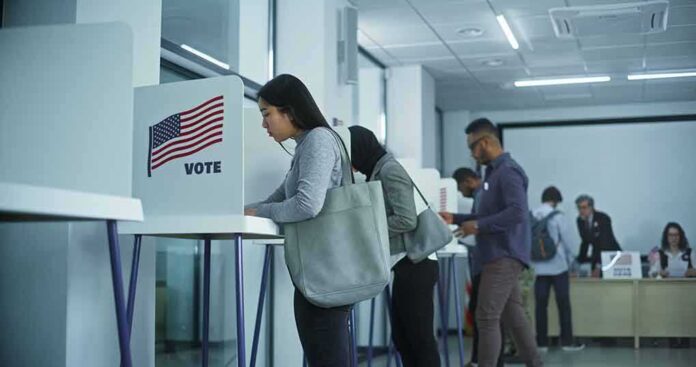
Hennepin County prosecutors say O’Keefe and Higby went to multiple polling places during the August 11 primary and gave election judges names of real Minnesota voters. Reports say the men recorded the encounters and tested whether workers would accept those identities while discussing the vouching process. Prosecutors argue the crime began when they misrepresented who they were to start getting a ballot, even if no ballot was finished or cast.
Coverage says the alleged conduct occurred at three polling places, which strengthens the claim that this was not an accident. The state’s theory relies in part on the pair’s own video that shows interactions with poll workers. Officials contend the names used belonged to registered voters, and that the men knew it during the test because they aimed to probe how vouching works in practice.
What O’Keefe and Higby Say About Their Intent and Actions
O’Keefe and Higby say they never voted, never signed a voter oath, and walked out before touching any ballot. They say they did not apply for ballots, but asked hypotheticals and pressed clerks on how vouching could be used. They frame the stunt as journalism meant to show weaknesses in election rules. They call the charges retaliation and an attempt to criminalize protected reporting under the Constitution.
The defense argument leans on a simple point many Americans see as fair: if no vote was cast and no oath signed, how is this “unlawful voting”? Prosecutors counter that Minnesota law can cover attempts to get a ballot by using another person’s identity. That legal question will likely decide the case. The men’s public response says their goal was to warn the public and drive reform, not to steal anyone’s vote.
Why Minnesota’s Vouching Rule Is Now in the Spotlight
Minnesota allows a registered voter in a precinct to attest to another eligible voter’s address so that person can register and vote the same day. State officials say identity is still checked by normal means, and vouching is used by a small share of voters. Critics argue the rule invites abuse, especially in busy urban precincts where a bad actor could push the limits. The law caps how many people one voter can vouch for in a single election.
This case blends two issues that often get mixed up: whether a system could be gamed in theory, and whether it is actually being gamed in real life. Prosecutors say the operation crossed a legal line by using real voters’ names to begin the ballot process. The defense says the system’s weakness is the story, and the First Amendment protects showing that weakness on camera. The court will now test where free speech ends and election crime begins.
What To Watch Next: Law, Evidence, and Equal Treatment
Watch for the exact statutes and subsections, the full criminal complaints, and any election-judge statements. Key evidence will include unedited video, timestamps, and precinct logs. The state will try to prove identity misrepresentation began at the check-in table. The defense will stress there was no completed vote. Voters should also look for whether Minnesota has charged similar undercover tests in the past or is singling out these defendants now.
Conservatives care about two things here: honest elections and equal justice. If using a real voter’s name at a check-in table is a felony, that rule must apply to everyone, not only to reporters who ask hard questions. If journalism becomes a crime, government power grows while public trust shrinks. President Trump’s supporters want both secure voting and open reporting. This case will show if Minnesota can respect both at once.
Sources:
okeefemediagroup.com, inforum.com, bbc.com, fox9.com