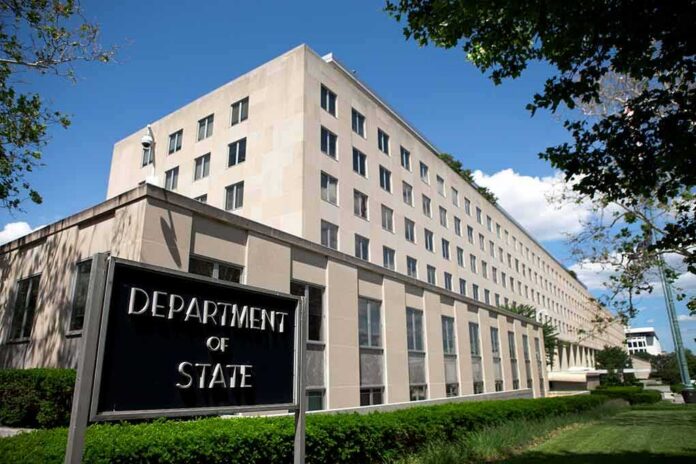
After 47 years, the United States removed Syria from the terror sponsor list, opening the door to U.S. investment after a formal 45-day review period expired.
Story Snapshot
- President Trump notified Congress on July 8, 2026, starting the 45-day clock to delist Syria.
- The Secretary of State made the removal official after the waiting period ended.
- The administration says the change supports U.S. security and regional stability, and unlocks investment.
- Bipartisan Senate voices urged removal before the final decision, signaling cross-aisle backing.
What Triggered The Delisting And When It Became Final
Reuters reported that President Trump notified Congress on July 8, 2026, of his decision to rescind Syria’s status as a State Sponsor of Terrorism, which by law triggered a 45-day review before it could take effect. The State Department later confirmed the move became official after that window closed, with the Secretary of State stating the designation was lifted at the end of the required notice period. That timeline matters because it shows the action followed the statute, not a shortcut around Congress.
The legal path used here is the standard one for removals. First the White House initiates notice to Congress, then after 45 days the Secretary finalizes it if Congress does not block it. The process is rare and designed to be deliberate. That caution is why this change stands out after nearly five decades on the list, and why each step, from notice to final sign-off, drew wide attention from allies and critics alike.
Why The Administration Says It Helps U.S. Interests
The State Department framed the delisting as a move to support U.S. national security and push peace and stability in the Middle East. The public case links the decision to opening channels for lawful trade and investment, which could help stabilize a country that is moving through a political transition and reduce the pull of militias and black markets. The message from Washington is simple: use economic leverage to steer outcomes that make terror less likely, not more.
The investment angle is concrete. Removal from the terror sponsor list eases some restrictions that have fenced off Syria from U.S. capital and banking ties for decades. Reports highlight the potential to “unlock” economic activity if companies and banks see better risk controls and a clearer path to compliance. That does not end all sanctions or rules, but it lowers a major barrier. The administration argues that this helps the United States shape the next chapter rather than watch from the sidelines.
Congressional Input And The Cross-Aisle Signal
Delistings can be divisive, but this one carried at least some bipartisan support before the final action. A letter from Senate Foreign Relations Committee leaders urged Secretary of State Marco Rubio to remove Syria from the list, marking a formal, public push from both parties. That matters for conservative readers for a practical reason: when Congress is engaged and supportive, the policy is more likely to stick, and U.S. leverage abroad is stronger.
Skeptics in Washington still want guardrails. The Congressional Research Service notes lawmakers are pressing Syria’s transitional leaders to combat terrorism, protect minorities, curb foreign fighters, and avoid threats to neighbors, including Israel. Those priorities align with core U.S. interests—secure borders, strong allies, and zero tolerance for terror financing. The delisting does not erase those demands; it moves them into a new phase, where progress can be tied to economic engagement and measurable results.
Reality Check: What We Know And What We Do Not
Some details remain classified or not yet public. Reports and statements confirm the notice, the 45-day wait, and the final rescission, along with the policy goals and investment impact. They do not disclose a full legal memo or an itemized intelligence assessment explaining why Syria no longer meets each statutory test. That gap does not undo the decision, but it limits what the public can verify today without further releases.
Syria off US terror blacklist after nearly 50 years as Trump admin clears investment hurdle
The United States formally removed Syria from its state sponsors of terrorism list after Marco Rubio authorized the rescission and delisted HTS
in-clears-investment-hurdleSyria off US… pic.twitter.com/ttN938rBtV
— Frank-News (@francoboca) August 25, 2026
For conservatives who demand results, the proof will come next. The administration tied this step to U.S. security and stability goals. Congress has spotlighted red lines on terror, foreign fighters, and threats to Israel. Economic doors are now cracked open, not flung wide. If benchmarks hold and threats fall, America gains leverage without endless wars. If not, pressure tools remain. Either way, the United States, under President Trump, is setting the terms—not Brussels, not Beijing, and not Tehran.
Sources:
reuters.com, foreign.senate.gov, ntd.com, time.com