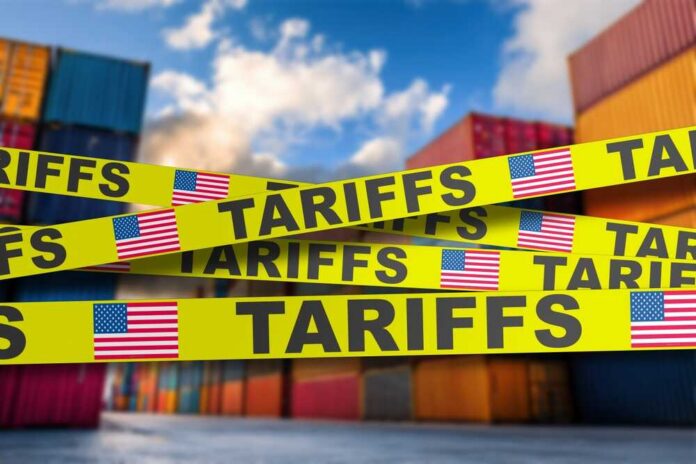
Trump’s aggressive tariff push is hitting family budgets like a hidden tax, even as Washington says the economy is “just fine.”
Story Snapshot
- Tariffs have quietly raised prices on everyday goods, acting like a tax on working families.
- Economic models warn of slower growth and lower wages if today’s tariff levels stick around.
- Big institutions admit the economy has not crashed, but still see clear signs of strain.
- Trump’s team frames tariffs as patriotic protection, while globalist economists attack them as reckless.
Tariffs Are Taxes Hitting American Families First
Economic research makes one thing clear: tariffs work like taxes, and those taxes land on American households and small businesses. When Washington slaps double-digit tariffs on imports, foreign companies rarely eat the cost. Instead, importers and retailers pass higher prices straight to shoppers at the checkout line. Studies of Trump’s second-term tariff wave find that these price hikes have already added around 0.7 percentage points to inflation, as tariff costs show up in the consumer price index. For families who already struggled under Biden-era inflation and high energy prices, even a small extra bump in prices for food, clothes, and household goods feels like one more squeeze. Conservative economists warn that if tariffs stay high, those costs will keep climbing and slowly erode real take-home pay, especially for middle-income households who do not have much cushion.
Analysts also point out that tariffs are not targeted at the elites who pushed globalism for decades. They land on everyday products that normal Americans buy. One major budget model estimates the average household will face more than $1,400 in extra annual tax burden from the current tariff mix by 2026. Over a lifetime, a middle-income family could lose about $22,000 in income because of slower growth and higher prices tied to these trade taxes. That hits hardest in small towns and manufacturing communities already battered by offshoring and cheap foreign labor. Critics from the political left use these numbers to claim Trump has an “anti-growth” agenda, but many conservatives see something different: decades of bad globalist trade deals left our economy fragile, and the pain we feel now reflects those past mistakes as much as current policy choices.
Growth Has Slowed, But The Predicted Collapse Has Not Happened
Nonpartisan economic models forecast that Trump’s tariff plans and immigration enforcement will slow growth over the next decade. Some estimates show real gross domestic product down by about 1% from where it would otherwise be and wages about 5% lower in the long run if today’s tariffs remain and other countries retaliate. Other studies link mass deportations to weaker job creation because businesses fear losing workers and cut back on hiring. These projections fuel headlines about “degrowth” and recession risk, which liberal outlets and academic critics are quick to promote. However, when we look at actual data from 2025, the story is more mixed. Growth has slowed, but the economy has not crashed.
Brookings Institution, not known as a conservative shop, admits Trump’s second-term agenda “hasn’t tanked the economy.” Their research shows that even after average tariffs jumped sharply in early 2025, overall output kept rising, though at a weaker pace. Manufacturing output in late 2025 was up about 2% on the year, but momentum faded and job gains in the sector turned negative, with about 68,000 manufacturing jobs lost that year. Employment growth for the whole economy in 2025 was the slowest in five years. That means critics were wrong to predict an instant meltdown, yet families can feel the drag in slower job growth and modest wage gains. For many conservatives, this looks less like “anti-growth by design” and more like trade disruption layered on top of an economy already damaged by years of bad policy, heavy regulation, and runaway federal spending.
Balancing Protection, Sovereignty, And Everyday Affordability
The Hoover Institution offers an evenhanded view that many on the right find sensible. Their analysis says Trump’s policy mix has pluses and minuses: tariffs and tougher immigration rules carry costs, but deregulation, lower taxes, and efforts to shrink bureaucracy can help growth. Hoover concludes the economy is likely to keep expanding, though at a somewhat slower pace with slightly higher inflation, rather than collapsing outright. This matches what many patriots see on the ground. Jobs still exist, the stock market has not imploded, but groceries, housing, and insurance feel expensive, and every policy shock makes it harder for families to plan for the future. Economic research also shows tariffs have raised federal revenue by hundreds of billions of dollars, effectively making them one of the largest tax hikes since the early 1990s. If Washington used that money to pay down debt and cut waste, the long-term damage could be smaller; instead, decades of overspending by both parties keep the debt climbing.
Critics in outlets like The Atlantic lean hard into the “degrowth” label and blame Trump personally for every sign of economic strain. Yet they rarely admit that mainstream models also show only modest changes in total output from tariffs alone—sometimes as small as a 0.1% long-run hit to gross domestic product. On the other side, some pro-Trump voices speak of tariffs almost like a cure-all and invoke Alexander Hamilton to defend protection at any cost. That ignores clear evidence that higher trade taxes do raise prices and slow trade, especially when foreign countries strike back. For constitutional conservatives, the real question is not whether tariffs are always good or always bad. The question is whether today’s trade and immigration steps truly serve American workers and families, or whether Washington is again using them as tools while ignoring deeper problems like federal overspending, central bank games, and attacks on energy independence that drove the cost-of-living crisis in the first place.
Sources:
nytimes.com, brookings.edu, epi.org, allianz.com, forbes.com, piie.com, trumpwhitehouse.archives.gov